Rural Carriers Appeal FCC for Deadline Relief
Rural providers participating in a federal program say ‘unforeseen circumstances’ are making a 2028 deadline unworkable.

Jericho Casper
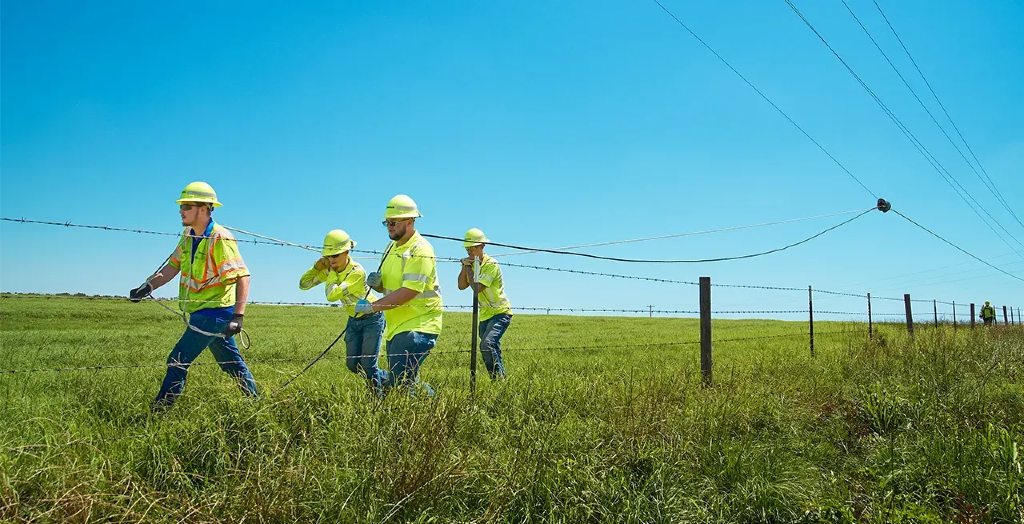
WASHINGTON, July 28, 2026 – Rural broadband network builders that accepted federal financial support want more time to finish the job. Still unclear: Will the Federal Communications Commission accommodate them?
The ACAM Broadband Coalition urged the FCC on Thursday to move now to grant rural carriers a one-year extension to their deployment deadlines under the Enhanced Alternative Connect America Model, or Enhanced A-CAM, program. In an ex parte, the coalition argued that conditions the FCC set in its 2023 order for granting an extension have now clearly been met.
The group cited a string of “unforeseen circumstances” stemming from shifting deployment targets, unprecedented demand for fiber, and workforce constraints. The group also cited shifting Broadband Equity, Access and Deployment program timelines.
“The mandate to determine whether a one-year extension is warranted was expressly designed ‘to ensure that the Enhanced A-CAM and BEAD program deployment timelines remain aligned and to account for possible unforeseen circumstances,’” the filing states. “Both of the Commission’s separate prerequisites for a one-year extension undoubtedly have been met.”
The ACAM Broadband Coalition is an advocacy and telecommunications group representing rural rate-of-return broadband carriers. Companies associated with or participating in the coalition include TDS Telecom, Kinetic by Windstream, BEK Communications, Hilliary Communications, and numerous other independent telephone companies and cooperatives
Enhanced A-CAM carriers currently face a Dec. 31, 2028 deadline to reach 100 percent of required locations with both voice and broadband service delivering at least 100/20 Megabit per second (Mbps). The coalition says the ground has shifted dramatically since carriers signed up.
Required location counts have changed by an aggregate 47.2% between initial 2023 offers and the final eligible locations list. The FCC’s Wireline Competition Bureau didn't release the final location counts until December 2025, meaning carriers didn’t have certainty about where they actually had to build until two years into a four-year program.
The letter cites a “perfect storm” in the fiber optics market, driven by artificial intelligence data center construction, BEAD buildout demand, and even military drone production competing for the same fiber grades.
Lead times have stretched past 60 weeks for some products, and the coalition cites accounts of smaller carriers seeing price hikes of 70 to 80% or even cancelled purchase orders, as manufacturers prioritize larger, more profitable buyers.
The letter also points to industry projections that the fiber broadband sector will need roughly 180,000 new workers over the next decade, and argues small rural carriers can’t compete with hyperscale data center builders on wages to retain skilled technicians and linemen.
Separately, the coalition welcomed the FCC’s ongoing rulemaking on Accelerating Wireline Infrastructure Buildout to speed up state and local rights-of-way approvals, but noted that even in a best-case scenario those reforms likely won’t take effect until early 2027, too late to help carriers facing a 2028 deadline.
The coalition warns that without swift action, some Enhanced A-CAM carriers could miss their final milestones “through no fault of their own,” with rural consumers ultimately bearing the cost.
The letter asks the FCC’s Wireline Competition Bureau to begin its review of the extension question as soon as possible, rather than waiting until 2027 as originally contemplated, arguing that carriers need an early decision to plan multi-year construction schedules efficiently.
The FCC authorized over $18.2 billion in total funding for the Enhanced A-CAM program in 2023, distributed across 368 rural telecom carriers covering 44 states. The program will deploy broadband service to more than 700,000 locations, and improve or maintain 100/20 Mbps broadband service at approximately 2 million locations.