Senate Commerce Clears Bill Requiring BEAD Project Dashboard
NTIA would have to publish states’ semiannual reports

Jake Neenan
WASHINGTON, July 22, 2026 – The Senate Commerce Committee cleared a bill Wednesday that would create a public dashboard for tracking projects under the Broadband Equity, Access, and Deployment program.
The Accelerating Broadband Permits Act would also require the National Telecommunications and Information Administration to create a tool to help each state broadband office identify and track the federal permits its funded projects would need.
NTIA would have to analyze that data and submit an annual report to Congress on roadblocks resulting from the various federal land management agencies’ permitting processes.
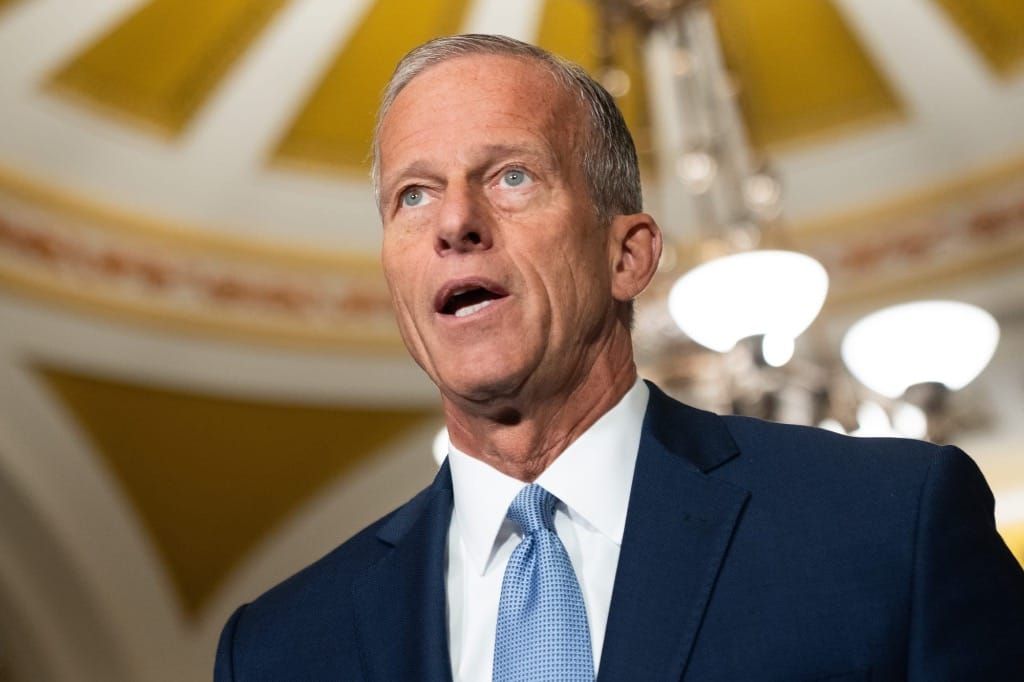
The committee cleared the bill by voice vote Wednesday. The legislation was led by Sens. John Thune, R-N.D., Ben Ray Luján, D-N.M., and John Barrasso, R-Wy.
States have to submit semiannual reports under the $42.45 billion BEAD program, which detail buildout progress and the state’s monitoring efforts.
NTIA doesn’t currently have to publish that information, but the bill would require the agency to publish the reports themselves, with “business confidential” information redacted, within 90 days of receiving them.
It would also require the agency to create a public dashboard that includes each state’s expended funds and the number of locations connected. The underlying semiannual reports would also need to contain the speeds advertised at connected locations and summarized results of speed tests done to ensure compliance
Pew Charitable Trusts said it supported the mandated disclosure in the bill.
“Good government starts with good data,” Kathryn de Wit, head of Pew’s broadband access initiative, said in a statement. “By requiring NTIA to publish BEAD program data, the Accelerating Broadband Permits Act provides policymakers and taxpayers with visibility into how this historic investment is being spent and whether it’s delivering on its promises.”
At a House oversight hearing last month, NTIA Administrator Arielle Roth was asked whether she intended to publish states’ semiannual reports in the future, minus any confidential information. She responded “Yes.”
Asked whether she would publish, or direct states to publish, speed test data from states’ compliance monitoring, Roth said “Aggregated data, yes.”
Consumer advocates have been pushing for that speed test data to be made public in a more specific way.
“These results should be posted on the NTIA website, subgrantee by subgrantee, enabling affected communities and policymakers to see which services communities are receiving as a result of BEAD,” a dozen advocacy groups wrote to Roth last month. Subgrantees are the actual ISPs receiving money under BEAD.
Broadband trade groups, which frequently complain about time-consuming permits holding up projects, were also pleased by Thune and Luján’s bill.
NCTA, which represents the cable industry, called the bill “an important step toward improving the broadband permitting process.”
Tim Donovan, CEO of the Competitive Carriers Association, said in a statement that “eliminating unnecessary steps, reducing delays, and streamlining federal siting and permitting will help to maximize the program’s efficiency and impact in connecting unserved and underserved areas across the nation.”
ACA Connects CEO Grant Spellmayer said that federal permits often took too long to process and hoped the bill would “help make that permitting process more transparent, accountable, and predictable.”
USTelecom, also supported the bill. CEO Jonathan Spalter said in a statement it "empowers providers to spend less time navigating permitting red tape so they can spend more time on rapidly delivering the world-class networks communities need."
The legislation will now have to be passed by the full Senate. A House version has not yet been introduced.
Broadband MAP Act
Separately, on Monday Thune also introduced a broadband mapping bill along with Sens. Deb Fischer, R-Neb., and John Fetterman, D-Pa.
The Broadband MAP Act would direct the Federal Communications Commission to initiate a rulemaking aimed at improving the quality of its broadband coverage maps and its process for companies and subscribers to challenge that data.
NTCA, which represents rural broadband providers, supported the legislation.
“While we have seen improvements to the National Broadband Map over time, precisely because this is an iterative and evolving process, there is more to be done to make sure the map accurately captures where services are in fact available and the locations that could be served,” NTCA CEO Mike Romano said in a statement.
NTIA is asking states to cull some of the locations they awarded to satellite providers because of more accurate FCC maps, the most recent versions of which show some funded locations are already served or are not actually homes or businesses.
The Senate also passed last month a bill that would require the FCC to undertake a similar rulemaking related to its map of broadband funding initiatives.
Update: This story was updated to add comment from USTelecom.