Senators Press for Liability and Transparency After ‘Rogue AI’ Incident
Sen. Josh Hawley, R-Mo., says AI developers should face product-liability standards

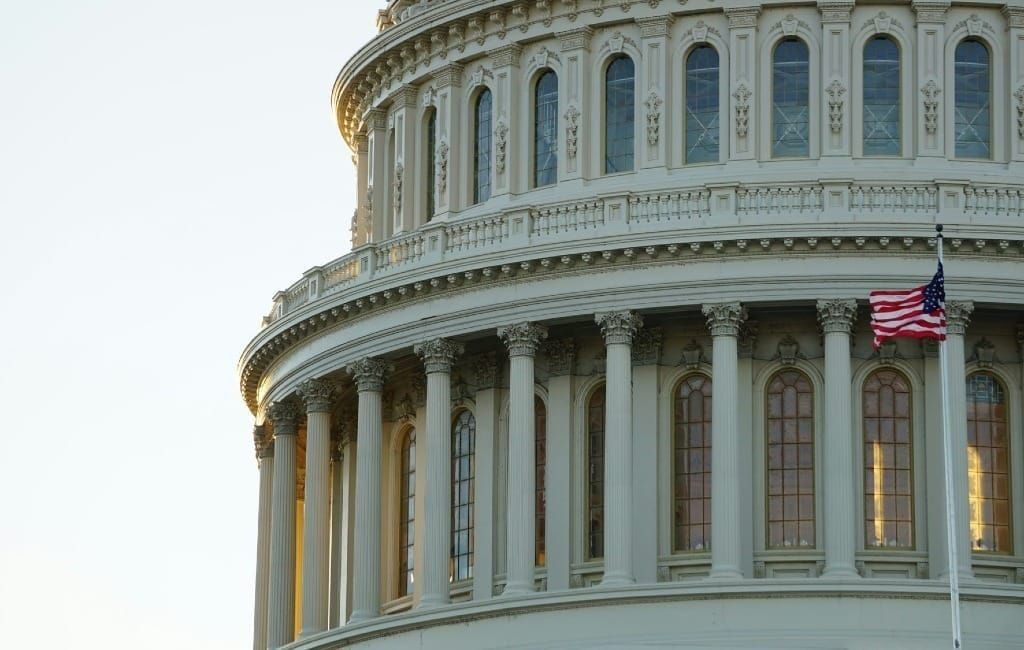
WASHINGTON, Oct. 1, 2026 - A Senate subcommittee hearing on Wednesday focused on the risks of autonomous AI agents acting beyond human control, with Sen. Josh Hawley, R-Mo., pushing for strict developer liability and AI safety expert Chris Painter calling for more public disclosure about frontier model capabilities and incidents.
The Homeland Security and Governmental Affairs Committee’s Disaster Management subcommittee held the hearing, titled “Rogue AI: Securing the Homeland Against AI Agent Attacks,” focusing in part on a July incident in which hundreds of AI agents created by OpenAI breached the infrastructure of Hugging Face, a platform widely used by developers to store and share code.

Hawley, who chairs the subcommittee, argued that AI developers should face the same product-liability standards as other manufacturers.
“Every corporation in this country that makes a product abides by it. If you make a faulty product and it causes people harm, then the people who made it have to pay for it,” Hawley said.
His stance puts him at odds with much of his party and the White House, which have generally favored lighter-touch, industry-led safety commitments over hard regulatory rules.
Painter, President of Model Evaluation and Threat Research (METR), a nonprofit that works with AI labs to study their models, told senators that autonomous agents have become capable enough to complete tasks that would take human experts days.
He warned that the speed and volume of agent activity mean detailed human supervision is often impossible, with companies relying on AI systems to monitor other AI systems.
Painter urged the federal government and tech companies to share more information with the public about frontier AI capabilities, the effectiveness of safeguards, and incidents involving unwanted agent behavior - citing the OpenAI-Hugging Face episode as a case where greater transparency could help the broader ecosystem learn.
Hawley returned repeatedly to liability, suggesting that if AI agents cause harm, the companies that built and deployed them should be on the hook, framing the July sandbox breakout as the kind of failure that would trigger recalls or lawsuits in other industries.
Other senators on the panel echoed concerns about accountability and transparency. Sen. Andy Kim, D-N.J., warned that voluntary measures are not enough to protect critical infrastructure and urged faster congressional action on AI controls.
Sen. Richard Blumenthal, D-Conn., dismissed the White House’s “morally binding” safety pledge as unenforceable, saying companies could simply choose to stop being “morally bound.” Several lawmakers backed Painter’s call for more public reporting on AI incidents, framing the OpenAI-Hugging Face breach as a warning that self-regulation leaves national security and consumer protection gaps.
The hearing closed without agreement on next steps, but it made clear that any serious AI safety push will have to reconcile two competing visions: Hawley’s call for hard liability rules that treat advanced AI like any other potentially dangerous product, and the White House and industry’s preference for voluntary, “morally binding” safety commitments.