Space Experts Call for Government Action as Space Data Centers Emerge
Panelists say we are seeing an ‘evolution in space ecosystems’ that will require international and national cooperation.

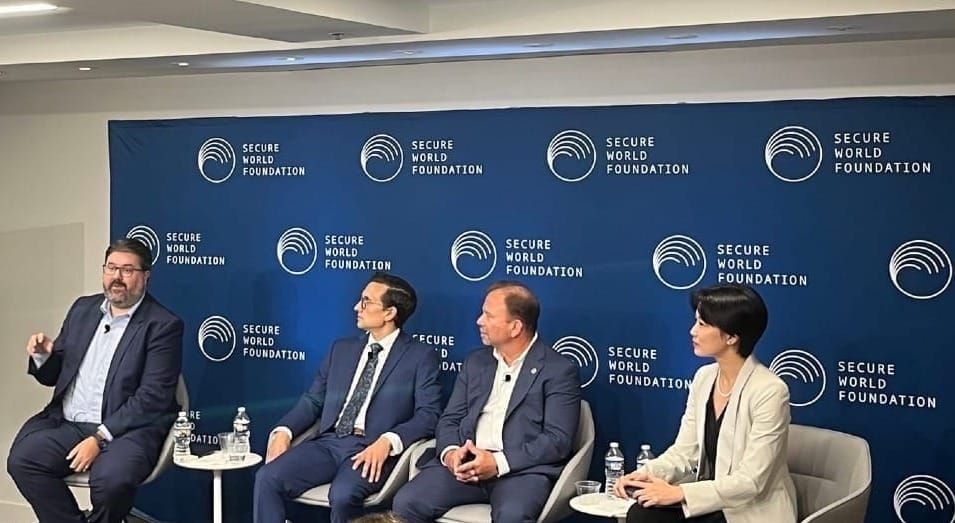
WASHINGTON, July 29, 2026 – As the demand for data centers in space grows, space experts are emphasizing the need for government action.
In a Secure World Foundation space sustainability and orbital data centers panel, space experts discussed the need for adjusting government frameworks and updating regulations to meet the demand for data center satellites.

This year, the Federal Communications Commission has seen a massive increase in orbital data center applications, with Elon Musk's SpaceX seeking to launch one million data centers and Jeff Bezos’ Blue Origin asking for approval to launch 50,000 data centers. Startups like Orbital are seeking to launch 100,000 data centers, and Starcloud is asking for approval to launch 88,000 data centers into orbit.
Data centers are following close behind low Earth orbit satellites to occupy space. Aerospace Corporation Principal Director of Space Enterprise Evolution Ronald Birk said, “We are clearly seeing an evolution of space ecosystems.” He stressed the importance of having regulations that consider the needs of roughly 12,000 space companies launching satellites, saying, “It’s really important to have a viable and trusted model of how all of the systems will operate.”
National Space Policy Lead Analyst for the Office of Space Commerce Matias Cava explained that the U.S. government understands the potential for data centers in space but does not fully understand what it will mean for regulations in areas like the launch process. With the commercialization of space, current frameworks need to be updated, requiring commitment to transparency and dedicated timelines.
The demand for orbital data centers will also require international cooperation in addition to U.S. government action. Starcloud Co-Founder and CTO Ezra Fielden emphasized coordinating orbits among users on a global scale. He said that we need to decide “what side of the road we are driving on” in terms of satellite orbits in terms of dawn-to-dusk or dusk-to-dawn orbits to avoid satellite collisions and congested orbital lanes.
Panelists also emphasized the need for research on the impacts of space commercialization that help inform government regulations and maintain space sustainability. Cava said, “It’s important to think about transitioning from a purely venture into space mentality to an upkeep mentality.”
Research topics mentioned included orbital reentries, graveyard deployments and atmosphere impacts. Planet Labs Director of Government Affairs Jeff O’Neil explained research will help space companies understand how to maintain a sustainable space environment, saying, “As we iterate on the technology, we can iterate on the best practices.”