Orbital Seeks FCC Approval for 100,000 Satellite Data Center Constellation
The five-month-old startup has raised $5 million in pre-seed funding to develop its space-based AI computing platform.

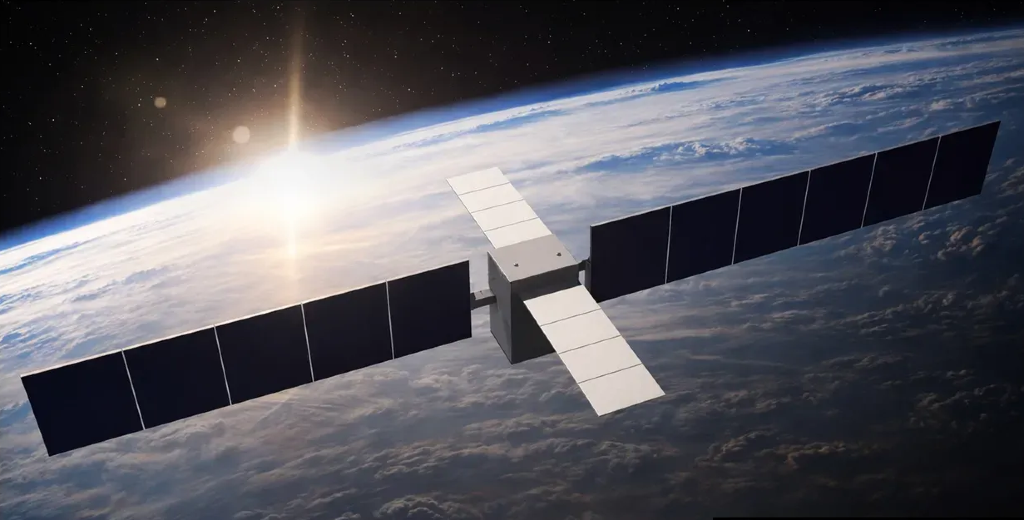
WASHINGTON, July 9, 2026 – Orbital, a five-month-old startup based in Los Angeles, has asked the Federal Communications Commission for permission to deploy up to 100,000 data center satellites.
The application submitted June 24 outlines plans for a constellation that would deliver approximately 10 gigawatts of compute, roughly enough to meet the average electricity demand of about 8 to 10 million U.S. homes, without drawing on terrestrial electricity, land, or water.

The filing comes as massive artificial intelligence data centers on Earth increasingly face delays from lawsuits, land fights, power grid constraints and local opposition. Orbital says placing AI computing infrastructure in orbit would sidestep many of those bottlenecks.
“The demand for AI compute is outrunning what we can reasonably build on the ground – we're short on power, land, and water all at once. Space solves all three,” said Euwyn Poon, founder and CEO of Orbital, in a statement. “We think the next generation of data centers won't be built in the desert – they'll be built in orbit.”
Orbital has raised $5 million in pre-seed funding to develop its space-based AI computing platform. The round was led by a16z Speedrun, the startup accelerator affiliated with venture capital firm Andreessen Horowitz, with participation from a group of early investors including Basis Set, Human Element, Wayfinder, Antler, and others.
Orbital describes its satellites as roughly the size of a refrigerator, but with a solar array the size of a tennis court. The company says future generations of satellites will be able to integrate Nvidia’s Space-1 Vera Rubin module – a radiation-tolerant computer chip built to run AI directly in orbit.
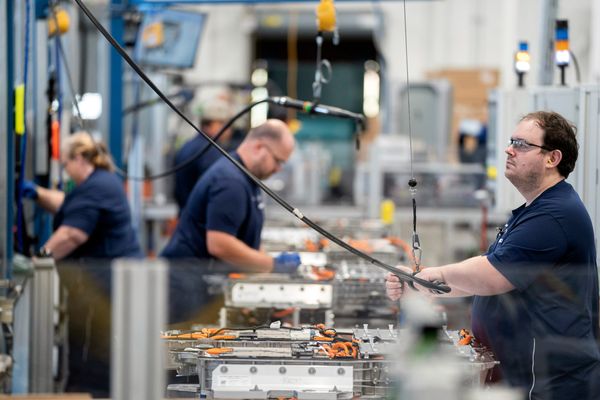
The satellites would be built at Factory-1, a satellite assembly and testing facility in the South Bay region of Los Angeles. To manufacture satellites at a low-cost, and as rapidly as possible in one of the nation’s most expensive labor markets, Orbital expects to rely heavily on automation.
The startup has recruited engineers from companies already at the forefront of the commercial space industry. Orbital's team includes veterans of SpaceX, Amazon Leo, Vast, Northrop Grumman and Millennium Space Systems.
The startup is joining an increasingly competitive race to move computing infrastructure off Earth. Technology giants including Elon Musk’s SpaceX, Google and Jeff Bezos’ Blue Origin, alongside startups such as Starcloud (formerly Lumen Orbit) and Kepler Communications, are looking to build or facilitate satellite-based compute that could harness uninterrupted solar energy and eliminate the need for millions of gallons of water to cool down processors.
Musk on Sunday emphasized the need for orbital infrastructure to prevent AI computing from being held up by Earth’s limitations and regulatory bottlenecks, saying, “Space is the only way to scale at scale,” in a post to X.
In January 2026, SpaceX filed an application with the FCC seeking authorization to deploy as many as 1 million orbital data center satellites. If approved, the constellation alone would be nearly 60 times the roughly 17,000 satellites currently orbiting Earth. The application has drawn pushback at the FCC from competitors and astronomers.
Two months later, in March, Blue Origin submitted its own FCC application for a space-based computing initiative known as Project Sunrise. The proposal calls for a constellation of up to 51,600 satellites designed to function as data centers in orbit.
Others looking to follow suit include Google, through its proposed Project Suncatcher. The Wall Street Journal reported in early May that Google’s parent company Alphabet was in discussions with SpaceX on a potential rocket-launch deal to build orbital data centers.
Despite the flurry of investment, industry experts say questions remain over the technical and economic feasibility of orbital data centers at scale.
A report by global real estate and investment firm JLL finds that the feasibility of orbital data centers ultimately depends on what type of workloads dominate future demand.
Analysts say orbital data centers are more likely to complement than replace terrestrial facilities, with orbital systems handling asynchronous, energy heavy workloads, while Earth based data centers retain dominance in real time computing.
The FCC has not fully approved any proposals for orbital data centers to date.