SpaceX Still at Odds on Sharing Rules with SES, Viasat
Geostationary systems fear loosening rules on LEO providers would create interference.

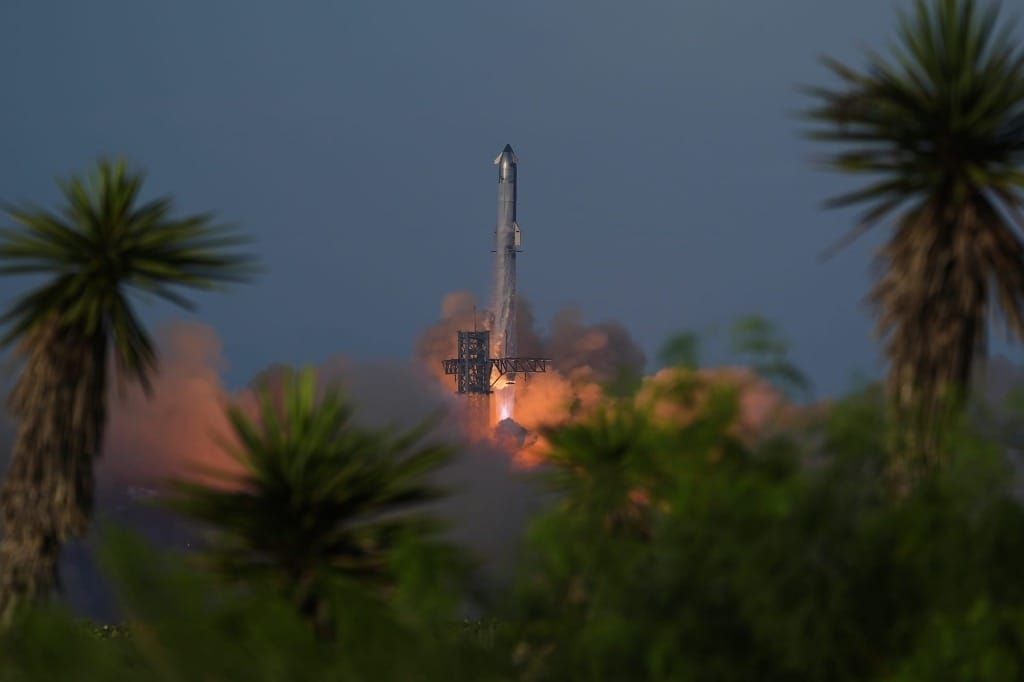
WASHINGTON, March 20, 2026 – SpaceX is still fiercely at odds with incumbent satellite companies over whether federal regulators should revise the rules governing how they share spectrum.
A plan put forward by Luxembourg-based SES “shackles next-generation satellite operations with massive constraints that have been definitively proven to be unnecessary and that demonstrably inflict harm on the rapidly growing millions of Americans that depend on next generation satellite systems for broadband access,” SpaceX told the Federal Communications Commission this month.
Viasat, meanwhile, called a recent SpaceX study on the issue “bad science” that “does not deviate from this misguided path, which SpaceX has followed for years in hopes of convincing regulators to allow it to generate increased interference into [geostationary orbit] networks and other [low-Earth orbit] systems and further entrench its dominant position in space.”

The FCC has since April been considering allowing higher power levels for LEO satellites in the 10.7-12.7 GigaHertz (GHz), 17.3-18.6 GHz, and 19.7-20.2 GHz bands, which are shared by LEO and incumbent geostationary orbit (GSO). International power limits were set decades ago to protect GSO systems, and SpaceX has said relaxing them would dramatically improve its already dominant satellite broadband service.
GSO operators like Viasat, SES, and DirecTV don’t like the idea very much. They fear SpaceX’s Starlink system, already more than 10,000 satellites, jacking up the power would create interference with their constellations.
There isn’t a formal agenda item on the issue for the World Radiocommunication Conference next October in Shanghai, China but experts have said it might still come up.
“It remains possible to modernize satellite spectrum sharing rules at WRC-27, but this will require a focused U.S. effort,” Michael Calabrese, head of New America’s Wireless Future Project, told senators at a hearing this week. New America has supported the effort to loosen restrictions on LEO providers.
In a March 2 letter to the FCC, SES proposed a compromise plan that involved a “periodic implementation process” with regular check-ins “so that any demonstrated issues or constraints can be addressed through data-driven adjustments rather than a complete dismantling of an [equivalent power flux density] framework that has long served GSOs and [LEOs] well on a global basis.”
The company argued it wasn’t clear that the current rules had significantly hampered LEO service, and that the FCC shouldn't completely ditch rules that were functioning as intended – they gave SpaceX room to become the largest satellite operator in the world and adequately protected incumbent GSO systems.
SpaceX strongly disagreed.
“The question of whether the EPFD framework harms consumers by unnecessarily constraining [LEO] services has been definitively resolved: it does,” the company wrote. The fact that LEO operators are growing “highlights how poorly served the public is by a sharing framework that overprotects outdated GSO systems while relegating people that need the superior service provided by next generation systems to second-class status.”
GSO companies Viasat and DirecTV both told the FCC they had issues with SpaceX’s analysis.
In November, Summit Ridge Group founder Armand Musey said upping the power limits now could make it difficult for other LEO broadband providers to enter the market.
“The power levels can probably be increased safely,” Musey said. “It would allow the existing LEOs to get more capacity from their networks, but may actually make it difficult to add additional LEO constellations.”