
Spectrum Fight Flares in Defense Bill Negotiations
Opponents warn outcome could hinder U.S. spectrum auctions and innovation.

Jericho Casper
WASHINGTON, Oct. 17, 2025 – A government spending watchdog organization urged lawmakers Thursday to reject a spectrum provision the Senate included in its annual defense policy bill.
Tucked within the National Defense Authorization Act now headed to conference, the language would allow top military officials at the Defense Department to block modifications to the lower 3 GigaHertz (GHz) and much of the 7/8 GHz bands, frequencies the Pentagon currently uses for radar and weapons systems.
The debate comes as the federal government’s spectrum manager, the National Telecommunications and Information Administration, has been directed to identify 500 megahertz of federal spectrum for reallocation or sharing.
In an op-ed this week, Deborah Collier, vice president of policy and government affairs at Citizens Against Government Waste, said the measure would “jeopardize the ability of the U.S. to remain the global leader in telecommunications.
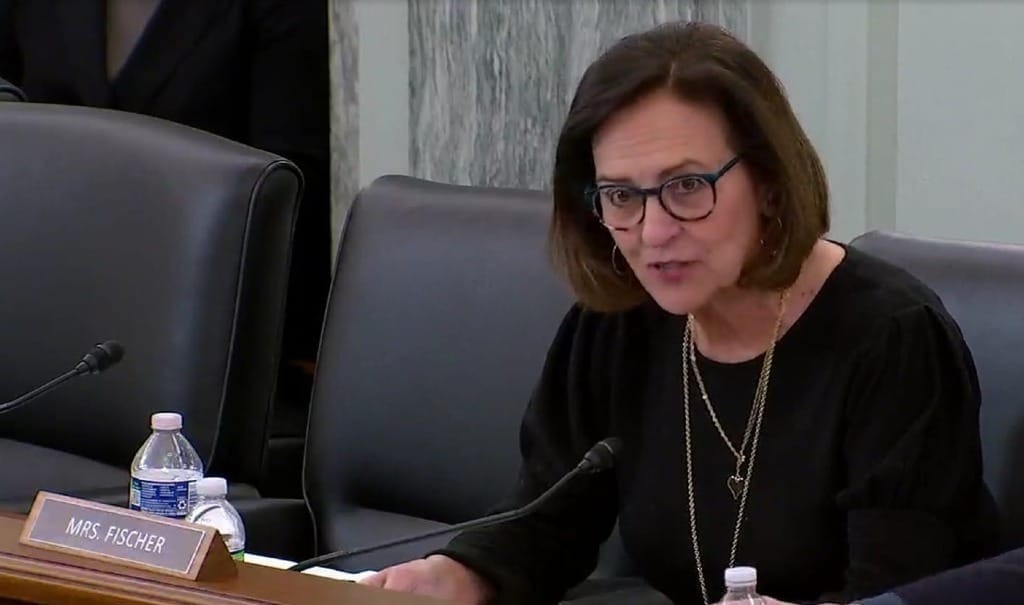
“The already tough battle over federally held spectrum was exacerbated during the Senate Armed Services Committee markup of S. 2996,” Collier wrote. “The committee agreed to an amendment offered by Sen. Deb Fischer, R-Neb., that would allow the DoD to veto any recommendations by the NTIA to either relinquish or share its spectrum allocations with other federal agencies.”
“Finding the necessary 500 MHz of federal spectrum to be auctioned will be difficult at best without the swift cooperation of agencies to give up or share their spectrum, and any obstacles to that objective should be eliminated,” she said.
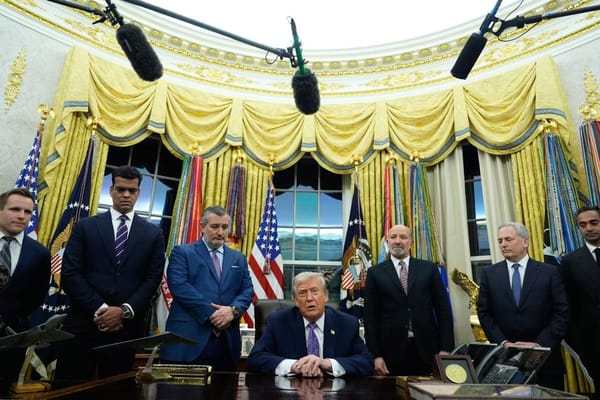
It remains unclear whether the language will make it into the final legislation. The House-passed version of the NDAA contains no such provision. And, Senate Commerce Committee Chair Ted Cruz, R-Texas, the White House, and House Communications Subcommittee Chair Richard Hudson, R-N.C., have all voiced opposition.
Fischer has defended the language, saying it reflects legitimate security concerns. At a recent Senate hearing, she warned that relocating the Defense Department’s radar and satellite systems out of the lower 3 GHz and 7/8 GHz bands could take decades and cost “hundreds of billions of dollars.”
“I agree there are technologies that could make sharing spectrum possible,” Fischer said. But “the DoD must have a seat at the table when its spectrum bands are studied and tested, otherwise we lose them. We risk losing access to this finite resource forever.”
“DoD losing access to its spectrum bands entirely comes with huge risks and will end up costing us more,” Fischer said.
The administration’s One Big Beautiful Bill Act, enacted July 4, directed NTIA to identify 500 megahertz of federal spectrum for reallocation or sharing and tasked the Federal Communications Commission with making 300 megahertz of non-federal airwaves available for commercial auction. It also restored the FCC’s auction authority through 2034.





Member discussion