Spectrum Pulling Cox from Rural Digital Opportunity Fund
Cox’s subscribers trends were worse than expected, New Street analysts said

WASHINGTON, Oct. 30, 2026 – Spectrum is pulling Cox out of a federal broadband expansion program, the company told regulators this week.
Although Cox subsidiaries had built out to “a substantial number” of the 8,212 rural locations they were set to serve under the Rural Digital Opportunity Fund, Spectrum said it was pulling them out “due to challenges, including related to speed testing and service milestone requirements.”

Under RDOF rules, defaulting ISPs can be fined 1.89 times their total average support per location, plus 10 percent of the support already received. FCC data says the company received more than $2.9 million in RDOF support as of this week.
Given the company’s total awarded support of more than $6.6 million, that would put a potential fine at about $12.7 million.
Attorneys for Spectrum, still legally called Charter Communications, wrote the following:
“Charter understands that, by withdrawing from the RDOF program, the Cox Entities will no longer receive RDOF support and may be subject to the Commission’s applicable non-compliance rules. Charter reserves its right to seek relief from such rules on behalf of the Cox Entities, including waiver, as may be necessary.”
The company completed its $34.5 billion merger with Cox Communications in August, creating the largest cable operator in the country.
The company has asked to go by Spectrum, its consumer-facing brand name, since the merger closed. Its legal name will change to Cox Communications in the coming months.
Cox’s remaining unserved locations will be eligible for grants under a supplementary funding round managed by the National Telecommunications and Information Administration.
Spectrum told the FCC it gave NTIA a list of the remaining locations so they would get served through that effort. The process will take months, as NTIA is still finalizing lists of potentially eligible locations, which state broadband offices will refine before taking additional bids.
Cox subscriber trends
Last week, Spectrum published Cox’s subscriber and financial metrics, which weren't previously public given Cox was a private company.
The subscriber losses at Cox were worse than expected, according to analysts at New Street Research.
“It is no surprise that Cox has been losing broadband subscribers but the pace at which they’ve been losing them is above what we estimated,” New Street analyst Vikash Harlalka wrote in an investor note.
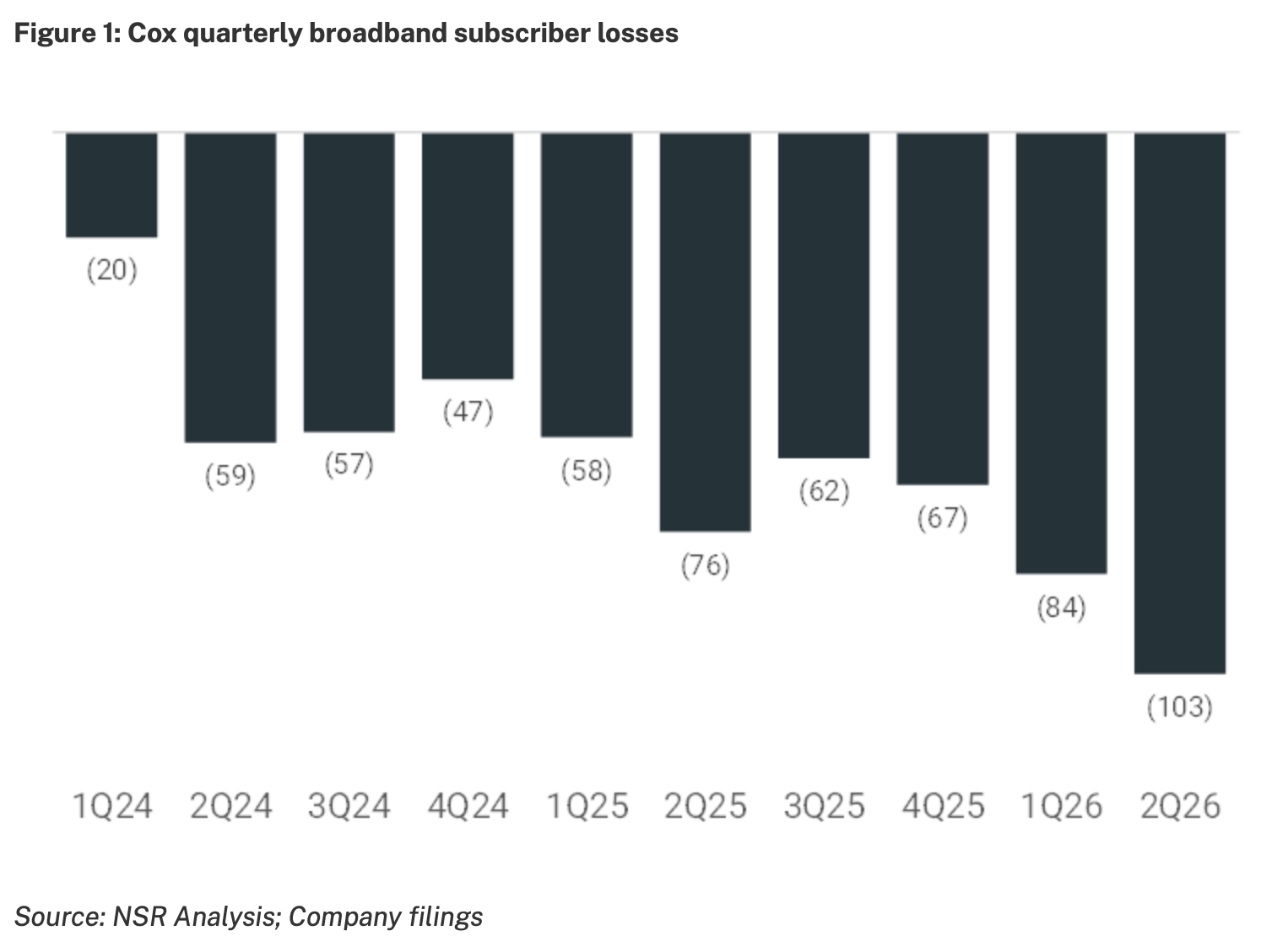
The year-over-year decline in broadband subscribers was three times worse at Cox than Charter before the merger, Harlalka wrote.
That made sense in the context of Cox’s high prices, he wrote. For broadband subscribers, Cox’s average revenue per user was nearly $86 in the second quarter, compared to $70 at Charter.
Cable companies have been buffeted by subscriber losses in recent years amid competition from fixed wireless and fiber, and lowering prices is a step most have been taking in a bid to restore their reputations with customers.
Spectrum will report third quarter results on Friday, Nov. 6.