U.S. Finalizes Spectrum Positions Early for WRC
NTIA said the U.S. delegation would push for expanding the FCC’s satellite sharing rules internationally

WASHINGTON, Nov. 20, 2026 – Federal regulators have finalized the U.S. positions on a slate of issues to be considered at the World Radiocommunication Conference next year.
Officials said that was much faster than usual and would give the U.S. a chance to marshal international support for its satellite spectrum priorities ahead of the conference.
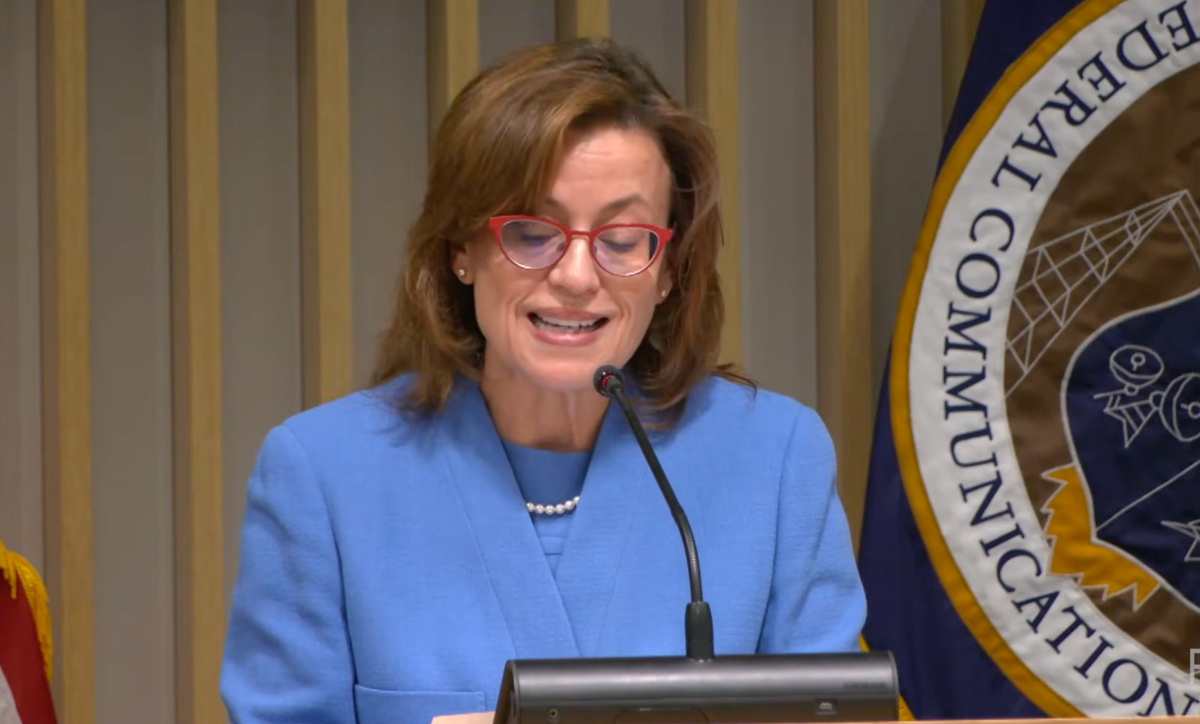
“This is actually a really big deal. We’re very early in the process,” Federal Communications Commissioner Anna Gomez said at the agency’s meeting Thursday. “It strengthens the U.S.’s ability to succeed at WRC, because now it has positions that it can work through the regional processes in order to gain support ahead of the actual conference itself.”
FCC Chairman Brendan Carr agreed. “It’s actually a big deal to get this done,” he said at the meeting.
Gomez led U.S. preparations for the last WRC in 2023. She was confirmed to a spot at the FCC before the conference and was replaced by State Department ambassador Steve Lang.
The FCC worked with other agencies like the National Telecommunications and Information Administration and industry groups to settle on U.S. positions for the conference. Regulators from around the world meet at WRC every four years to decide global spectrum allocations and rules.
Much of WRC-27 will center on satellite communications, an important issue for the U.S. given American firm SpaceX is the world’s dominant rocket launcher and low-Earth orbit satellite operator.
The U.S. nailed down positions on the conference’s 19 main agenda items, It will take those to an upcoming meeting of regulators from North and South America starting Nov. 30, its first chance to start building international support.
In a release, NTIA said it would use WRC agenda items 9 and 10 to push for new satellite spectrum sharing rules modeled on rules the FCC instituted earlier this year “to be adopted at WRC-27 on an interim basis in several key bands, alongside longer-term, broader reforms.”
Although it’s not technically on the agenda, analysts have said that should be a big priority for the U.S at WRC-27. International rules on spectrum sharing between LEO satellites and geostationary satellites are considered by U.S. regulators to unnecessarily hinder LEO performance for the sake of protecting legacy geostationary systems.
The FCC unilaterally departed from the international rules in April, but LEO systems operated by SpaceX and others would see a capacity boost worldwide if they were expanded.
“Our position is straightforward: modernizing satellite power limits internationally will unlock additional capacity, accommodate new innovations, and deliver faster broadband to more users while maintaining the current ITU system for network filings and appropriate protections against harmful interference,” NTIA Administrator Arielle Roth said earlier this month.
She said NTIA had already been advocating on the issue during trainings with regulators from developing countries.
The FCC said the U.S. delegation would support item 1.13, which would expand direct-to-device service on a secondary basis to mobile, but oppose item 1.14, a similar measure that would expand dedicated direct-to-device or MSS allocations.
The agency said item 1.14 “focuses on bands that are heavily used for terrestrial mobile services” and that the secondary use framework in item 1.13 was preferable in that case.
Some analysts had hoped the U.S. would support both measures. The U.S. has been making an effort to expand direct-to-device spectrum access as demand for airwaves to support the service has skyrocketed.
“As debate over additional MSS allocations moves to the international stage, the United States should strongly support efforts to identify new MSS spectrum bands that can be allocated globally or regionally for D2D services,” New America’s Open Technology Institute wrote in a June report.
China on board?
WRC-27 will be held in Shanghai, China.
Ruth Pritchard Kelly, a professor of telecom law at the Universities of Nebraska and Mississippi and former legal advisor at SES and Eutelsat, said over the summer that China might be on board with the U.S.’s push to update satellite sharing rules, even though the change would benefit American companies.
China is launching its own large LEO constellations, she noted during a June webinar, which would also stand to see improved capacity if the rules were adopted internationally.
“With the WRC taking place in China next year, what coalition might be built there?” she said. “Unexpected, but not out of the realm of possibility.”
Gerald Adams, a fellow at the University of Pennsylvania law school, said during the webinar that Columbia would likely be on board as well, since it had helped SpaceX with some field tests, but that Brazil would likely oppose it given its government-backed geostationary system.