
States Race to Meet Federal Broadband Funding Deadline
States race to meet a federal deadline for the $42.5 billion BEAD program amid dramatic cost reductions.


WASHINGTON, September 29, 2025 – State broadband officials scrambled to finalize proposals for the federal government's $42.5 billion Broadband Equity, Access and Deployment program, with most facing a September 4, 2025, deadline that has revealed dramatic cost reductions and highlighted implementation challenges.
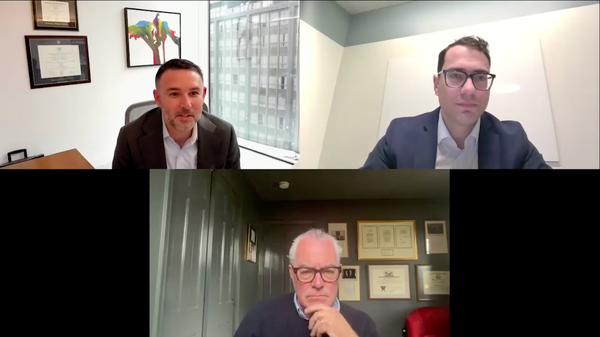
Maine submitted a proposal requiring just $48 million in federal funding to connect its remaining unserved locations, a significant drop from an original estimate of $271 million. Andrew Butcher, President of the Maine Connectivity Authority, said the state will serve approximately 24,000 locations at an average subsidy of "about $2,080 per location."
"We're seeing 85% of the awards going to fiber, 14% to LEO or low Earth orbit satellite and about 1% to hybrid fixed cable," Butcher said during a Sept. 3 Broadband Breakfast Live Online webinar. The cost reduction represents "about $200 million in deployment cost savings" resulting from competitive bidding and previous state investments that reduced the scope of unserved areas.
 Broadband Breakfast
Minnesota faces different challenges as it works to serve 76,000 locations under the federal program. Bree Maki, Executive Director of the Minnesota Office of Broadband Development, said the state's current broadband definition differs from federal requirements, creating confusion for communities and providers.
"Our definition of unserved and underserved is not the same as BEAD's," Maki said while traveling between stakeholder meetings. "So explaining that to people and providers and communities of why they may be getting nothing new has also been a challenge."
Minnesota's preliminary results show 56% fiber and coax deployment, 26.5% satellite, and 17.5% licensed fixed wireless, though Maki cautioned those numbers "will be changing even until 11:59 tomorrow."
Texas received an extension until Oct. 27 to handle the program's largest allocation of $3.3 billion and most complex logistics. Bryant Clayton, Broadband Development Office Director in the Texas Comptroller's office, said the state received "over 4,500 applications from 70 different applicants" covering more than 3,300 project areas.
"At least 98% of our project area units received at least one application and we had about $6.4 billion in funding requests across all of those applications," Clayton said, explaining why Texas needed additional time for evaluation.
The compressed timeline has limited public engagement opportunities. States were required to provide only seven days for public comment on their draft proposals, reduced from a previous 14-day requirement.
"A 7-day window for comment on the benefit of the bargain round is not really fair to anyone," Butcher said, noting that meaningful community engagement requires more extensive outreach beyond formal comment periods.
All three state officials expressed concerns about workforce availability and supply chain constraints as deployment accelerates. They also highlighted growing interest in how remaining BEAD funds might support complementary infrastructure investments beyond direct broadband deployment.
"An estimate of about $15 billion out of the BEAD program is going to be eligible for the enabling investment functions," Butcher said, referring to potential uses for cost savings such as workforce development and supporting infrastructure.
The program represents the largest federal broadband investment in U.S. history, aimed at connecting all Americans to high-speed internet by 2030.




Member discussion