T-Mobile Content with FWA, Not Eyeing Cable, Exec. says
CFO Peter Osvaldik also reiterated he saw satellite operators as complementary rather than competitive.

Jake Neenan
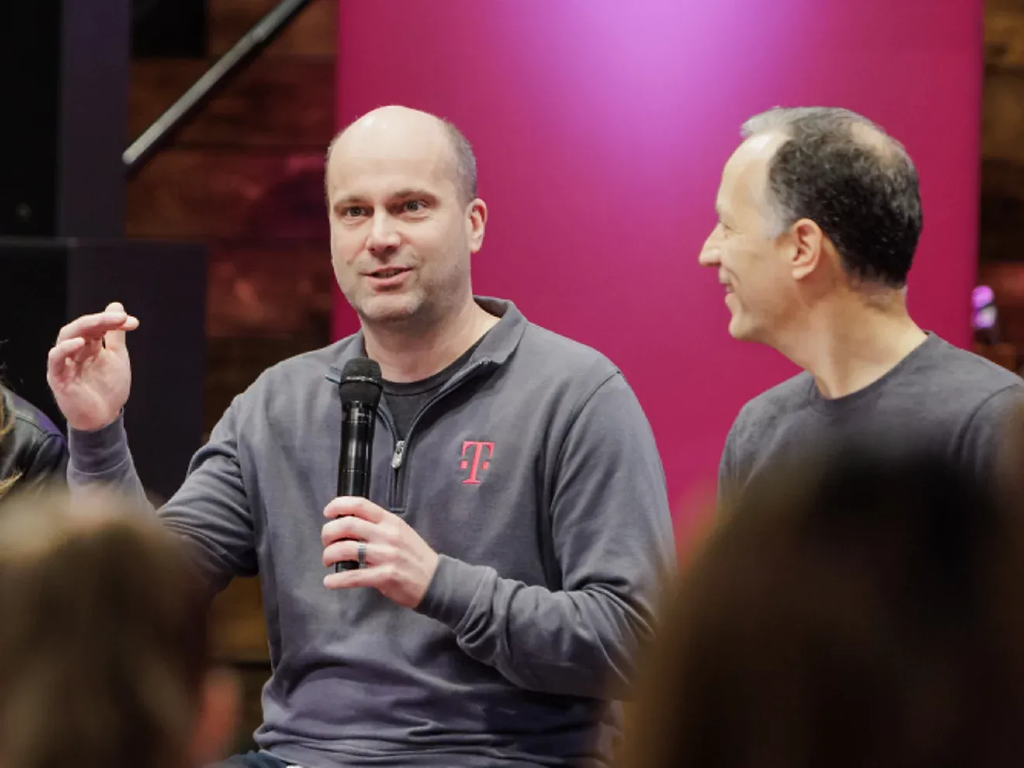
WASHINGTON, May 13, 2026 – T-Mobile sees fixed wireless as a long-term alternative to a nationwide wireline network, CFO Peter Osvaldik said Wednesday.
He spoke at a MoffettNathanson conference in New York. Asked by Craig Moffett, the firm’s founder, if fixed wireless was “a fully sufficient alternative” to wireline footprint, and “indefinitely, permanently a solution,” Osvaldik didn’t hedge.
“We certainly see it that way,” he said.
T-Mobile CEO Srini Gopalan said on the company’s earnings call last month he was often asked about whether the company would consider acquiring a cable network (he also said the company was uninterested). Moffett said he asked because he also got the question.
But T-Mobile’s target of 15 million fixed wireless customers by 2030 is enough of a scaled home broadband solution for the carrier, Osvaldik said.
The other major ISPs are betting on convergence — customers bundling fixed and mobile broadband — as a means of attracting and retaining customers, but T-Mobile has said it’s not as excited about the idea, and doesn’t feel the need to buy a massive wireline network in pursuit of it.
The cable giants already have sprawling nationwide wireline networks, and AT&T and Verizon are racing to deploy as much fiber as possible to catch up. But T-Mobile has gone after smaller fiber operators through joint ventures. It’s targeting 12-15 million fiber passings, compared to AT&T’s goal of 60 million and Verizon’s 40-50 million.
But Osvaldik said customers were willing to buy services regardless of whether they were bundled, and that the fiber joint ventures were focused on money making in their own right rather than being part of a larger push for converged customers.
“5G broadband is a big cornerstone for our broadband strategy as well, but it isn’t some sort of mythical, ‘Well, we need convergence,” he said. The company has about 9 million fixed wireless subscribers.
He said a report from Moffett last year that found fixed wireless takes up a majority of traffic on Verizon and T-Mobile’s networks wasn’t far off, although he said the service took up less than the estimated two-thirds of T-Mobile’s capacity.
Verizon CEO Dan Schulman, for his part, said earlier Wednesday that Moffett was wrong and that fixed wireless was “a minority” of traffic, but didn’t specify the proportion.
Osvaldik said it was a smart use of bandwidth, despite being a small portion of revenue, because fixed wireless capacity was lying fallow anyway.
“You would have been paying for all of it, vis-à-vis the spectrum, the site leases, all of that,” he said, “and not monetizing it at all.”
Osvaldik was also asked about reports that German firm Deutsche Telekom, which has a controlling stake in T-Mobile, was considering a merger. He didn’t expand on CEO Srini Gopalan’s statement last month that the deal would require approval from holders of a majority of the other T-Mobile shares.
Satellite
Like Verizon CEO Dan Schulman at the same conference Wednesday, Osvaldik said he did not see low-Earth orbit satellite services as direct competitors.
“We don’t see this really as a competitor, but more as a complement,” he said, touting the carrier’s spectrum assets and network of cell sites.
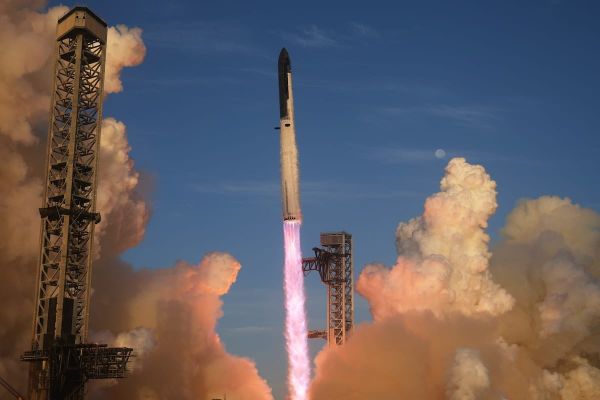
T-Mobile currently offers its T-Satellite service through a partnership with SpaceX using T-Mobile spectrum. Gopalan said on the company’s earnings call it was seeing less usage than anticipated.
The carrier also launched a new business broadband service, called SuperBroadband, that uses SpaceX’s Starlink as a backup to provide redundancy.
Osvaldik said the carrier wasn’t seeing much à la carte purchasing of T-Satellite, which is also available to AT&T and Verizon customers, and it functioned better as a means of getting T-Mobile customers to buy higher priced plans with more perks.
He also reiterated the company wasn’t interested in a mobile virtual network operator (MVNO) deal in which a satellite company would provide mobile service on its infrastructure. He repeated the reasons Gopalan and other carrier CEOs gave, which is that the deal wouldn’t obviously open up a new market of customers T-Mobile couldn’t otherwise access.
Asked by Moffett if that meant there was a chance, Osvaldik laughed and said, “That’s not what I’m saying at all. I’d say the opposite.”