Texas Governor Halts Data Center Grid Connections Pending Audit
The data center interconnection freeze is separate from the state's halting the disbursements of billions in broadband funding.

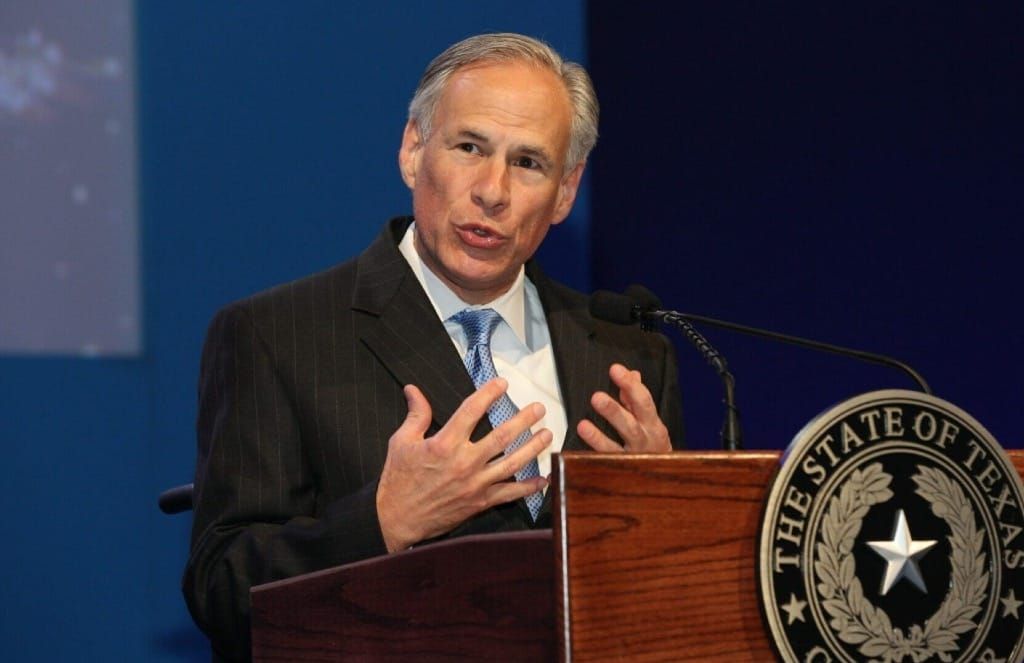
August 13, 2026 – Texas Gov. Greg Abbott (R) has ordered the state’s electric grid regulators to conduct a sweeping audit of every data center project seeking to connect to the Texas grid.
The governor’s order halts new interconnections until the review is complete and raises uncertainty for a wave of artificial intelligence driven data center construction already underway in the state. More than 1,800 projects are currently seeking grid connections.

The state’s grid operator, the Electric Reliability Council of Texas, is currently evaluating more than 474 gigawatts of requests to connect to the Texas grid, and roughly 90 percent of that demand comes from data centers, the governor’s office said.
That figure dwarfs the state’s current capacity. Texas set a record for hourly peak demand of 91 gigawatts on July 22, breaking the previous record of 85.5 GW.
The order directs ERCOT and the Public Utility Commission of Texas to verify and audit all data center projects moving through ERCOT’s interconnection process. Any project that does not comply with requirements set by the two agencies will be denied a connection to the grid.
Legal analysts say Abbott's order could complicate deals that are already signed and under construction.
A client alert published by law firm Morrison Foerster flagged a list of open questions facing developers, lenders and utilities on active projects, including how the order affects closing conditions, funding conditions and “final completion” deadlines written into existing contracts; and whether lenders remain obligated to keep funding a project if power availability has become uncertain.
What the audit will look at
Abbott’s Aug. 3 order builds on an earlier June 10 directive establishing statewide standards to ensure data center development does not come at the expense of Texas families or communities.
Under the order, the PUCT and ERCOT must collect the following information from each data center project before it can proceed:
- Whether the project relies on state or local financial incentives, including tax abatements or grants;
- Whether the facility will draw power from the ERCOT grid or supply its own generation;
- Whether the facility will use its own water supply for cooling or draw from local aquifers;
- What steps the project is taking to limit impacts on neighboring communities, including noise, lighting, traffic and emergency response coordination; and,
- Ownership and controlling-interest information, including compliance with Texas’s Lone Star Protection Act, a law restricting land and infrastructure ownership by certain foreign entities.
On Wednesday, Abbott’s office announced that Core Scientific, Vantage Data Centers and SB Energy had committed to comply with the standards, joining a growing list of companies signaling compliance in the days since the audit order – including Meta, OpenAI, Google, Amazon, Oracle, Digital Realty, QTS Data Centers, Mara and Skybox Datacenters.
Not every company has stayed in: one unnamed data center developer told the state it could not meet the standards and ended its project before construction began, according to the governor’s office. Separately, a proposed data center in Henderson County was scrapped after developer Diode said it could not meet the guidelines.
An unprecedented wave of demand
Texas already has hundreds of data centers in some stage of development. The state is currently the second largest market for the facilities in the country, behind Virginia, and is poised to take the top spot.
A Texas Tribune analysis in June counted at least 248 data center projects statewide, while a separate tracking service put the state’s total footprint, including those operating, under construction and planned, at 591 facilities as of July, representing roughly 91,000 megawatts of tracked capacity.
Dallas-Fort Worth, Austin, Houston and San Antonio are the state’s four major data center hubs, though some of the newest, largest developments, including the 4.5 gigawatt Stargate project backed by OpenAI, Oracle and SoftBank, is happening in rural Abilene county with fewer local zoning controls.
The data center interconnection freeze is not the only Texas infrastructure freeze. Texas has temporarily halted the disbursements of billions of dollars in federal broadband funding as the state’s broadband office undergoes a forced leadership change.
Both pauses trace back in part to Abbott’s office: Broadband Office Director Bryant Clayton has said a rule change ahead of the BEAD awards came at the direction of the governor’s office.
States pushback on data center growth
The Texas order arrives amid a broader national wave of state level pushback on data center growth.
New York became the first state to enact a statewide moratorium in July, when Gov. Kathy Hochul signed an executive order pausing environmental permits for data centers of 50 megawatts or larger for up to a year.
Hochul’s order represented a narrower version of the Responsible Data Center Development Act, which passed the state Legislature in June but which Hochul declined to sign, opting for her own executive action instead.
At least 14 other states had data center moratorium bills pending in their legislatures as of this year, while thousands of local governments have enacted or considered their own construction pauses.