Three Former FCC Commissioners Advocate to Continue E-Rate Program
Commissioners argue necessity of E-Rate program as billions could be on the line.

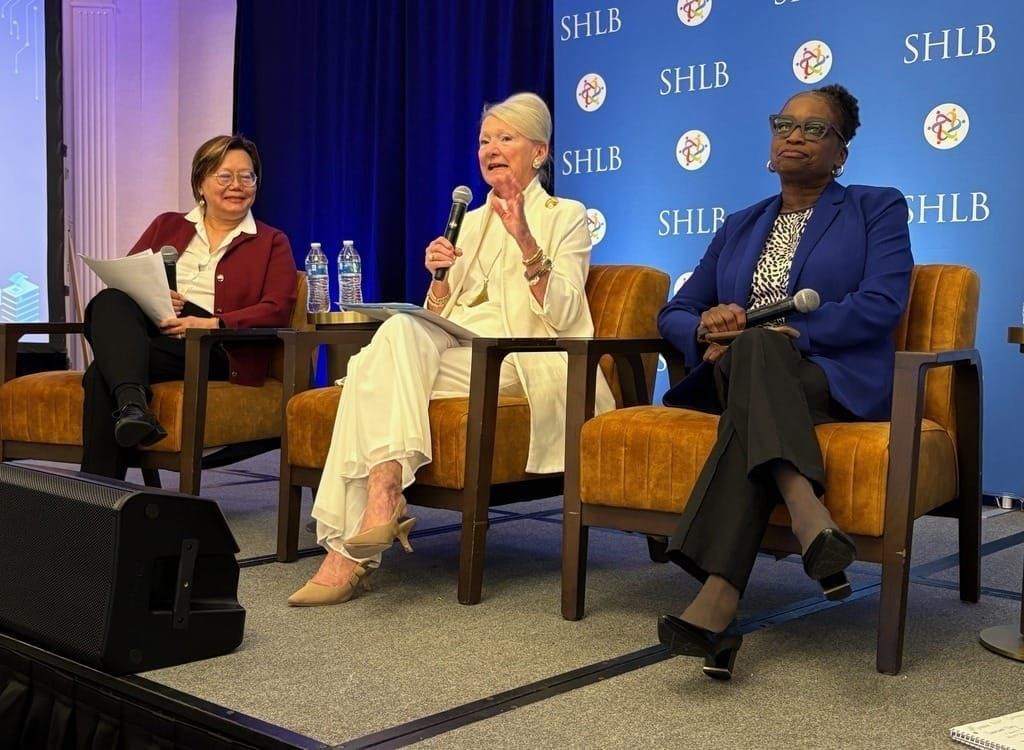
WASHINGTON, Oct. 8, 2026 – Three former commissioners of the Federal Communications Commission have passionately affirmed the necessity of $2.4 billion E-Rate program.
At the annual AnchorNets 2026 conference, hosted by the Schools, Health & Libraries Broadband Coalition, former commissioners attested to the importance E-Rate has for schools, children, and rural communities.

Currently, the FCC is reviewing whether to limit, change, or sunset E-Rate, a federally funded program that provides up to 90% discounts on basic internet access for eligible schools and public libraries.
As of now, FCC Chairman Brendan Carr has claimed that the E-Rate program is exacerbating children's increasing screen time, resulting in more distractions and significant learning loss.
However, critics argue that Carr’s approach will instead lead to schools making cuts elsewhere in attempts to preserve what little connectivity they can afford, especially for communities in rural and low-income areas.
Rachelle Chong, the first Asian-American FCC commissioner, noted the inconsistent logic behind screen time concerns. Chong, a Republican, was appointed by President Bill Clinton and served in the FCC when the E-Rate program was first approved, arguing, “E-Rate is a connectivity program to the school, and to the library, and rural healthcare. It doesn’t take a personal smartphone out of that kid's hand.”
A report from data researcher Hari Narayanan’s site, BroadbandClusters, corroborated this, emphasizing that 77 percent of E-Rate’s funding goes to the highest-need schools and libraries.
Deborah Taylor Tate, former FCC commissioner under President George W. Bush, focused on how E-Rate supports children in need. Advocating against possible E-Rate termination, Tate encouraged the audience to use her slogan. “We need to build America now, starting in kindergarten,” Tate emphasized on Thursday.
Mignon Clyburn, former FCC commissioner appointed under President Barack Obama, emphasized that technological knowledge should be considered a necessity in the age of AI. The former first acting female FCC chairwoman and former FCC commissioner from 2009-2018 said, “A connectivity gap can become an opportunity gap, and eventually a workforce readiness gap.”
A study released from SHLB by Battle Group on Thursday further found that cutting E-Rate would result in annual wages in the U.S. falling by $2.8 billion as well as tax revenue by $1.5 billion.