Towers Worry Dish Bankruptcy Could Drain Escrow

Crown Castle objected to an intercompany loan

Towers Worry Dish Bankruptcy Could Drain Escrow
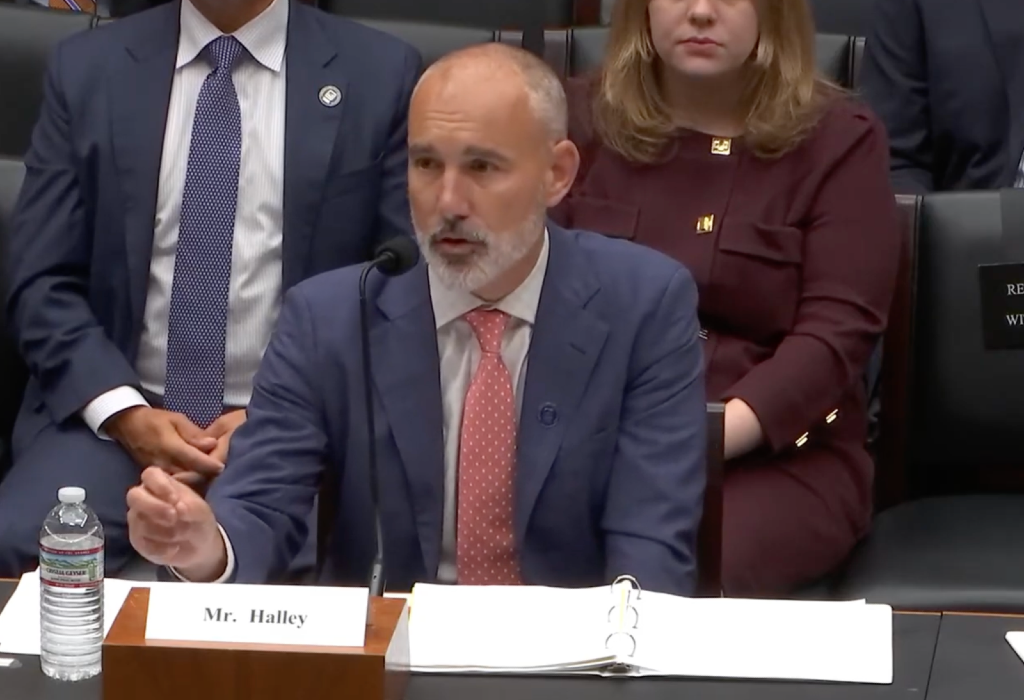
Screenshot of WIA CEO Patrick Halley testifying at a 2025 House hearing

WASHINGTON, July 21, 2026 – Federal regulators have required EchoStar to set aside $2.4 billion to pay potential damages to infrastructure companies suing over unpaid contracts. 

Those former business partners now worry EchoStar subsidiary Dish Wireless could drain that trust as part of its bankruptcy.

Wireless Infrastructure Association CEO Patrick Halley met Thursday with Federal Communications Commission lawyers to outline the group’s concerns, according to a filing posted Tuesday.

“DISH is now taking actions in bankruptcy that — among other things — attempts to turn the Trust into a slush fund for itself and to harm the very infrastructure companies that the Trust was designed to protect,” WIA wrote in the ex parte.

The trust was a condition of the FCC approving EchoStar’s $42.6 billion spectrum sales to AT&T and SpaceX. Tower companies lobbied the agency aggressively for it, fearing they wouldn’t be able to collect damages from Dish after it decommissioned its wireless network.

More than 170 companies are suing Dish over unpaid leases and contracts, collectively for billions of dollars. Dish argues it isn’t at fault and doesn’t owe them anything, as its parent’s spectrum sale was forced by FCC pressure and Dish won’t receive the proceeds.

Dish Wireless and Dish DBS, EchoStar’s pay-TV unit, have both filed for bankruptcy. As part of that, Dish Wireless said it owed EchoStar billions after EchoStar financed its network build out starting in 2020. The total intercompany loan due to EchoStar was reduced to $8.8 billion from more than $13 billion after Dish’s Boost Mobile brand was transferred to another subsidiary of EchoStar.

Ahead of the bankruptcy filing, that loan balance was transferred to Dish DBS and put in a separate trust for the benefit of DBS bondholders, explained Anton Gorbunov, a senior analyst at Octus. 

He said the maneuvering was much more complicated than usual, but the upshot was that holders of DBS debt, who have already agreed on a restructuring plan for DBS, now also hold a large amount of Dish Wireless debt and could thus vote to clear both bankruptcy plans, even if other parties like the towers disapproved.

“I’ve been in this industry for a long time,” he said. “That is the first time I’ve seen something like this in the U.S.”

The towers worry the $2.4 billion trust set aside to pay them will be entirely used up paying down the $8.8 billion in debt Dish Wireless now owes to DBS bondholders.

Tower objections

In the U.S. Bankruptcy Court for the Southern District of Texas, tower companies are objecting to that $8.8 billion intercompany loan, arguing it shouldn’t be counted when debtors ultimately vote to confirm Dish Wireless’s bankruptcy plan.

Crown Castle, which is seeking the most damages at $3.5 billion, filed the objection on Thursday. The company argued the loan was effectively engineered to benefit EchoStar in the bankruptcy proceedings.

That’s partly because under the plan, which would be easily approved with the DBS votes, the tower companies would recover “pennies on the dollar” compared to what they’re seeking, Crown Castle said.

EchoStar would also set the bidding price on Dish Wireless’s network assets and potentially buy them itself. In doing so, it would acquire Dish’s ability to sue to unwind any of the intercompany transactions that led up to the bankruptcy. 

The buyer could at least potentially argue some of those didn’t give Dish a fair deal, Gorbunov said.

“If you sell them to EchoStar, they’re not going to sue themselves, right?” he said.

The next hearing in the case is Thursday. Consideration of certain issues were postponed until after that hearing to give the towers time for discovery.

EchoStar declined to comment on either filing.

Popular Tags