Trump Announces Data Center ‘Rate Payer Protection Pledge’ at SOTU
Trump says his administration negotiated with large tech companies to produce their own energy for data centers.

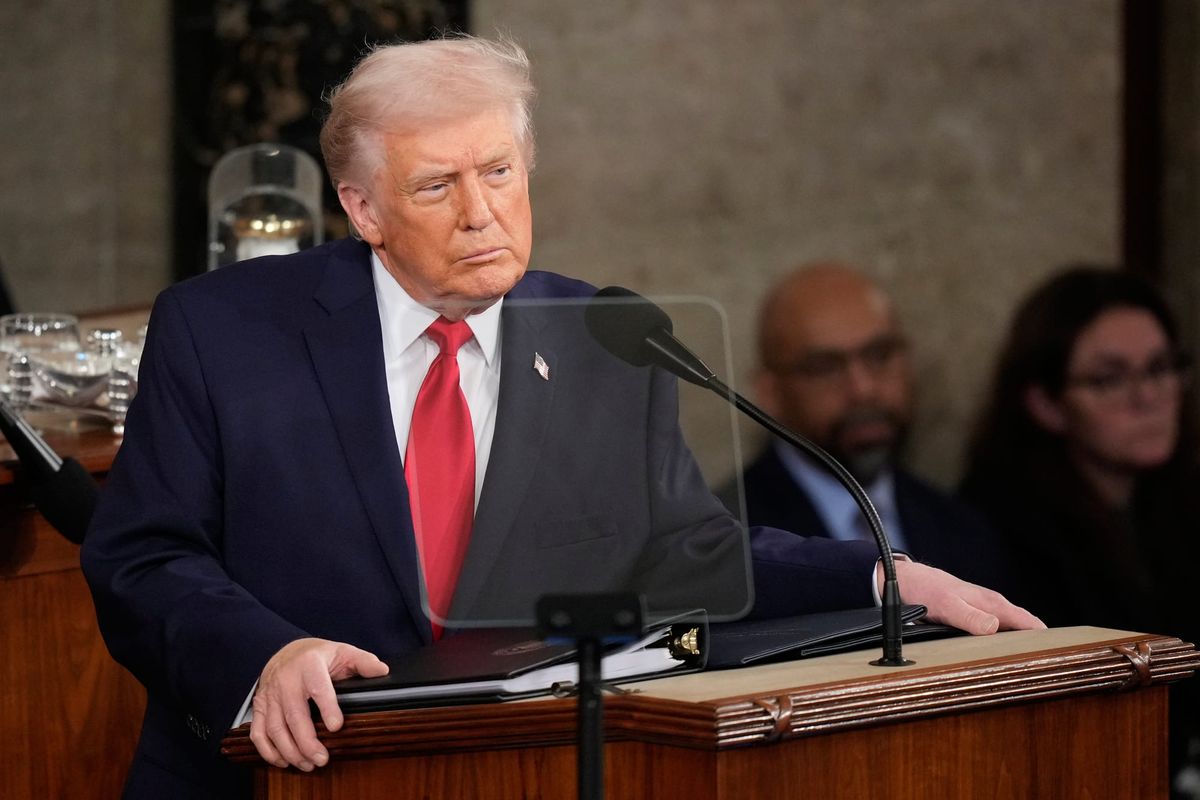
WASHINGTON, Feb 25, 2026 – President Donald Trump briefly spoke about his administration's work negotiating a “Rate Payer Protection Pledge” during his State of the Union address on Tuesday.
This "pledge" will obligate tech companies to supply on-site energy for data centers to prevent rate hikes for consumers in the communities where they are located, according to the president.
“They can build their own power plants as part of their factory, so that no one’s prices will go up and in many cases, prices of electricity will go down for the community, and very substantially then,” Trump said. “This is a unique strategy, never been used in this country before."
However, many tech companies like Google, Amazon, and Microsoft have already made public commitments to paying for grid upgrades and on-site energy generation.
At the INCOMPAS policy summit on Feb 5, Brianne Miller, senior director of energy and infrastructure policy at Microsoft, touted the company’s “Community First AI Infrastructure Initiative,” a five-point plan which commits Microsoft to ensuring that the company does not raise consumer rates by adding additional electricity supply.
Later at the same event, Ray Fakhoury, policy manager for Amazon Web Services, also stressed the importance of “front of meter” power generation to supply data centers and additional power to the grid to ensure communities see the benefits of data centers to their wallets.
Marsden Hanna, the head of energy and sustainability policy for Google took it a step further at the State of the Net Summit on Feb. 9, noting that Google has not only committed to fund additional power generation but also pay for upgrades to the grid to make it more efficient while driving down prices.
It remains unclear how Trump’s pledge will actually affect what is already underway.
The mobile carriers said proposed FAA rules were too restrictive.
Lawmakers and experts say the USF funding mechanism is unsustainable and outdated.
Roth said spectrum policy, international cooperation, and AI-driven networks will shape next-generation connectivity.
Officials urged stronger coordination to counter China in global spectrum policy.
Member discussion