Trump’s Cyber Strategy Prioritizes Protection Against ‘Foreign Adversaries’

Cyber Director Sean Cairncross says the administration wants stronger AI security and fewer regulatory burdens on tech companies.

Trump’s Cyber Strategy Prioritizes Protection Against ‘Foreign Adversaries’
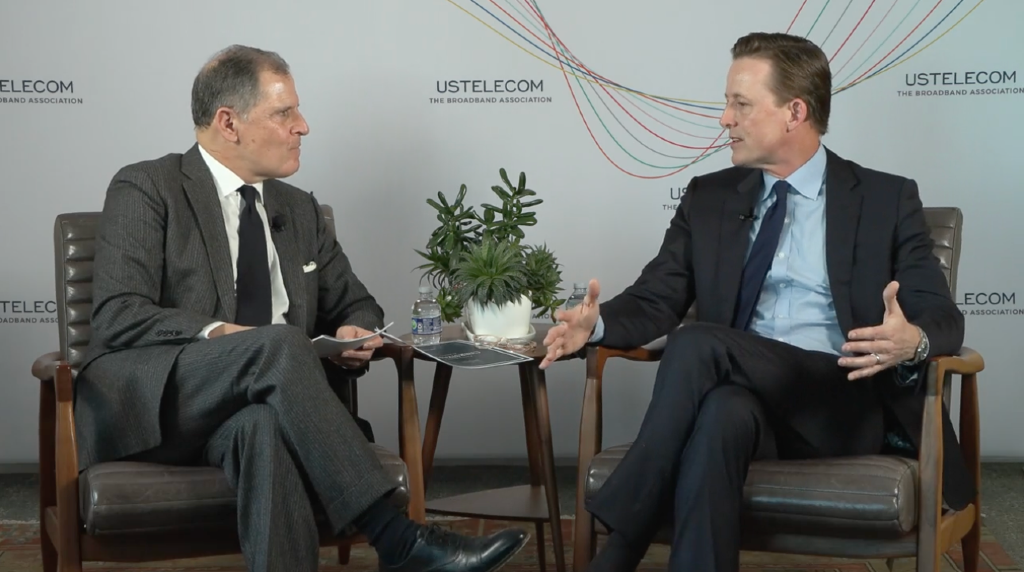
Photo from left: USTelecom CEO Jonathan Spalter and White House National Cyber Director Sean Cairncross at a forum Monday, by Kelcie Lee.

WASHINGTON, March 9, 2026 – Protection from “foreign adversaries and criminals” is the first and foremost goal in the president’s new Cyber Strategy document, said White House National Cyber Director Sean Cairncross

At USTelecom’s Cybersecurity Innovation Forum on Monday, Cairncross talked to USTelecom CEO Jonathan Spalter, calling for increased partnership with the private sector, reinforced cybersecurity for artificial intelligence and technological growth and protection from foreign enemies and espionage. These goals were highlighted in President Trump’s Cyber Strategy for America document, released Friday, which consisted of six pillars of action for cybersecurity. 

“President Trump is making very clear that if you seek to harm Americans or you seek to harm America’s interests, you will face an American consequence and the same is true in cyberspace,” Cairncross said. 

According to Cairncross, there has been a mindset shift within the federal government that adversaries and “transnational criminal organizations” can no longer operate without cost. He also noted that this is an interagency effort, working under the White House, and with the Department of Justice, FBI and Department of Defense to ensure strategy that will “make a dent in their operations.” 

The U.S. will react, he said. "Whether it’s nation states conducting espionage, squatting our critical infrastructure, ransomware actors, scam centers, whatever it is, if they are seeking to do us harm, we need to impose a consequence,” Cairncross said. 

In addition to cyber security, Cairncross said outreach between the federal government and private sector professionals was essential for protecting technology. Cairncross called on private sector CEOs to start conversations in “really securing our systems,” while the government seeks to reduce the regulatory burden for these companies. 

To ensure the country’s win in the artificial intelligence race, Cairncross also said he hopes to implement a balance of security and innovation that won’t cause friction in preventing faster deployment of technology. 

“We’re not looking to push a compliance checklist on industry and essentially blameshift and say, ‘Well, you didn’t do enough,’” Cairncross said. “We’re looking to work together to say, ‘What do we need to do to better protect industry from foreign adversaries and criminals, and how can we create the space for industry to react?”

Spalter pointed out the timely Cyber Strategy document in regards to war in the Middle East, and emphasized the long-term and short-term importance of these goals. When it comes to ongoing conflict, Cairncross said he will continue looking for cyber security threats and remaining vigilant. 

Cairncross also noted the hope to create pilot programs to ensure faster deployment of new technology and critical infrastructure. 

“As President Trump has made clear, he expects results,” Cairncross said. “And he’s empowered the team under him to go get ’em.”

Member discussion

Popular Tags