
ULA Launches 29 More Amazon Leo Satellites
Fifth mission advances constellation as deployment timeline looms.

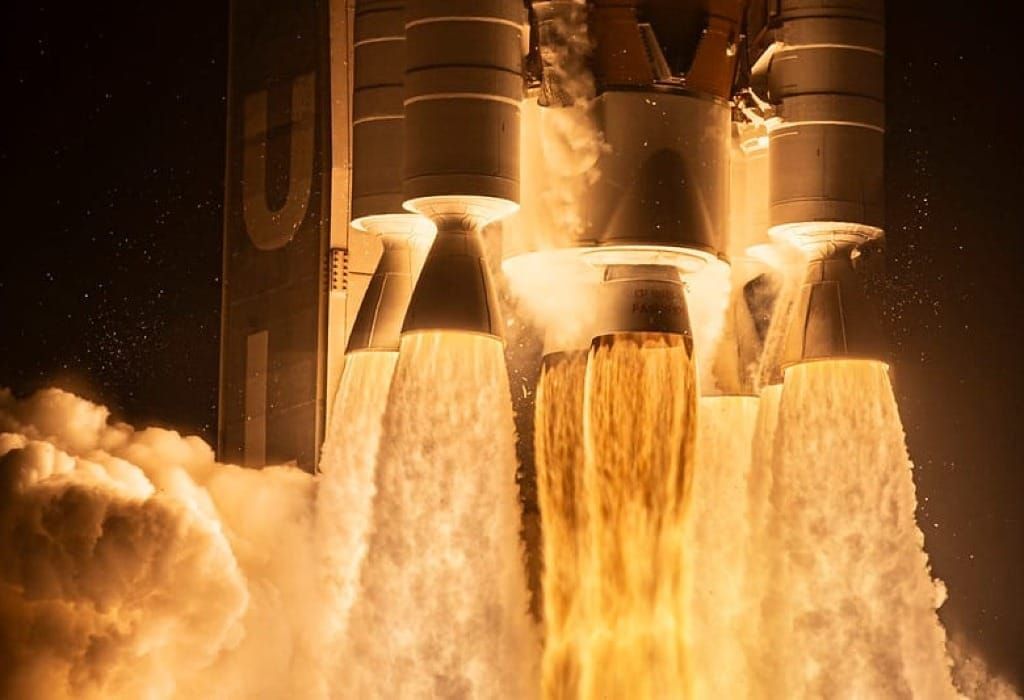
WASHINGTON, April 6, 2026 – United Launch Alliance successfully launched 29 Amazon Leo satellites early Saturday, marking the fifth mission in Amazon’s effort to build a global low-Earth orbit broadband network.
The Atlas V rocket lifted off from Cape Canaveral Space Force Station at 1:46 a.m. EDT, bringing the total number of Amazon Leo satellites deployed to 241 across multiple launch providers.
United Launch Alliance is one of several companies supporting Amazon’s launch efforts, alongside providers including SpaceX and Arianespace.

The Leo constellation is designed to eventually include more than 3,000 satellites to provide high-speed internet service worldwide, particularly in unserved and underserved areas.
“Connecting the world begins with liftoff,” Gary Wentz, ULA vice president of Atlas and Vulcan programs, said in a statement. “Each mission contributes to Amazon’s overall goal of building out the Leo constellation.”
The launch comes as Amazon faces pressure to scale deployment. The company must meet federal milestones requiring a significant portion of its satellite constellation to be in orbit by mid-2026.
ULA has several additional launches planned, including the Leo 6 mission scheduled for later this month. The broader deployment agreement includes multiple Atlas V launches and dozens more missions using ULA’s next-generation Vulcan rocket.
While Amazon has accelerated its launch cadence in recent months, its network remains far behind competitors like SpaceX’s Starlink, which already operates thousands of satellites and serves millions of users worldwide.






Member discussion