
Under Louisiana’s New BEAD Plan, 80% of Locations Will Get Fiber
That's down from 95% under the state's Biden administration plan

August 8, 2025 – Louisiana is still planning on funding fiber to most of its eligible homes and businesses under the Broadband Equity, Access, and Deployment program, but not as many as the first time around.
After an additional round of bidding mandated by the Trump administration, the state is looking to connect 80 percent of its BEAD locations to fiber. That’s down from more than 95 percent under the plan it produced under the Biden administration.
Louisiana released a draft of its final spending proposal under the $42.45 billion program for public comment Friday, closely following the release of Virginia’s plan on Thursday. Getting the document approved by the Commerce Department is the last step before states can start funding projects.

Virginia’s proposal would also get fiber to 81 percent of its eligible locations.
Elon Musk’s satellite provider SpaceX is set to receive $7.7 million to serve more than 10,000 locations in Louisiana, nearly 9 percent of the state’s eligible count and up from about 2 percent under the state’s previous plan. The company committed to spend an additional $22 million on the projects.
Again, the biggest winner in the state would be a consortium of local fiber providers, taking home more than $378 million to serve 68,500 locations. The broadband office said 82 percent of its nearly $500 million in deployment spending was going to in-state ISPs.
“We carefully designed and ran a process as part of our ‘Benefit of the Bargain’ award round to minimize costs, maximize results, and prioritize projects that can be easily scaled with the necessary capacity to support real-time emerging needs and long-term demands,” Veneeth Iyengar, executive director of that state’s broadband office, said in a statement. “I am pleased to share that this process worked.”
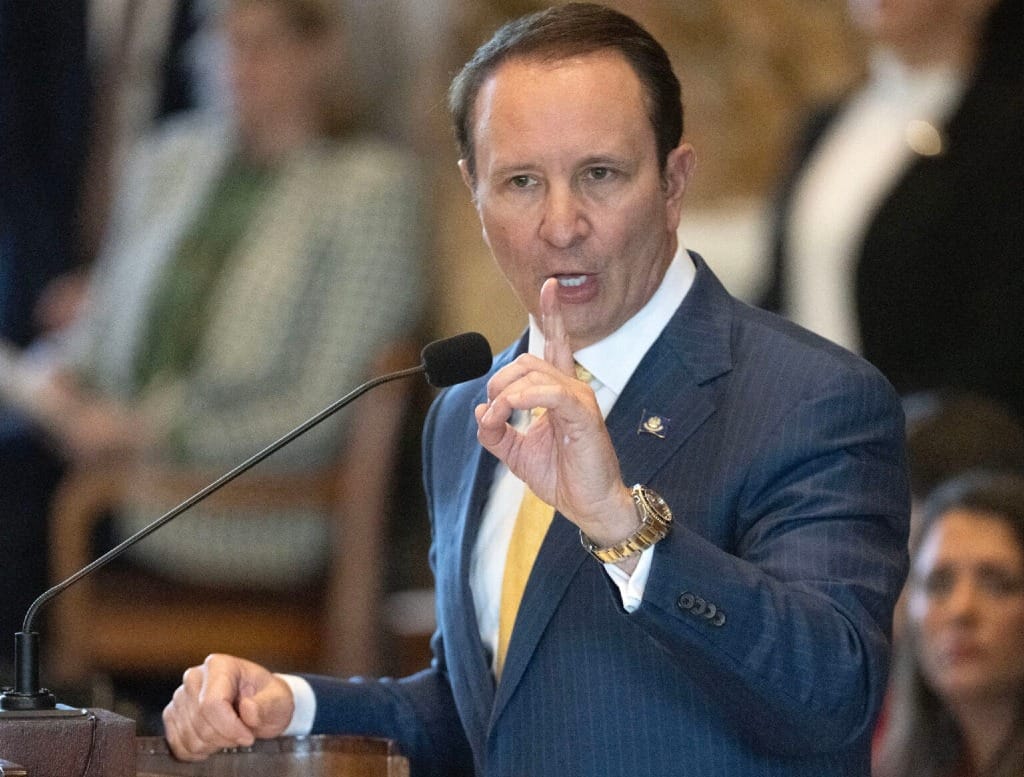
In January Iyengar and Louisiana Gov. Jeff Landry cited the state's progress on BEAD in a letter to Commerce Secretary Howard Lutnick.
The Trump administration issued new rules for the program in June, rescinding federal approval of Louisiana’s spending plan and those of two other states. The new policy eliminated an explicit preference for fiber and made it easier for other technologies like satellite to compete on the basis of deployment cost, where fiber is at a disadvantage.
High deployment costs were repeatedly cited Lutnick as a prime reason for changing the rules and requiring another slate of bids. Louisiana said it delivered on that, taking its average per-location cost down from $5,300 to $3,900 and refusing to give more than $8,000 in support for any single location.
That saved the state about $250 million over its Biden administration plan, the broadband office said. Louisiana would now have more than $855 million of its $1.355 billion BEAD allocation left over, but it’s not clear what will happen to that cash.
State had been set to receive $750 million BEAD-supporting funds.
The state had originally been planning to spend nearly $750 million in left over BEAD money on initiatives like telehealth, digital skills training for small businesses, and precision agriculture equipment and trainings, but, like in Virginia, no nondeployment activities was mentioned in Louisiana’s draft final proposal.
The Trump administration rescinded the federal greenlight from any nondeployment uses of BEAD funds in June – including some now-halted projects that were already underway – and has yet to release new guidance, which it says is forthcoming.
States are in something of a holding pattern waiting for that guidance. Not all of them are optimistic they’ll ultimately get to use the BEAD money their new plans save, despite the law that created BEAD saying at least efforts to promote broadband adoption were allowed.
Under the new rules, some states have reported fiber providers that applied the first time being less interested in resubmitting materials under less favorable rules, while others have been able to maintain participation. Bidding data from states that have released it show SpaceX and Kuiper have been bidding aggressively in some places.
Louisiana’s total count of BEAD locations fell to about 125,000 from nearly 140,000 during its Biden-era bidding round. Data from the broadband office said most of those taken off the list were removed from the Federal Communications Commission’s location database.
All states’ final proposals are due September 4. The Commerce Department is planning on reviewing and approving them all within 90 days of that deadline. Louisiana’s grant data showed the state expects to finalize agreements with providers shortly after that, on Dec.15, 2025.
Priority projects
Exactly how much funding gets shifted away from fiber and toward fixed wireless and satellite will depend on how states interpret the Trump administration’s definition of a priority project, which gets first consideration for a given area even if it costs more than a non-priority application.
The Infrastructure Act, which created BEAD, defined a priority project as one that meets the program’s minimum speed and latency standards and can “easily scale speeds over time” to meet future connectivity needs and support 5G deployments.
The Biden administration had determined that only applied to fiber and categorically pushed other technologies, which have lower maximum capacities, to non-priority status.
The Trump administration has now asked states to make the determinations themselves on an application-by-application basis, opening the door to other technologies receiving the designation and potentially beating out fiber applicants that would require more funding.
Louisiana said SpaceX’s satellite applications were treated with priority in almost all cases where the company was selected for funding, aside from one project to serve 458 locations. The state’s draft proposal said that it contracted with technical experts to review applications and judge the evidence provided for scalability claims, and required applicants to have a certified engineer sign off on that evidence.
The broadband office said its evaluation took into account which parts of the state were ill-suited to wireless service because of tree cover, high population density, and other factors.





Member discussion