
Upper C-band Incumbent SES: Don’t Auction More Than 160 Megahertz
The Federal Communications Commission had proposed selling off as much as 180 megahertz in the band.

Jake Neenan
WASHINGTON, Jan. 21, 2026 – The largest satellite incumbent in the upper C-band is asking the Federal Communications Commission to clear no more than 160 megahertz for auction to the mobile carriers.
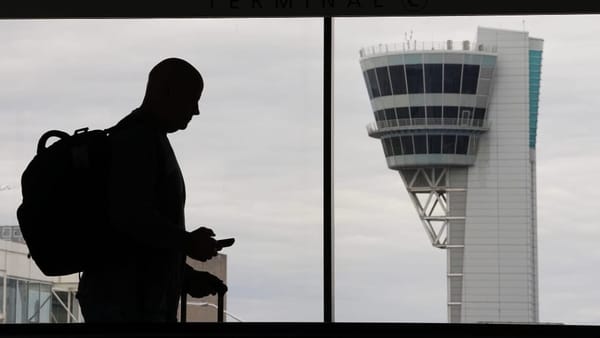
The agency had proposed selling off as much as 180 megahertz, which is what the aviation industry said next-generation airplane altimeters can accommodate safely. Altimeters measure a plane’s altitude, critical information for pilots and air traffic controllers, and operate just above the upper C-band, or at 3.98-4.2 GigaHertz (GHz).
“Clearing the maximum 180 megahertz proposed in the [FCC proposal] leaves satellite operators with only 20 megahertz of C-band downlink, which is insufficient to operate a standard C-band satellite transponder,” SES wrote in comments posted Wednesday.
“This limited bandwidth would severely limit the services that can be supported in the remaining C-band, both from a quality and capacity perspective, especially for SES’s media customers, including those providing important live coverage of sports and other important events.”
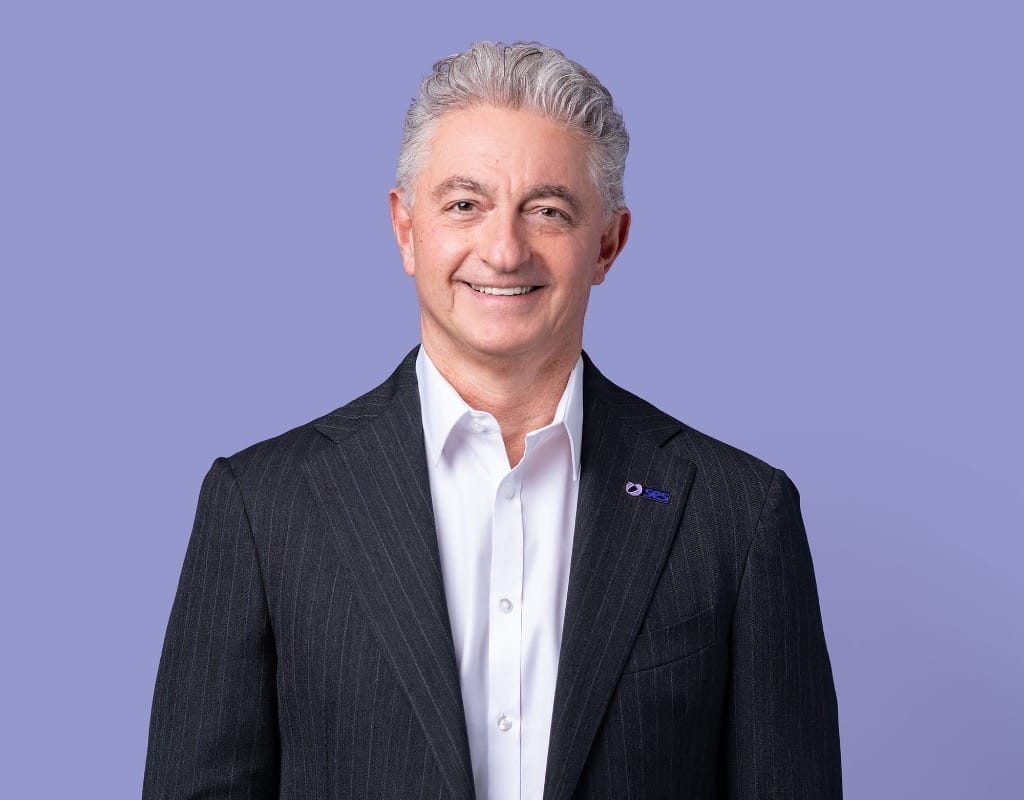
Luxembourg-based SES, led since 2024 by CEO Adel Al-Saleh, acquired Intelsat last year and became the largest operator in the upper C-band. The company provides video distribution services to broadcasters in the band.
By law, the FCC has to sell at least 100 megahertz of the band by July 4, 2027. Comments came in Tuesday and Wednesday on the agency’s proposed rules for the auction.
The National Association of Broadcasters, whose members use the video services currently provided in the band, said the agency should auction no more than the required 100 megahertz. Any more than that would require service to be moved to other bands, rather than packed to a smaller part of the upper C-band, which would be costlier and potentially disruptive, NAB wrote.
Acceleration payments
SES and fellow incumbent Eutelsat said the FCC should offer extra payments for incumbents that vacate spectrum quickly, like the agency did with the lower C-band auction in 2020, in addition to relocation and repacking costs normally covered by auction winners.
Both companies said without acceleration payments the clearing process could take ten years, but Eutelsat said it could clear as much as 130 megahertz in three years if it were given incentive payments.
CTIA, the wireless industry trade group, was actually on board with that. Carriers had paid for a $9.7 billion pool to incentivize incumbents to clear the lower C-band.
“This effort succeeded,” the group wrote. “All five eligible incumbent space station operators elected accelerated relocation, enabling rapid 5G deployment in the Lower C-band.”
Consumer advocacy groups Public Knowledge and New America’s Open Technology Institute said the FCC should avoid more acceleration payments. They characterized the idea as an unnecessary windfall, since the main obstacle to carriers using the airwaves will be the aviation industry developing and installing new altimeters.
“We urge the Commission to be very reluctant to duplicate this framework in a manner that effectively uses the value of the public airwaves to give an unnecessary windfall to licensees that are being relocated because they are not making the highest and best use of the spectrum they occupy,” the groups wrote.
Altimeter retrofits
A4A, which represents the major U.S. Airlines, said the agency should require auction winners to also pay for the necessary altimeter retrofits and replacements that will be necessary, since current equipment couldn’t handle any mobile use in the upper C-band.
The Federal Aviation Administration estimated in a recent proposal that the total cost of the upgrades could be about $4.5 billion. A4A said it was still trying to get a solid estimate of the cost with its members and equipment manufacturers.
The group wrote that the FCC should also provide – via auction winners – acceleration incentive payments to aircraft operators that swap their gear on faster timelines.
Mobile-satellite service
SpaceX said the FCC should direct-to-cell satellite service across the entire C-band, either via deals between satellite providers and carriers that own the spectrum, or through satellite companies using the airwaves directly on a lower priority basis outside mobile deployment areas.
Public Knowledge and OTI agreed with SpaceX on this point, at least with respect to the spectrum ultimately auctioned for mobile use.
“A type of ‘use it or share it’ authorization for D2D service in areas where the Upper C-band is not in use for mobile terrestrial service would help to facilitate more robust seamless connectivity, potentially across every geography and consumer handset irrespective of which MNO provides a user’s mainstay terrestrial service,” the groups wrote.
If incumbent satellite companies are relocated, SpaceX wanted access to the upper portion of the band, which it said it could use without interfering with altimeters. The consumer groups wanted the FCC to consider allowing direct-to-devices providers to share the top 120 megahertz of the band regardless.
Tribal licensing window
Consumer advocates and Tribal leaders had pushed the FCC for a licensing window in which Tribal governments and ISPs could apply for free licenses over Tribal lands. The FCC held such a window in its 2.5 GHz auction during the first Trump administration.
The FCC’s upper C-band proposal asked about another Tribal licensing window, a result of edits pushed for by FCC Commissioner Anna Gomez, but Navajo Nation president Buu Nygren wrote he wasn’t convinced the agency was seriously considering the idea.
“Frankly, the [proposal] reads as a call for commenters to differentiate the Upper C-Band auction from the 2.5GHz auction, essentially asking commenters to give reasons why a TLW is not appropriate here,” he wrote.
He said a Tribal window was necessary to ensure airwaves were put to use on Tribal lands, which tend to be sparsely populated and thus, he argued, not carriers’ top priority for deployment.
CTIA, now led by Ajit Pai, the FCC chair that oversaw the 2.5 GHz auction, has opposed a Tribal licensing window.
Sharing
WISPA, which represents small and wireless ISPs, said the FCC should make any upper C-band spectrum that isn’t sold available for sharing. Many WISPs use shared spectrum like the 6 GHz band or CBRS to provide rural broadband.
“Such opportunistic use could be managed through proven dynamic frequency management techniques to protect licensees and incumbent users both inband and in the adjacent 4.2-4.4 GHz band,” the group wrote.
The approach was endorsed by Monisha Ghosh, an engineering professor at Notre Dame and former FCC CTO, and other researchers.
“The Spectrum Access System (SAS) developed for CBRS can be easily extended to determine appropriate power levels for new devices in this band such that no harmful interference occurs to both in-band ([fixed-satellite service]) and adjacent band (altimeters) incumbents,” they wrote.




Member discussion