
White House Adviser Pledges to Protect Spectrum Critical for Wi-Fi
U.S. won’t 'go backwards' on Wi-Fi leadership, even after Congress dropped 6 GigaHertz (GHz) protections in reconciliation bill.

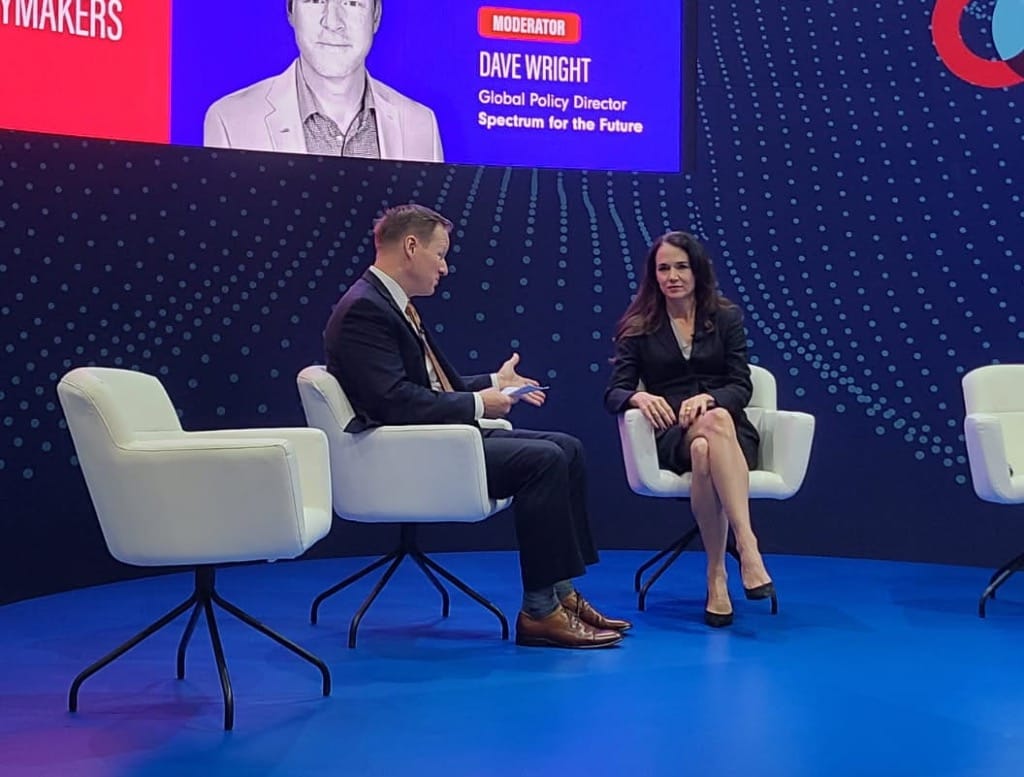
WASHINGTON, Sept. 30, 2025 – A White House economic adviser reaffirmed Monday the administration’s commitment to protecting the 6 GigaHertz (GHz) band for unlicensed use, even as Congress presses federal agencies to free up hundreds of megahertz for auction.
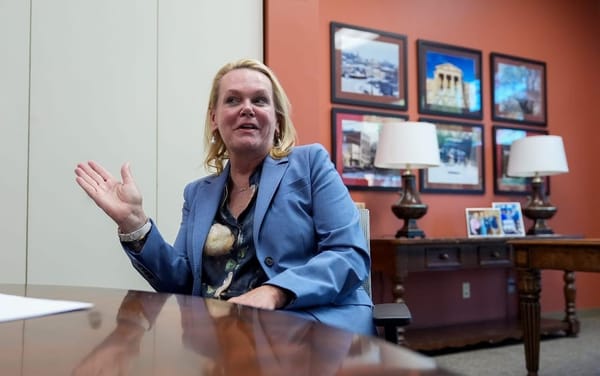
“A number of us in this administration were very intimately involved in designating that band,” said Robin Colwell, deputy director at the White House National Economic Council, speaking at the 2025 SCTE TechExpo. “We fought to get it, and I don't understand why anybody would think we're trying to go back on that now.”
In a conversation with Dave Wright, global policy director for Spectrum for the Future, Colwell tried to quell concerns that arose after explicit protections for the 6 GHz and Citizens Broadband Radio Service bands, included in the House version of the reconciliation bill, were removed in the Senate.
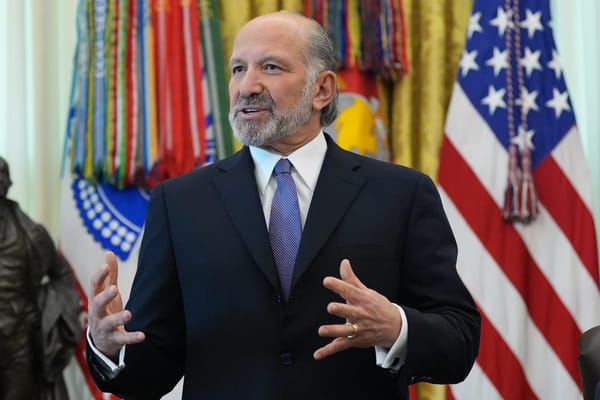
“We fought tooth and nail to get that spectrum, and it was so that we could become the worldwide leader in Wi-Fi,” Colwell said. “You saw the President. We want to maintain our leadership here.”
The legislation, signed into law in July, required 800 megahertz of spectrum for licensed auctions. Colwell said the administration remains committed to an “open” approach to spectrum policy, favoring flexibility over strict carve-outs or protections for certain bands.
“We are hoping to be able to open up even more spectrum than what the bill says to other technologies,” she said. “But the more we get tied down in terms of what we’re allowed to look at, or what we’re allowed to consider in terms of modifications, the harder that gets.”
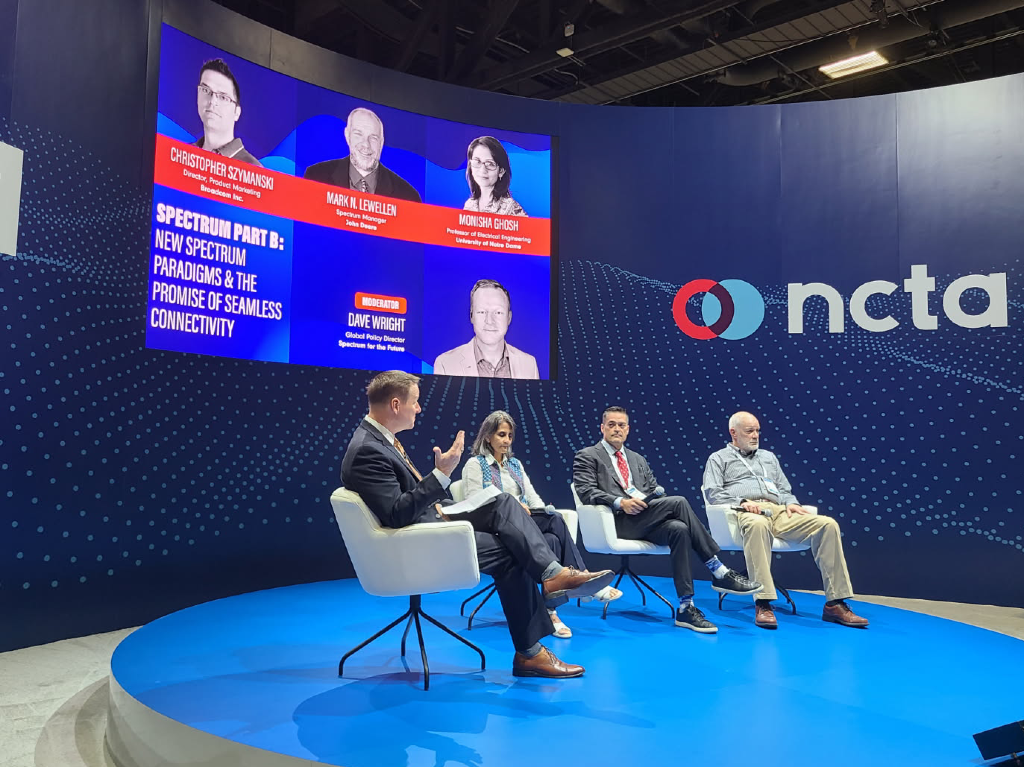
However, panelists in a subsequent discussion moderated by Wright, argued the administration should not simply be promoting licensed auctions, but also expanding shared-use models.
Shared-use 'just works'
“Both of these examples you just heard about – 6 GHz and CBRS – are shared bands,” said Monisha Ghosh, professor of electrical engineering at University of Notre Dame. “There is a huge advantage that comes with sharing. You don’t have to pay incumbents. You don't have to wait for them to vacate the space. You can just layer on another use, on that same band.”
“The lessons that we've learned,” Ghosh said, “is that this just works.”
Chris Szymanski, director of product marketing at Broadcom, said 6 GHz Wi-Fi has been a runaway success, with hundreds of millions of devices already shipped and U.S. adoption outpacing Europe two- to three-fold.
“I’ve never seen adoption like this,” Szymanski said, warning that any effort to revisit the band would risk U.S. Wi-Fi leadership.
He pointed to the automated frequency coordination (AFC) system which Broadcom partnered with Cisco and Meta to develop. The cloud database prevents interference with incumbent microwave links in the 6 GHz band.
The system allows standard-power Wi-Fi to operate in large venues such as stadiums and campuses by automatically checking which frequencies are available at a given location and assigning them to access points in real time. Without it, 6 GHz Wi-Fi would be restricted to “low-power indoor” use only.
John Deere uses CBRS to run private LTE and 5G
Mark Lewellen, spectrum manager for John Deere, described how the company uses CBRS licenses to run private LTE and 5G in its factories. An early adopter of CBRS, the company reserves spectrum slices so employees can connect indoors through a neutral-host arrangement.
“T-Mobile, Verizon and AT&T all have 20 megahertz each indoors at our facilities,” Lewellen detailed. “The neutral host then takes that, translates it into their public spectrum and connects to their public network.”
The agreement keeps proprietary industrial data secure while ensuring workers can use their personal phones on the factory floor. “I believe that we're the first industrial company to do that,” he added.
He noted why CBRS was essential: many Deere plants are in rural areas without reliable macro-tower coverage, and even if a tower exists, the signals don’t penetrate Deere’s metal-roofed buildings.
In a separate interview, Wright told Broadband Breakfast that CBRS now has more than 420,000 base-station radios deployed – exceeding the combined small-cell deployments of the nation’s three largest wireless carriers, with just a fraction of the spectrum.
“If you look at reports from the Global Mobile Suppliers Association, which is Ericsson, Nokia, all the handset manufacturers and all the people who supply cellular equipment, they say the U.S. is far in the lead on private networks, and it's due to CBRS,” Wright said.
'Barriers to entry are pretty much non-existent'
“Other countries are following the lead, but we're still way out front, because anybody can deploy a CBRS network,” Wright said. “The barriers to entry are pretty much non-existent.”
He noted that the reconciliation bill carved out protections for certain incumbent bands, including 2.7 GHz, 4.9 GHz and 7.25–7.40 GHz – but not for CBRS or 6 GHz, leaving advocates to press their case in policy debates.
Wright warned against proposals to raise CBRS power levels to match traditional cellular. Both Wi-Fi and CBRS were designed as lower-power, high-density systems, he stressed, and letting them scale would worsen interference issues.
“Everybody sharing just works better when you keep power low,” added Ghosh, who likened higher-power operations to “someone bringing a megaphone into a crowded room.”
As the federal government works to identify 800 megahertz of spectrum for auction, Colwell reiterated that the administration has no plans to retreat on U.S. Wi-Fi leadership.
“We are not trying to cede the leadership or go backwards,” she said. “The bill has an extremely aggressive requirement for auction of licensed spectrum, and I am really confident that under the parameters that we have right now, we are able to meet those requirements.”




Member discussion