12 Days of Broadband: Brendan Carr, Deregulator or Speech Police?

The Federal Communications Commission's 39% problem
12 Days of Broadband: Brendan Carr, Deregulator or Speech Police?

Brendan Carr has long cast himself as a small-government conservative, impatient with ownership caps and suspicious of legacy media regulation as a Federal Communications Commissioner. 

12 Days of Broadband 2025 (click to open)

On the first day of broadband... | Broadband Breakfast
12 Days of Broadband is an innovative online event series featuring 12 distinct virtual sessions focused on critical topics in broadband connectivity, telecommunications policy, and digital infrastructure. Each day (Monday, Dec. 1-Tuesday, Dec. 16) wi…

Watch the Event Video of the First Day of Broadband!

Now, as Donald Trump’s man at the once-theoretically-independent agency, he is also the point person for a White House that wants the agency to punish “fake news” and keep “radical left” broadcasters from getting bigger. 

Those two identities collide over the agency’s 39 percent national TV audience cap for broadcast ownership.
CTA Image

Watch the short video event on the First Day of Broadband...

Watch at 2 p.m. ET

Carr has moved to review the docket on that cap just as Nexstar seeks FCC approval of a $6.2 billion merger with TEGNA that would give it control of 265 broadcast stations and reach 56.4 percent of U.S. television households, well beyond the current percent ceiling. 

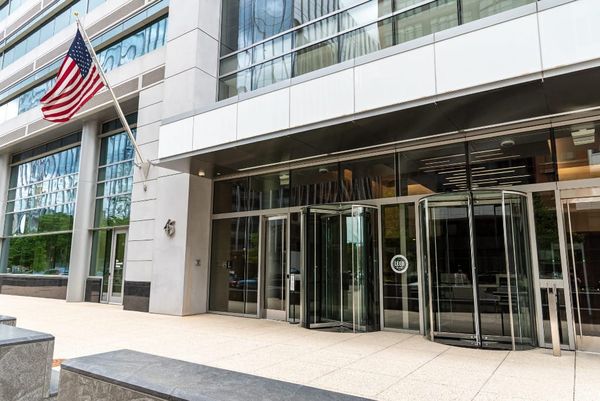
Protesters outside FCC headquarters now denounce Carr for “greenlighting dangerous media consolidation,” while inside the building, he has argued that loosening ownership limits would empower local licensees against network executives in New York and Los Angeles.

In a Truth Social post on Nov. 23, Trump warned that any FCC move that let “radical left networks” like ABC and NBC “enlarge” would be unacceptable. The post puts Carr in a bind: Is he trying to devolve broadcasting power away from Washington, or centralize authority over broadcasting? 

Put another way, is Carr – whose struggles with free speech represent the First Day of Broadband Breakfast’s 12 Days of Broadband for 2025 – presenting himself as an ally to the media industry, or the enemy of it?

Kimmel, Kimmel, Kimmel

One key flashpoint in the debate over broadcast ownership and free speech in 2025 was the media storm that unfolded soon after the assassination of conservative activist Charlie Kirk at a university in Orem, Utah, on Sept. 10, 2025. 

When ABC late-night talk show host Jimmy Kimmel said that Trump-supporting conservatives were "desperately trying to characterise this kid who murdered Charlie Kirk as anything other than one of them," Carr went on the offensive. He said on podcaster Benny Johnson’s show on Sept. 17 that ABC affiliates could face fines or even license revocation if they kept airing a show that amounted to a “pattern of news distortion.”

“We can do this the easy way or the hard way,” Carr said, urging licensed local stations to “push back” on Disney and and other ABC affiliates and stop carrying Kimmel until they “straighten this out,” warning that otherwise they were “running the possibility of fines or license revocation from the FCC.” 

Within hours, Sinclair and Nexstar — both major owners of ABC affiliates — said they would drop the show. ABC then pulled Kimmel nationwide.

Democrats responded on Sept. 18 by calling for Carr’s resignation. Even a prominent Republican, Senate Commerce Committee Chairman Ted Cruz, R-Texas, was critical of Carr: “I think it is unbelievably dangerous for government to put itself in the position of saying, ‘We’re going to decide what speech we like and what we don’t, and we’re going to threaten to take you off air if we don’t like what you’re saying,’” Cruz said on Sept. 19. “It might feel good right now to threaten Jimmy Kimmel, but when it is used to silence every conservative in America, we will regret it.”

Doubling down on ‘News Distortion’

But in the days that followed, Carr doubled down in his criticism of Democrats, with the supportive arm of Trump’s Truth Social posts. Carr cited past efforts to push regulators to scrutinize TV station owner Sinclair and to pressure cable operators to drop Fox News and Newsmax. 

Carr also pointed to Biden White House officials who publicly urged social media platforms to police content. “Some of the very same Democrats that are distorting what happened here actually did the thing they say happened,” he said.

The outrage boiled over into the FCC’s open meeting on Sept. 30. Before being quickly escorted out, protesters chanted “fire Carr, the censorship czar.” The groups leading the protest faulted Carr for “greenlighting dangerous media consolidation and serving the interests of billionaire oligarchs.”

In Expert Opinions on Broadband Breakfast, public interest advocate Gigi Sohn argued that media consolidation was to blame for the threats to free speech from Carr. 

Information Technology and Innovation’s Joe Kane took a different tact, claiming that Carr was inappropriately wielding “the public interest standard against broadcast content” in violation of the First Amendment.

But Daniel Suhr, president of the Center for American Rights, said Carr’s statements about Kimmel didn’t meet the legal test of “jawboning” because Carr “does not have direct regulatory and enforcement jurisdiction over ABC as a network.”

CBS, 60 Minutes and the Skydance-Paramount deal

If Kimmel showed Carr using informal pressure to influence programming, the Paramount/CBS saga showed him using formal licensing tools in the middle of a high-stakes corporate transaction.

The through-line is the “News Distortion” complaint about a 60 Minutes interview with then-Vice President Kamala Harris. Suhr’s group, the Center for American Rights, had accused CBS of deceptive editing in the 2024 campaign. Jessica Rosenworcel’s FCC dismissed the complaint, but Carr revived it the day he took over as chairman on Inauguration Day.

In reopening “news distortion” probes against ABC, CBS, and NBC, Democratic FCC Commissioner Anna Gomez said at a June event that the commission was “harassing CBS” and the other broadcasters, noting that FCC rules required clear evidence that a broadcaster deliberately distorted factual news and that Comcast, one of Carr’s other targets, was not even a broadcast licensee.

The other shoes dropped on July 2, when Paramount paid $16 million to settle a $20 billion lawsuit against CBS over the interview (to be used to pay legal fees for Trump, his co-plaintiff, and a future presidential library); and on July 24, when the FCC approved Paramount’s $8 billion merger with Skydance Media.

As part of the approval, Skydance made concessions around bias monitoring and removal of diversity, equity and inclusion policies at CBS. A two-year commitment was made to appoint a CBS News ombudsman to investigate "bias" and ensure impartiality.

“This moment marks a dangerous precedent for the First Amendment, and it should alarm anyone who values a free and independent press,” Gomez wrote in a statement to Broadband Breakfast on July 2. She further scorned Paramount’s “cowardly capitulation” after the FCC’s approval on July 24.

Comcast, NBCU and the long arm of ‘a fishing expedition’

But Carr is going even further. He has also opened an agency probe into whether Comcast and its NBCUniversal use their contracts with local affiliates to punish stations that deviate from network editorial views.

Carr Opens FCC Probe into Comcast/NBCU Domination of Local Affiliates by Ted Hearn’s Policyband describes Carr’s theory of the case: That the national company’s economic control over affiliates could undermine local journalists’ independence, justifying a new look at both contract terms and ownership rules. 

In a letter to Comcast opening an investigation on July 29, Carr demanded that Comcast produce agreements to show whether it is squeezing independent station owners.

Carr framed his push as defending local licensees from corporate pressure from New York and Hollywood. It’s a populist argument, to be sure, but he’s frequently used it to bolster an otherwise corporate-friendly effort to revisit the 39 percent cap. 

On the other hand, Democrats see the same investigations as selective punishment of Trump’s critics in the media industry, particularly when paired with threats of license consequences. Gomez has attempted to call this out on her “First Amendment Tour” countering Carr.

And Carr’s scrutiny extends to other potential Trump antagonists in the telecom and media industry – including Verizon, Disney/ABC and Comcast – over either equal employment opportunity or diversity, equity and inclusion. (To be addressed in a future “12 Days of Broadband” article.) Gomez called these “partisan” efforts at “a fishing expedition” designed to “stok[e] culture wars. “

Is ‘News Distortion’ the new weapon of control?

Whether because of Kimmel’s brief exile from ABC affilitates, the changes at CBS, or potential new pressure on ABC and NBC, alarm bells are ringing. How far, exactly, will Trump and Carr go to stymie dissent?

“Over the past 11 months, we've witnessed an extraordinary number of formal and informal assertions of power over the broadcast media and national networks,” said Robert Corn-Revere at an event on Nov. 12.

The libertarian Corn-Revere is chief counsel for Foundation for Individual Rights and Expression, which is most well known for criticizing left-wing efforts to silence right-wing voices.

“None of this behavior is normal, authorized by the Communications Act, or permitted by the First Amendment,” Corn-Revere said.

At an October event hosted by the once(?)-conservative American Enterprise Institute think tank, he described Carr’s behavior as crossing the line into “coercion.”

Specifically on the issue of “News Distortion,” many other former FCC chairmen and commissioners are weighing in against it. They are doing so in a cross-ideological fashion. 

On Nov. 13, a group of coalition of former Federal Communications Commission leaders – including former Reagan administration chairmen Mark Fowler and Dennis Patrick (who tagged-team to kill the “Fairness Doctrine” in the late 1980s) and former Obama administration chairman Tom Wheeler – filed a formal petition urging the agency to kill the “News Distortion” rule, arguing that it is unconstitutional, vague, and unnecessary.

The policy “casts an omnipresent shadow” over editorial decisions, the group said. They worriedly noted that Carr “has invoked the News Distortion policy and the public interest obligations of broadcasters.”

Wither Newsmax? Trump, Carr and the 39% Cap

The irony, now, is whether conservative news outlets like NewsMax or One America News (OAN) could conceivably kill the effort at broadcast deregulation for which Carr has worked for years.

In the Nov. 23 post, Trump opined that ABC and NBC were “a disaster - a virtual arm of the Democrat Party,” and that - if anything, they should be made smaller. An FCC waiver would be necessary to allow the merger of Nexstar and TEGNA.

Newsmax CEO Chris Ruddy is one of the chief antagonists, and he has characterized the effort to lift the 39% cap as “a disaster for conservatives around the country.” It was his post that prompted Trump’s anti-ABC and anti-NBC comments.

Although Nexstar, Gray, Sinclair and TEGNA are among the TV broadcast ownership groups with the largest footprint, the next largest companies that could conceivably benefit from deregulation are Comcast’s NBC affiliates, Fox, Paramount’s CBS affiliates and Disney’s ABC affiliates. (Subscribe to Broadband Breakfast Plus Policyband for full coverage.) 

The day after Trump’s bombshell post – last Monday, Nov. 24 – Nexstar tried to spin Trump’s statement as one in their favor: “We agree with President Trump that the status quo is no longer acceptable, nor should the government do anything to strengthen the stranglehold of legacy media and Big Tech on the marketplace of ideas.”

The lingering question, though, is: Will Brendan Carr will be able to do anything to strengthen the stranglehold of the FCC’s power over the marketplace of ideas?

Member discussion

Popular Tags