Three Branches of Government – or One?

White House action reshaped federal tech and telecom regulation in 2025

Three Branches of Government – or One?

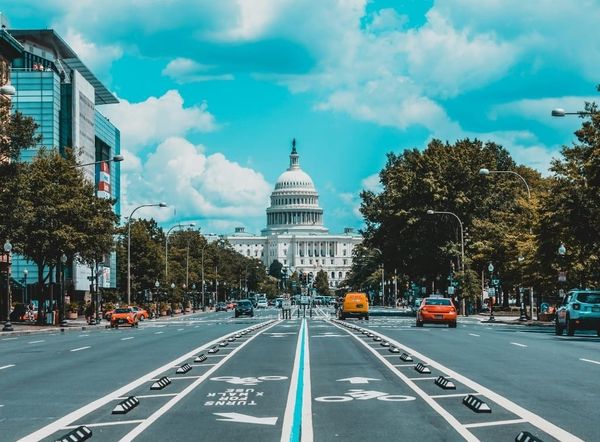
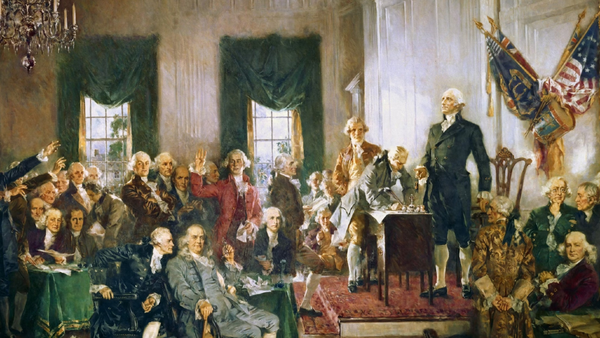
The Constitution creates three branches of federal government: Legislative (Article I), Executive (Article II), and Judicial (Article III).

12 Days of Broadband 2025 (click to open)

On the third day of broadband... | Broadband Breakfast
12 Days of Broadband is an innovative online event series featuring 12 distinct virtual sessions focused on critical topics in broadband connectivity, telecommunications policy, and digital infrastructure. Each day (Monday, Dec. 1-Tuesday, Dec. 16) wi…

There is no “fourth branch” of government. Yet for more than 100 years, Congress has created and sustained an administrative architecture under which independent agencies operated free from the direct influence of the President. 

That architecture eroded in 2025.

President Donald Trump spent his first year back in office challenging the legal and political boundaries that limit presidential influence over regulators. Declaring that agencies exercise “substantial executive authority,” Trump used removal powers, executive orders, and sustained political pressure to purge critics, tighten White House control over agency agendas, and stack leadership ranks with loyalists.

A Supreme Court test is now imminent. On Dec. 8, justices will hear Trump v. Slaughter, a case that places Humphrey’s Executor squarely before them. The 1935 decision, issued after President Franklin Roosevelt tried and failed to fire a Federal Trade Commissioner, held that independent agency leaders could only be removed from office for misconduct. 

The Supreme Court challenge follows months of shake-ups across independent agencies, where Trump has tried to remove dozens of officials, often based on political disagreements, despite the Constitutional precedent set in Humphrey’s Executor 

The Constitutional structure of independent agencies 

These varied independent agencies – from the Federal Reserve to the Federal Communications Commission, and the National Labor Relations Board to the FTC – used to sit at arm’s length from the White House.

In practice, they are generally run by multi-member boards with staggered terms, bipartisan composition, and, in many cases, protections against being fired over policy disagreements.

The White House now wields unprecedented authority over who leads these agencies, how they spend money, what rules they write or repeal, and which investigations they pursue. 

The future of independent agencies now depends upon the Supreme Court.

Removals begin the restructuring

The first quasi-judicial, quasi-legislative agency targeted was the National Labor Relations Board, where Gwynne Wilcox was removed on Jan. 28. Wilcox, the first Black woman to serve on the Board, was removed alongside the agency’s Democratic general counsel Jennifer Abruzzo

Trump said Wilcox and Abruzzo were “radical, far-left appointees” with records of upending labor law. The removals left the NLRB without the quorum required to decide cases.

Vacancies broke the bipartisan balance Congress requires of independent commissions, reducing dissent, weakening internal checks, and allowing a narrow faction to dominate policymaking.

Trump turned next to the Federal Trade Commission, where he terminated both Democratic commissioners, Rebecca Kelly Slaughter and Alvaro Bedoya

Firing the FTC’s strongest critics of big tech

Slaughter had been one of the agency’s strongest advocates for aggressive antitrust action against big tech, algorithmic accountability, and sweeping privacy rules. Bedoya, a national expert on surveillance and civil rights, pushed the FTC to crack down on biometric technologies, ad-tracking systems, and children’s data abuses.

In letters sent to both commissioners on March 18, the White House told Slaughter and Bedoya that their “continued service on the FTC [was] inconsistent with the administration’s priorities,” arguing that commissioners exercise substantial executive power and therefore fall under the President’s removal authority.

Slaughter challenged her removal in federal court, and in July a district judge ordered her reinstated, citing Humphrey’s Executor, which held that FTC commissioners may only be fired for inefficiency, neglect of duty, or malfeasance. 

She returned to the agency for four days before being removed a second time, prompting an emergency appeal. In early September, the Supreme Court allowed Trump’s removal to stand while the litigation proceeds, voting 6–3 to pause the lower court’s order. 

Similar purges have hit agencies far outside tech and telecom, from the NLRB and Equal Employment Opportunity Commission to the Consumer Product Safety Commission and the National Credit Union Administration

Several fired members of independent agencies and commissions have now filed lawsuits challenging their removals. 

In its responses, the administration has cited the Supreme Court’s 2020 ruling in Seila Law, which struck down for-cause removal protections for the director of the Consumer Financial Protection Bureau. The administration has argued the Court should revisit Humphrey’s Executor and ultimately hold that the decision is outdated.

Legal experts say the Court’s decision to let Trump’s removal stand while litigation proceeds was a signal of how the justices may ultimately rule.

Public alignment and appearances on Air Force One

Personnel removals were only part of the strategy. In parallel, the White House worked to consolidate power over regulatory agencies by filling leadership ranks with loyalists.

One example unfolded at the Federal Communications Commission where Chairman Brendan Carr, already aligned with Trump during the president’s first term, became an unmistakable political partner in 2025.

Carr’s public alignment with Trump included appearances on Air Force One, visits to Trump’s Florida property at Mar-a-Lago, and photos of the chairman sporting a gold Trump lapel pin. Carr posted to X on Nov. 16 celebrating a meeting with Trump, most recently.

Over the course of Trump’s first year back in office, Carr repeatedly used the FCC’s regulatory authority to advance the administration’s priorities – intervening in content disputes, pushing White House-aligned merger conditions, siding with presidential allies in spectrum fights, and attacking state regulations in line with directives from Trump.

While no commissioners were forcibly removed at the FCC, two left voluntarily, both Republican Commissioner Nathan Simington and Democratic Commissioner Geoffrey Starks stepped down on June 6.

Simington’s unexpected exit came after a Trump-aligned media strategist, Gavin Wax, was installed as his chief of staff in April. In the weeks that followed, Simington’s messaging started to take a turn, particularly when he and Wax jointly called for the administration to “DOGE the FCC,” in May advocating staffing cuts, the downsizing of major bureaus, and slashing the Universal Service Fund.

Executive orders undermine independence

At the same time leadership positions were being rearranged, agencies were also targeted by a wave of new executive orders that undermined their independence in dramatic and unprecedented ways.

In February, Trump issued an executive order, entitled Ensuring Accountability for All Agencies, declaring that independent agencies must be “supervised and controlled by the people’s elected President.” 

The order required all agency heads to employ White House liaisons as senior staff in their offices, and required independent agency chairpersons to “regularly consult with and coordinate policies and priorities with the directors of the White House Office of Management and Budget, the White House Domestic Policy Council and the White House National Economic Council.” 

It also gave the director of OMB the authority to control expenditure of the agency’s funds, including defunding “particular activities, functions, projects or objects.”

Usurping independent agency rulemaking authority

Trump also used executive orders to undermine independent agencies’ use of their rulemaking powers. 

Independent agencies were instructed to review all regulations in their jurisdiction and seek to repeal those deemed inconsistent with administration policy. This substantive review and repeal process was to be conducted in coordination with their Department of Government Efficiency team leads and the director of OMB. 

Independent agencies were also now required to submit all new regulatory actions to OMB for substantive review before publication. 

At the FTC, several major rulemakings initiated under the previous administration were paused, narrowed, or withdrawn under the force of executive directives, including proposals related to data privacy, algorithmic accountability, and certain consumer protection mandates required by statute.

Other presidential directives particularly reverberated inside the FCC – including two, both on Inauguration Day, creating a DOGE mandate across all federal agencies, and directing agencies to eliminate diversity, equity, and inclusion staff, contracts, and activities.

Within weeks, Carr confirmed the FCC was implementing the White House’s DOGE mandate. He said staff had “pulled every single contract that the FCC has” to identify potential cuts.

The FCC’s internal DOGE led to its Delete, Delete, Delete initiative, a recurring deregulatory sweep in which the agency identifies “outdated” rules to purge with limited public comment periods. Critics argue the process is difficult to reconcile with the Administrative Procedure Act’s requirements for transparency and public participation.

And, just one day after the White House directed agencies to dismantle diversity, equity, and inclusion programs, Carr announced a sweeping rollback of the agency’s DEI initiatives. 

Carr eliminated DEI from the FCC’s strategic plan, budget requests, advisory committees, performance plans, economic reports, and internal task forces, including the FCC’s DEI advisory group and task force created in 2022.

He also opened investigations into the private sector over their diversity policies, including Verizon, Comcast, ABC, Disney, and others, and tied future merger approvals to the rollback of DEI programs.

Carr has simultaneously advanced White House priorities that stalled in Congress. After Republicans failed to preempt state artificial intelligence laws in a reconciliation bill, Carr launched two inquiries into whether the FCC’s powers under the Communications Act could be used to challenge state AI regulations.

Former officials say the cumulative effect has been profound. In November, former staff warned that the consumer protection functions of the FCC and FTC were operating at a fraction of their normal capacity. 

In the absence of a sustained check on White House powers by the First Branch of government (Congress), whether 2025 becomes a turning point or a breaking point for the separation of powers now rests with the Third Branch of government (the Supreme Court).

Member discussion

Popular Tags