Universal Service Fund Survived, Faces New Legal and Political Challenges

A follow-on legal case about the USF resumed on Wednesday, Dec. 3, in the Fifth Circuit.

Universal Service Fund Survived, Faces New Legal and Political Challenges

The Universal Service Fund and its four funding programs survived a major legal challenge in 2025. But the Federal Communications Commission’s multi-billion-dollars-per-year broadband and telecom subsidy isn’t entirely out of the woods yet though.

12 Days of Broadband 2025 (click to open)

A follow-on legal case about the USF had been put on hold because of the government shutdown. But on Wednesday, Dec. 3, the case resumed.

The need for major USF reform is one of the few areas of bipartisan agreement in Washington, and another legal challenge is brewing in federal court.
CTA Image

Don't miss the Fourth Day of Broadband at 2 p.m. ET on Dec. 4!

Watch at 2 p.m. ET

In July 2024, the U.S. Court of Appeals for the Fifth Circuit found the USF to be unconstitutional. Judges ruled that the combination of the program’s funding scheme, fees on interstate and international voice revenue, and the delegation of accounting work to a nonprofit effectively took taxing power away from the legislature.

Opponents of the program, led by conservative nonprofit Consumers’ Research, had argued each of those elements violated the nondelegation doctrine, the idea Congress can’t hand its powers to other entities without providing sufficient guardrails.

The Fifth Circuit’s combination ruling was novel, and the FCC asked the Supreme Court to reverse it.

Industry breathed a sign of relief

In June 2025 the high court did just that in a 6-3 decision, causing the telecom industry to breathe a sign of relief. Consumer advocates and trade groups often find themselves on opposite sides of legal and policy disputes, but there’s broad support for preserving the USF, even if everyone agrees it needs an overhaul and disagrees on how exactly to do that.

The $8 billion fund’s four major programs support rural broadband networks, plus internet discounts for low-income households, rural health care centers, and schools and libraries.

The majority ruled that Congress had put sufficient guardrails on the FCC’s ability to collect fees from telecom carriers to fund the program, and that the Universal Service Administrative Company’s accounting work was sufficiently supervised by the agency that it wasn’t an improper delegation.

The three dissenting justices, Neil Gorsuch, Clarence Thomas, and Samuel Alito said that two provisions of the 1996 law standing up USF did in fact violate the nondelegation doctrine. The sections allow the FCC to designate “additional services” and “advanced telecommunications and information services” as eligible for funding under the program.

They cast this as effectively allowing the agency to fund whatever it wanted with USF, circumventing the other parts of the law designating the fund to support universal service in rural and low-income areas.

A subsequent lawsuit by Consumers’ Research

Those arguments were taken up by Consumers’ Research in a subsequent lawsuit, filed in the Fifth Circuit that initially struck down the fund. The group filed the suit in October after the FCC released the fourth quarter 2025 contribution factor, the percentage of assessable revenue that telecoms will pay into the fund.

Groups have already lined up to intervene on the FCC’s side in the case: NTCA, which represents rural ISPs, the Schools, Health and Libraries Broadband Coalition, the Benton Institute for Broadband & Society, the National Digital Inclusion Alliance, and the Center for Media Justice. Some of those had intervened in the previous USF case.

In the follow-on case, also brought by Consumers’ Research, the Fifth Circuit said on Dec. 3 that Consumers’ Research’s brief would be due on Jan. 12, 2026. 

“As Justice Gorsuch explained, the ‘additional’ and ‘advanced’ services authorized by” the sections at issue “‘go above the baseline of what’s been considered universal service’ and are determined ‘without regard to whether they satisfy’” the rest of the law, Consumers’ Research argued in a September filing with the FCC.

The group had asked the agency to lower the contribution factor by the amount necessary to fund programs authorized using those provisions, or to zero it out entirely. The group is also challenging USAC’s role again, taking up another Gorsuch argument that it’s improper for the group to collect money and make payments for the program.

How will the agency reform USF?

While the fund was saved from being entirely upended this year, there’s a concerted effort to modernize USF. 

The program’s expenditures have remained flat in recent years, while voice revenue is steadily decreasing, making the current funding situation unsustainable. Lawmakers had been working on legislation to update the contribution base and make other fixes going back to 2023, but the effort was stalled by the legal challenge and the transition in Congress and the White House.

The effort was started back up in June, shortly before the Supreme Court decision came down, with lawmakers from both parties and both chambers of Congress. Aides from the offices of Sens. Dan Sullivan, R-Alaska, and Ben Ray Luján, D-N.M., said at SHLB’s AnchorNets conference that they expect to unveil a new framework by early 2026.

Multiple commenters have suggested the working group look to broadband service revenue for USF fees. Major broadband trade group USTelecom has said the lawmakers should add big tech companies to the mix, something FCC Chairman Brendan Carr has supported and tech companies have unsurprisingly opposed. 

When the FCC classified ISPs as telecom providers in 2024 – a move that has since been struck down by courts – then-Chairwoman Jessica Rosenworcel chose not to levy USF fees. She told lawmakers she feared the move would increase rates for consumers, given the fees are currently passed on to consumers and likely would be if ISP revenue were assessed. She floated the idea of online advertisers.

Free market think tanks have argued for funding the program through the Congressional appropriations process, circumventing the need for the FCC to charge fees altogether. 

Participants don’t want annual appropriations

Participants in the fund don’t want that. They say they need long-term predictability to make network investments based on USF support, and worry that money would be suddenly cut off if Congress couldn’t reach a consensus.

They point to the Affordable Connectivity Program, which was funded with a multiyear appropriation of $14.2 billion to provide low-income households a discount on broadband bills. Congress didn’t provide additional funding for the program – Republicans didn’t want additional funding absent more stringent eligibility requirements, and lawmakers never reached a consensus – and it ran out of cash in April 2024, leaving 23 million households without the support they had been getting.

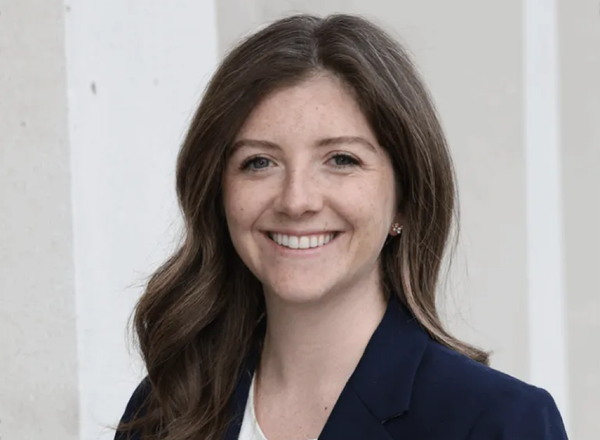
Carmen Suro-Bredeson, senior policy counsel to Luján, noted at AnchorNets that broadband and tech companies “do not contribute under the current system” and said there was a need to expand the contribution base “without placing new burdens on the very people these programs are meant to help.”

The National Lifeline Association and the Information Technology & Innovation Foundation, which supports the appropriations model, told lawmakers they should provide for a larger low-income discount to take the palace of the ACP. The FCC’s existing Lifeline program offers a $9.25 discount compared to ACP’s $30.

“Lifeline discounts should be expected to zero-out co-pays for most subscribers, as eligibility criteria target the benefit to those households most in need of assistance,” NaLA wrote in comments to the working group. “Co-pays can make broadband unaffordable and unobtainable for the eligible population which is likely to be unbanked or under-banked, subject to weekly income volatility, and face challenges in making physical or electronic payments.”

False Claims Act

The Supreme Court also decided in February that the False Claims Act, which mandates triple damages for fraudulently obtaining government cash, applies to USF money, or at least some of it. The decisions set up more litigation currently winding its way through the courts.

An AT&T subsidiary had argued to justices that since telecom revenue pays for the fund, it wasn’t the government’s money for the purpose of the FCA. A whistleblower trying to sue AT&T under the law for alleged fraud countered that all USF funds were government money, as the FCC operates the program to meet goals set by Congress.

Justices in a unanimous decision said that the relatively small portion of the fund that passes through the Treasury – debts and penalties collected by the Justice Department – was definitely government money. In a concurrence, conservative Justices Thomas and Brett Kavanaugh said they doubted all the fund’s money was covered by the FCA.

That was enough to keep the case alive and, after an unsuccessful effort to dismiss the case by AT&T, send it to trial. That’s scheduled for Jan. 20, 2026.

Attorneys from both sides told the high court that such a ruling, which justices telegraphed during oral arguments, would likely tee up future lawsuits over damages, and where exactly they should be capped.

The district judge overseeing the case in Wisconsin declined for now to cap damages, saying any fraudulently obtained subsidy support could be received in full.

“Those issues were not briefed in this Court, and in any event are a long way away. We therefore leave them for the courts below to decide, should it ever become necessary to do so,” Justice Elena Kagan wrote for the court on the damages issue.

Member discussion

Popular Tags