Amazon, Corning Reach Multibillion-Dollar Fiber Deal
Corning has also signed major agreements with NVIDIA and Meta. It has maintained it can meet fiber demand for the BEAD program.

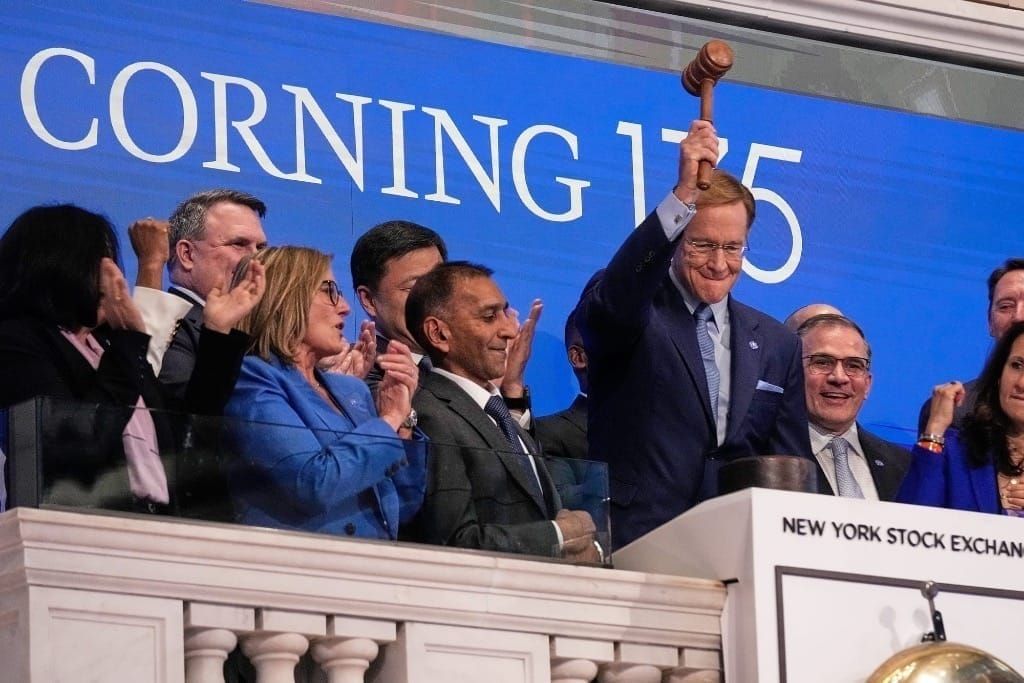
WASHINGTON, June 8, 2026 – Corning has reached a multibillion-dollar deal to supply fiber to Amazon’s data center infrastructure across the U.S., the companies announced Monday.
The companies said the deal, the exact terms of which were not disclosed, would boost Corning’s manufacturing capacity at its North Carolina facilities. The companies said the partnership would create 1,000 new jobs at those facilities.

“Amazon's investment will help us expand production, create 1,000 new advanced manufacturing jobs at our facilities, and lead the way toward building a resilient U.S. manufacturing base,” Corning CEO Wendell Weeks said in a statement.
Based in Corning, N.Y., the glass company first founded in 1851 now finds itself an important supplier for AI companies hungry for more connectivity. Corning stock was up more than 5 percent on the Amazon news Monday.
Multiple other hyperscalers have already signed fiber deals with corning. NVIDIA invested $500 million in Corning last month, and Meta struck a $6 billion deal with the company earlier this year.
While those deals will help the company increase its manufacturing capacity, they’re a sign that demand for fiber is through the roof and companies look to connect more and more data centers.
Rural broadband providers are also looking for Corning’s fiber. Especially those receiving grant funding from the Broadband Equity, Access, and Deployment program, since the program has a domestic manufacturing requirement that extends to fiber.
Some rural ISPs have expressed concern about their ability to secure Build America, Buy America (BABA) compliant fiber, and some reported previously placed orders being unexpectedly canceled earlier this year.
But Corning and other American fiber manufacturers have insisted they have the capacity to meet demand from both AI companies and BEAD participants. In a March blog post, executives from Corning, Prysmian, AFL, and Lightera said BEAD demand would likely represent less than 5 percent of domestic manufacturing capacity.
BEAD is being managed at the federal level by the National Telecommunications and Information Administration. Arielle Roth, the head of the agency, has said NTIA is monitoring the issue.
“We’re monitoring the health of the fiber supply chain,” she said at a Free State Foundation event last week. “We have commitments from large providers that they intend to deliver supply to the [ISPs] in a timely fashion to keep us on track.”
Also part of the Amazon-Corning deal is an expansion of Corning’s fiber technician training program at Catawba Valley Community College in North Carolina.
The program trains students for “careers in fiber optic manufacturing and related technical roles,” the companies wrote. “The program provides hands-on education and courses that will increase the talent pool and offer pathways to high-paying technical roles.”
The Fiber Broadband Association estimated in 2024 that the industry would need nearly 60,000 new fiber techs to meet demand from federally funded builds, not including what would be needed just to account for retirements and attrition.
That estimate was from before the Trump administration altered BEAD’s rules to focus less on fiber, but more than 63 percent of the program’s 4 million locations are still in line for fiber.