Amazon LEO Asks FCC to Deny SpaceX’s Spaced-Based Data Center Proposal

SpaceX has been researching the feasibility of space-based data centers.

Amazon LEO Asks FCC to Deny SpaceX’s Spaced-Based Data Center Proposal
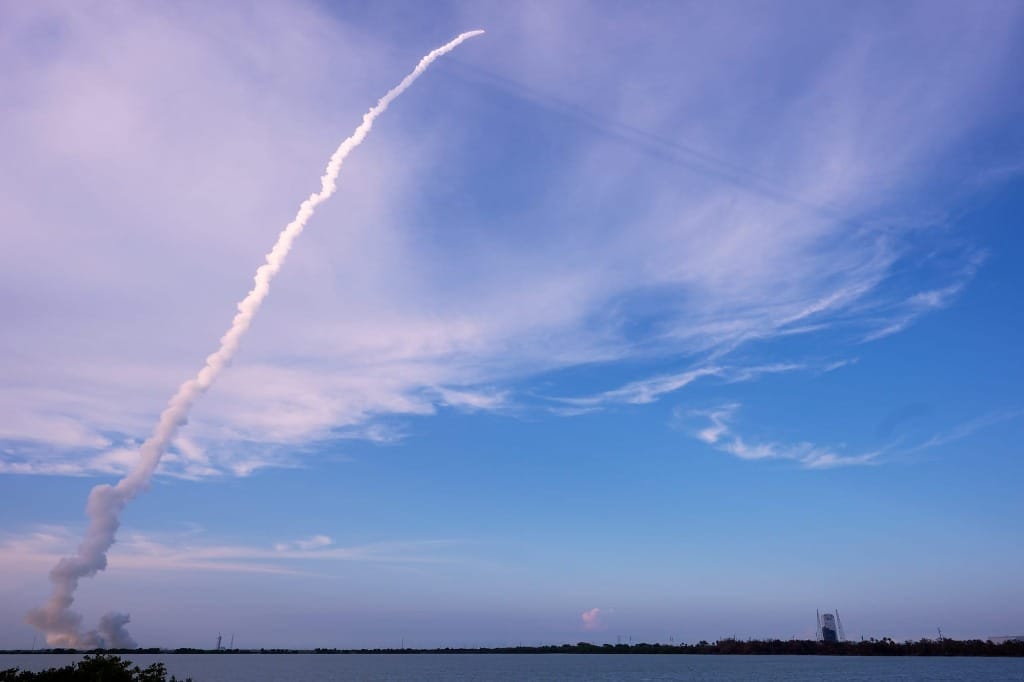
Photo of a United Launch Alliance Atlas V rocket with a payload of Amazon Leo internet satellites by John Raoux/AP

WASHINGTON, March 10, 2026 – A one million satellite constellation deployed by SpaceX may be more like science fiction than hard fact, at least for now, according to Amazon Leo

Amazon Leo the low-earth satellite competitor to Elon Musk’s  Starlink,  filed a denial request with the Federal Communications Commission on Friday, suggesting that it would “take centuries” to deploy SpaceX’s proposed one-million satellite constellation data center. 

“The application seems to describe a lofty ambition, rather than a real plan–and a speculative placeholder rather than a complete application under the commission’s rules,” the request said. “Nonetheless, it risks real harm.” 

In an interview with The Indian Express, OpenAI CEO Sam Altman called the proposal "ridiculous" noting that the current economics don’t make such a plan feasible. 

Amazon also noted that SpaceX’s application remained incomplete, noting they have yet to lay out a satellite design, exact operating attitudes, disposal procedures, and an ability to manage "conjunctions or interference” at a constellation of this size. 

Today, around 15,000 satellites are currently in orbit, making SpaceX’s request a significant increase in total satellites in space. 

SpaceX’s request, submitted on February 2nd suggested that operation of a constellation and the altitudes they provided would allow for “sufficient room to deconflict against other systems with comparable ambitions”  

Experts like George Mason University Associate Professor of Physics and Astronomy Professor Peter Plavchan, disagreed with SpaceX’s assertion, noting that a “satellite constellation that occupies every orbital altitude of interest to near its carrying capacity, [would] thereby prevent all other actors from putting their satellites in any of those orbits”. 

Amazon’s request ultimately agreed with Plavchan, stating that SpaceX is attempting to create an “orbital monopoly, making it the gatekeeper to space” running counter to the public interest. 

During a Senate Commerce, Energy, and Transportation markup hearing on February 3, Sen. Maria Cantwell, D-Wash., raised concerns about this proposal during a discussion on the SAT Streamline Act, a bill that would automatically approve satellite launch requests if the FCC took no action within a year and a half. 

That language was removed in the bill after these concerns were discussed between Cantwell and its author, Senate Commerce Committee Chairman Sen. Ted Cruz, R-Texas.

Member discussion

Popular Tags