Amazon Looking to Launch 5,100 Satellites for Direct-to-Device
The service would be supported by exclusive spectrum acquired from Globalstar

Jake Neenan
WASHINGTON, July 27, 2026 – Amazon is looking to launch more than 5,100 new satellites to support a future direct-to-device mobile service.
The company’s proposed satellites would “support the leap from basic messaging to voice and data services,” Amazon attorneys Emily Hsu and Michael John Carlson wrote in an application filed late Friday with the Federal Communications Commission.
Amazon is planning to start launching the new satellites in 2028, the company said in a Monday blog post. It will be an effort to compete with SpaceX’s direct-to-device service, which the rocket company is also hoping to improve with a new constellation and exclusive spectrum.
The Amazon constellation would use direct-to-device spectrum the company is acquiring through its $11.6 billion purchase of Globalstar, which still needs FCC approval. Globalstar already provides basic direct-to-device service to newer Apple phones, and Amazon said in its applications it would continue operating those satellites.
Globalstar uses spectrum in the Big LEO bands, which the FCC has deemed exclusive to Globalstar because of the high likelihood of interference. The airwaves are a valuable resource because they’ll allow Amazon to provide direct-to-device service without partnering with a terrestrial mobile provider.
In its application, Amazon said it was not applying for that kind of partnered service, where a satellite provider leases spectrum owned by a mobile carrier to provide service outside the carrier’s reach. The e-commerce giant was seeking to use spectrum solely set aside for satellite direct-to-device, much of it being Globalstar’s exclusive spectrum.
Amazon said its direct-to-device service would provide connectivity for people in rural areas outside the reach of terrestrial mobile networks, in addition to connectivity for emergency response and remote industrial operations.
Despite not being into a partnership in the U.S., Amazon noted in its blog that it has inked deals with international mobile operators and would continue partnering with them.
The direct-to-device system will “complement existing mobile networks, filling coverage gaps where terrestrial deployment is impractical, cost-prohibitive, or vulnerable to disruption,” the company wrote in its blog post.
Amazon’s constellation would operate in low-Earth orbit at altitudes ranging from 510 to 580 kilometers. The satellites would last six to eight years before being sent to burn up in the atmosphere.
SpaceX is planning its own 15,000-satellite constellation for its Starlink Mobile service, which also needs FCC approval, and is acquiring $19.6 billion of spectrum from EchoStar for the purpose. The company has made bigger claims about the service’s capabilities, which are intended to be comparable to terrestrial service.
Currently SpaceX has 650 satellites supporting direct-to-device, which is provided in the U.S. via a deal with T-Mobile using the carrier’s spectrum.
AST SpaceMobile is also seeking FCC approval to use Ligado’s exclusive spectrum for direct-to-device in a future constellation. AST is currently partnering with AT&T and Verizon and aiming for its current fleet to use their spectrum, once enough units are launched to support service.
The U.S. mobile carriers are fine with direct-to-device being a complement to their terrestrial networks, as Amazon described its service, but are not excited about talk of SpaceX eating into their market share.
They’re in the process of forming a joint venture to pool their spectrum assets for direct-to-device partnerships. Analysts see it as a means of making it easier for SpaceX competitors to form and making it less likely one carrier will break ranks and give SpaceX a mobile virtual network operator (MVNO) deal.
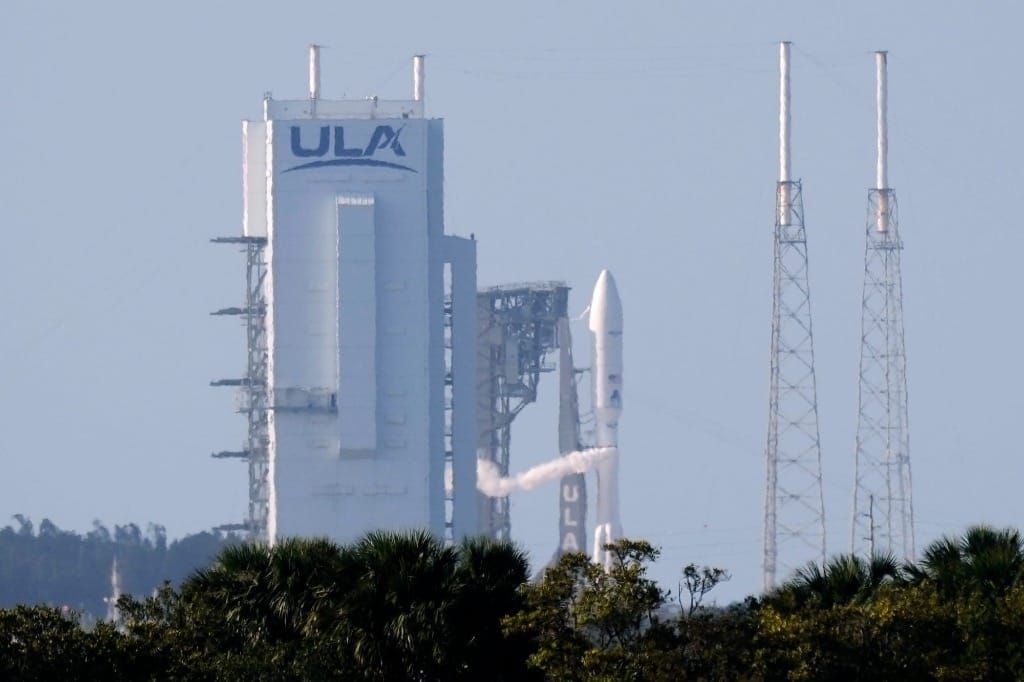
Amazon is launching satellites to support its fixed satellite broadband service, and said Monday it has more than 390 in orbit. The company was supposed to have more than half of its planned 3,200 satellites in orbit this month but was unable to secure enough launch capacity.
SpaceX, itself a dominant rocket launcher, has the largest low-Earth orbit satellite constellation, with more than 10,000 supporting its Starlink broadband service.