Bipartisan Senators Want to Keep Non-Deployment Funds

Six GOP Senators signed on to a Tuesday letter to the NTIA.

Bipartisan Senators Want to Keep Non-Deployment Funds
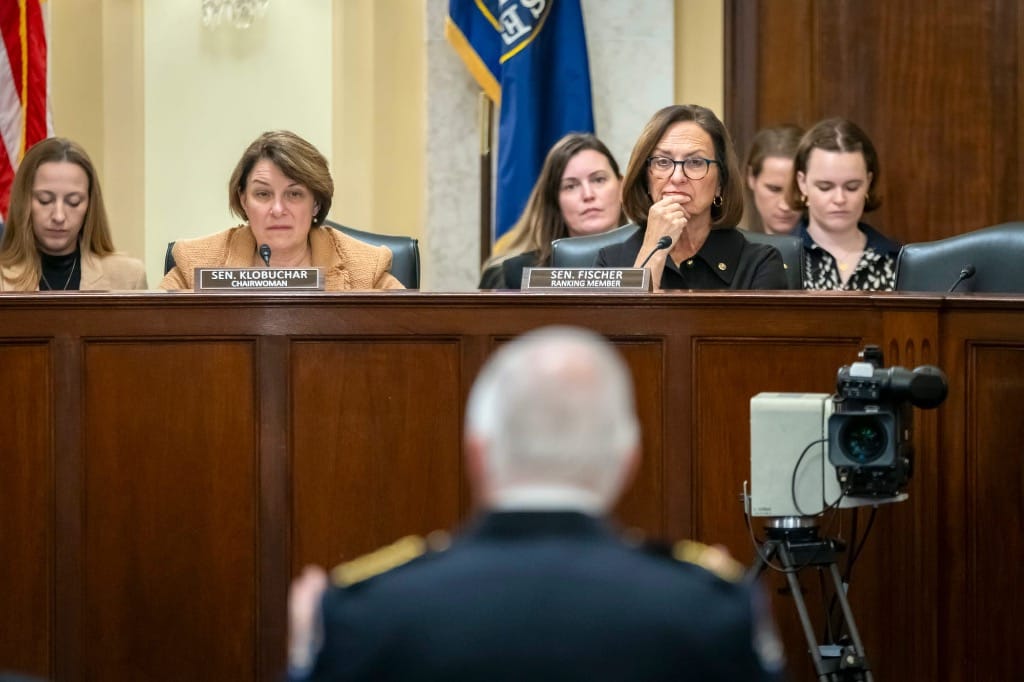
Photo of Sens. Amy Klobuchar, D-Minn., and Deb Fischer, R-Neb., in 2024 by Ben Curtis/AP

WASHINGTON, Dec. 17, 2025 – A bipartisan group of 14 senators is asking the Commerce Department to preserve states’ access to billions in funding under the Broadband Equity, Access, and Deployment program.

Commerce’s National Telecommunications and Information Administration estimates nearly of BEAD’s $42.45 billion won’t be needed for broadband deployment projects, partly a result of the Trump administration’s push to reduce spending. 

The fate of that remaining cash, commonly called non-deployment funding, has been somewhat up in the air after NTIA rescinded approval for any non-deployment activities in June. President Donald Trump signed an executive order last week looking to withhold the funds from states with unfavorable regulations on AI companies.

“We strongly urge NTIA to preserve states’ ability to use their non-deployment BEAD funds consistent with congressional intent and the bipartisan infrastructure law,” the lawmakers wrote in a Tuesday letter to NTIA Administrator Arielle Roth.

The letter was led by Sens. Deb Fischer, R-Neb., and Ben Ray Luján, D-N.M.

Six of the 14 signatories were Republicans. Democrats on Capitol Hill have been quicker to criticize the administration over the issue, and while some GOP members of Congress have publicly said they also want their states to retain control over the money, they hadn’t signed on to previous letters to NTIA on the issue.

Fischer also led a separate letter Wednesday from Nebraska's Congressional delegation – which included fourteen additional Republican lawmakers – pushing NTIA to allow states to use non-deployment funds on extra connectivity for precision agriculture.

Last week more than 160 state legislators, 20 of whom were Republicans, also wrote NTIA asking the agency not to claw back the funding. States had been planning under the Biden administration to use the funding for broadband adoption and workforce development efforts, among other things.

The Infrastructure Law allowed “consideration of a broader set of permissible ‘non-deployment’ uses to facilitate goals of the program,” the federal lawmakers noted Tuesday. “Congress granted this authority, along with the authority to redistribute unallocated funding amongst eligible entities, to maximize broadband infrastructure buildout – and thereby boost the economic productivity that connectivity brings to every corner of our country.”

Roth did say earlier this month that NTIA was “operating under the assumption that the states will get to use their BEAD savings,” and had previously suggested she would support using some of the funding for permitting reform.

But Trump signed an executive order last week directing Roth to produce a policy notice saying states with “onerous” law on AI companies would be ineligible for non-deployment dollars.

The agency has 90 days from Dec. 11 to produce the policy notice, and former NTIA general counsel Sean Conway said last week that it would be difficult to judge how vulnerable the measure will be to legal challenges without seeing the document.

He said there could be constitutional issues with the notice though, both whether the restriction is sufficiently related to the purposes of BEAD, and whether it amounts to the federal government improperly coercing states.

“The most interesting legal question will be: How does the policy notice articulate the germaneness of the condition to the purposes of the BEAD program?” he said.

The lawmakers asked Tuesday for more information on what non-deployment uses would be allowed and when state broadband offices could expect more guidance. Roth had said before the executive order came down that NTIA would have “much more to share” on the issue in early 2026.

The letter was signed by Sens. Deb Fischer, R-Neb., Jerry Moran, R-Kan., James Risch, R-Idaho., Mike Crapo, R-Idaho., Dan Sullivan, R-Alaska, Lisa Murkowski, R-Alaska., Lisa Blunt Rochester, D-Del., Ben Ray Luján, D-N.M., Maria Cantwell, D-Wash., Jacky Rosen, D-Nev., Jeanne Shaheen, D-N.H., Ed Markey, D-Mass., Tammy Baldwin, D-Wis., and Amy Klobuchar, D-Minn.

Sens. Shelley Moore Capito, R-W. Va., and Roger Wicker, R-Miss., weren’t on the letter but have also said they want their states to hang on to their full BEAD allocations.

Member discussion

Popular Tags