
California’s Affordable Broadband Bill Dead for 2025
State lawmaker points finger at the Trump administration.

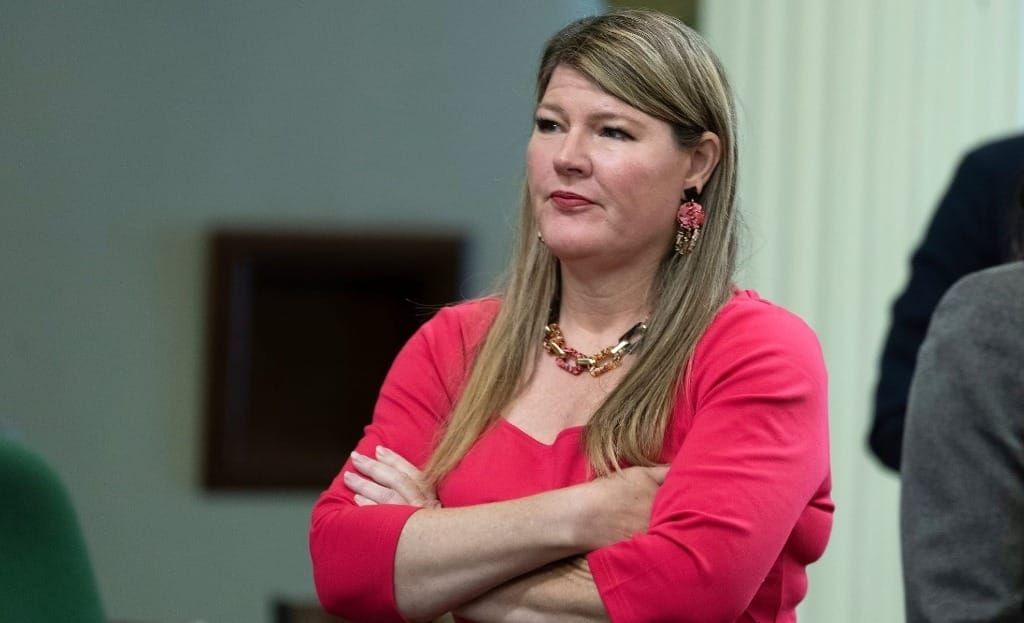
WASHINGTON, July 17, 2025 – Low-income Californians won’t be paying $15-a-month for internet pursuant to state law, at least not this year.
The California Affordable Home Internet Act, a bill introduced in January 2025 by Assembly Member Tasha Boerner, D-Encinitas, closely resembled New York’s 2021 Affordable Broadband Act. Both bills required Internet Service Providers to offer $15-per-month broadband plans to low-income households participating in public assistance programs, though speed requirement differed.
But unlike New York’s law, which made it through the courts, California’s Affordable Broadband Bill officially died at the state level.

Boerner told Broadband Breakfast on Tuesday that the bill is no longer moving forward and blamed its failure on the Trump administration’s June 6 changes to the $42.45 billion Broadband Equity, Access, and Deployment program.
.“For all intents and purposes, for this year, it is not moving forward,” Boerner said.
According to Boerner, she faced a dilemma: Either advance her broadband bill or risk jeopardizing California’s reception of its $1.8 billion BEAD funding.
She said discussions with the National Telecommunications and Information Administration last week revealed to her that California ISPs applying for a BEAD grant would be able to exempt themselves from the bill.
“So, last week I made the very difficult decision to hold my bill in committee,” Boerner said.
Bill passed State Assembly, but faced pushback from ISPs
The bill, which passed the State Assembly on June 4 in a 52–17 vote, faced pushback from ISPs.
Internet providers like Charter Communications, Cox, Verizon, and AT&T heavily lobbied for amendments to the bill that would work in their favor. One such amendment lowered the definition of broadband from 100 Mbps down, 20 Mbps up, to a much slower 50 Mbps down, 10 Mbps up–helping ISPs unable to meet the faster upload speeds.
“By setting this new, substandard bar for low-income Californians, AB 353 will lock communities into second-class connectivity,” California Alliance for Digital Equity’s Lindsey Skolnik told the Institute for Local Self-Reliance.
Despite this setback, Boerner said she is not backing down. She’s now working with Sen. Maria Elena Durazo, D-Calif., on a new bill to expand California’s LifeLine program, which offers discounted phone services to low-income households, to also cover smartphones and home internet.
The proposed bill would require ISPs to offer 100/20 Mbps plans for $30 a month. After removing the $19 lifeline subsidy, the total cost would be $11 a month – $4 less than CAHIA’s $15 cap.
“I'm still singularly focused on making sure Californians have the access to broadband that they need,” Boerner said.






Member discussion