Court Finds FCC’s Broadband Funding Vehicle Violates a 1945 Federal Law
The agency violated the Government Corporation Control Act when it created the Universal Service Fund’s administrator, judges ruled

WASHINGTON, Oct. 15, 2026 – A federal broadband subsidy program that spends about $8.5 billion a year ran into legal trouble today.
Federal judges ruled Thursday that the Federal Communications Commission didn’t have the authority to set up the nonprofit that administers the Universal Service Fund (USF). The program supports rural broadband networks and discounts for low income households, rural health care centers, and schools and libraries.

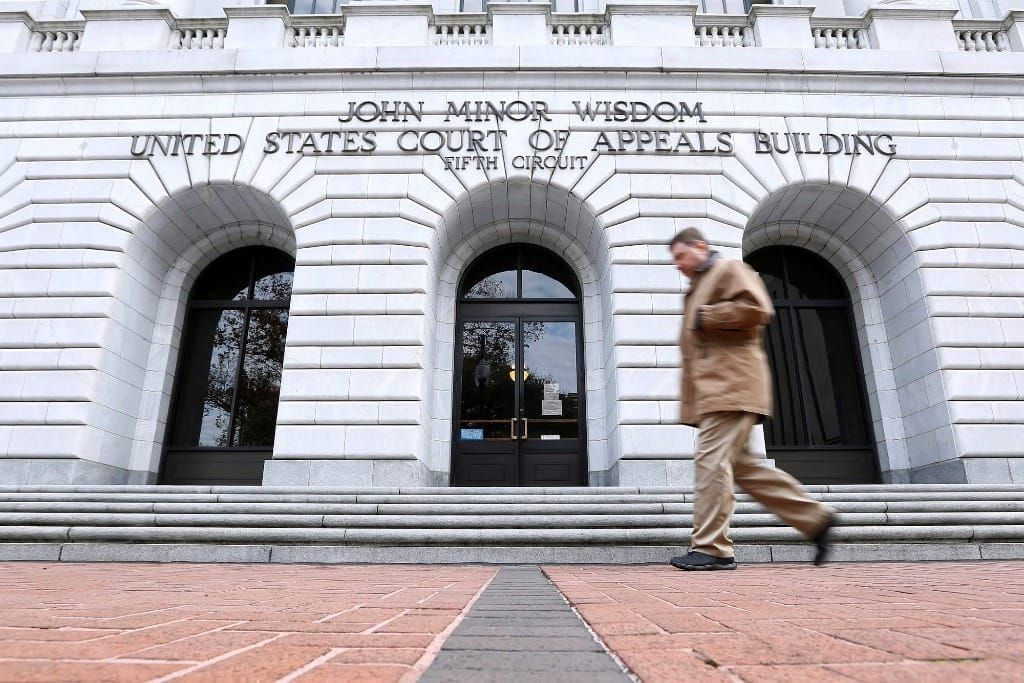
The U.S. Court of Appeals for the Fifth Circuit found the FCC violated the Government Corporation Control Act of 1945 when it created the nonprofit that administers the fund.
The conservative nonprofit challenging the fund had made other arguments targeting the FCC’s ability to raise money for the program, but a panel of three judges only ruled on the fund’s administrator.
It’s not clear what the impact of the ruling will be, including whether the FCC can satisfy the court by running USF from within the 1,300-person agency.
The FCC said it was weighing its options after Thursday’s decision came down.
“While the court takes issue today with an FCC decision made almost 30 years ago, the court’s order would not go into effect until two months from now, at the earliest,” an FCC spokesperson said in an email. “The FCC is considering all options available to it.”
Lawmakers are currently crafting legislation to modernize the fund and its contribution mechanism. It’s also not clear how the decision will affect their work.
A full panel of Fifth Circuit judges ruled last year that USF’s funding structure was unconstitutional, a decision that was later reversed by the Supreme Court.
The FCC set up the Universal Service Administrative Company (USAC) to do the accounting work for the USF. The program is funded by fees on interstate voice revenue, and USAC is tasked with estimating the pool of revenue and the fund’s demand each quarter.
That’s used to set the fund’s quarterly contribution factor, the amount of assessable revenue companies have to pay into the fund.
Circuit Judge Edith Clement wrote for the court that the FCC had set up USAC to “act as an agency” without explicit Congressional permission, which she said ran afoul of the GCCA.
“The FCC argues that when it comes to calculating the contribution factor, USAC does not act as an agency because it gives recommendations to the FCC in a strictly ‘advisory role,’” Clement said. “But even in this capacity, USAC acts as an instrumentality of the FCC. The FCC uses USAC as a means to calculate the quarterly contribution factor, relying on its projections to determine both the Fund’s expenses and carriers’ revenues.”
When Congress stood up two non-shuttered pandemic programs, it authorized USAC as an administrator. The FCC said that meant lawmakers were implicitly fine with USAC’s role administering USF.
Clement was not convinced.
“We are loath to conclude that by authorizing the FCC to use USAC to administer two temporary, emergency measures — both of which ended in June 2024 — Congress implicitly blessed USAC’s appointment as permanent administrator of the entire Universal Service Fund,” she wrote.
Joey Wender, executive director of the Schools, Health & Libraries Broadband Coalition, said the group was reviewing the decision and would work with the FCC to figure out a response.
SHLB had intervened in the case on the FCC’s side to defend the fund.
“We are disappointed by today’s decision. Last year, the Supreme Court upheld the constitutionality of the Universal Service Fund, and today’s ruling does not change that. Today’s decision only addresses issues surrounding USAC authority,” Wender said.