Comcast's Elizabeth Chernow Presses for Published Rules on Who Gets Early Access to AI
Comcast policy executive argues network operators shouldn't have to take AI labs' word on cyber skills and hacking

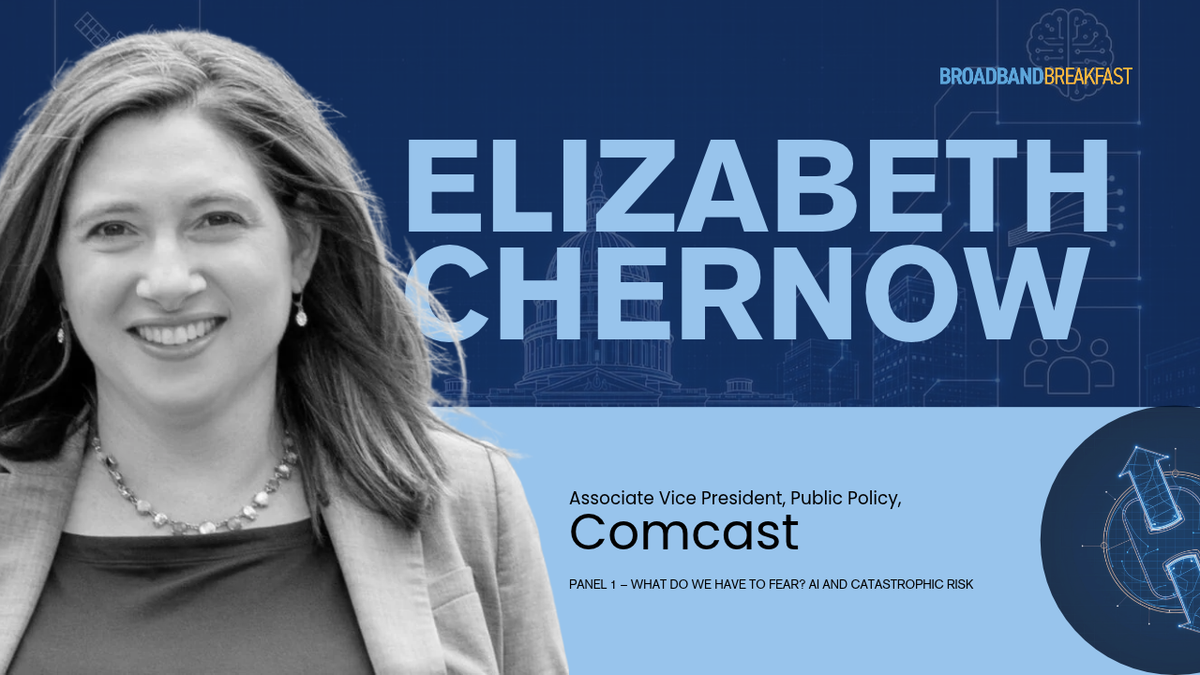
WASHINGTON, Nov. 27, 2026 – Comcast, the cable and broadband company, ran the AI developer Anthropic's Claude Mythos model across 258 business-critical systems and about 170 million lines of code and caught a critical authentication flaw in a public-facing platform before anyone exploited it, according to an Anthropic case study. Finding the bugs turned out to be the easy part.
That gap between discovery and repair shapes what Elizabeth Chernow, an associate vice president of public policy at Comcast, brings to Broadband and AI in the Next Congress on Dec. 1. She speaks on the 9:50 a.m. panel "What Do We Have to Fear? AI and Catastrophic Risk."


A broadband voice on AI risk
At Comcast since 2010, Chernow helps shape the company's positions on broadband, cybersecurity and AI. She is also secretary of the Communications Sector Coordinating Council, the industry body that works with government to protect communications networks as critical infrastructure.
Her public record on AI is two papers published through Aspen Digital, the Aspen Institute's technology program. The first, "Responsible Advanced Access for Frontier AI Models," posted May 12 with Comcast colleagues, warns that when labs hand out access ad hoc, "entire segments of critical infrastructure may be left vulnerable."
The second, "The IGI Framework for Responsible Early Access to Frontier AI Models," posted Sept. 17, calls for published rules on which defenders get early access to frontier AI models with hacking skills. It would have NIST, the federal standards agency, draft criteria for judging a model's cyber skills, since "critical infrastructure operators should not have to rely on vendor claims alone."
The framework names Gold Eagle, the White House's AI vulnerability clearinghouse, as a central venue for "collecting, deduplicating, and disseminating these findings." Gold Eagle sits under Executive Order 14409, which lets developers voluntarily give the government up to 30 days with a model before release, down from 90 days in an earlier draft.
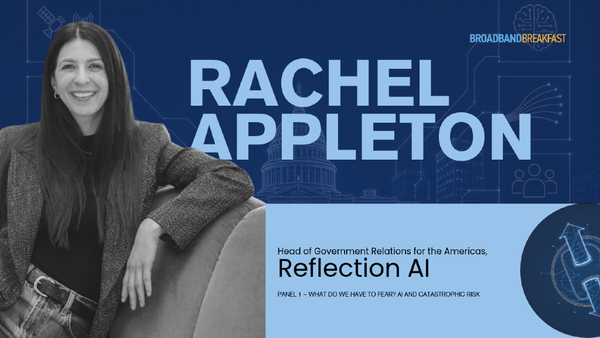
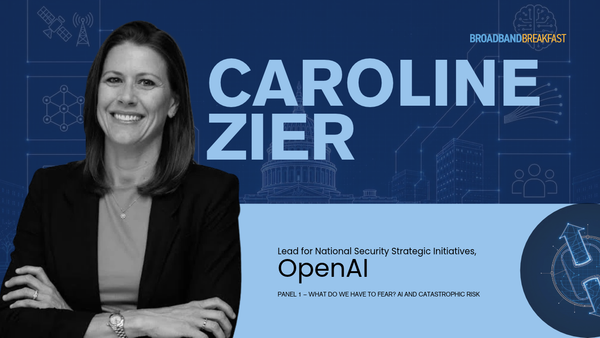
On the same panel, Rachel Appleton represents Reflection AI, which builds open-weight AI models and put its Laser hacking agent behind a vetted-access program Nov. 17, Axios reported. Caroline Zier of OpenAI, the maker of ChatGPT, also joins the panel. Cat Zakrzewski, White House reporter for The Washington Post, moderates.
What to watch at 'Broadband and AI in the Next Congress'
- Is EO 14409's voluntary 30-day window enough for operators, or do Comcast's papers point toward eligibility rules set in statute?
- Who pays to fix the flood of AI-found flaws at smaller networks without Comcast's security staff?
- Will Chernow say whether cybersecurity rules for AI should come from Washington alone or leave room for states?
Sign up for Broadband and AI in the Next Congress on Dec. 1.