Rep. Nanette Barragán Moves AI Data Center Reporting From Voluntary to Mandatory
Her bill with Rep. Don Beyer would require AI data centers above 50 megawatts to report their environmental footprint to EPA every year

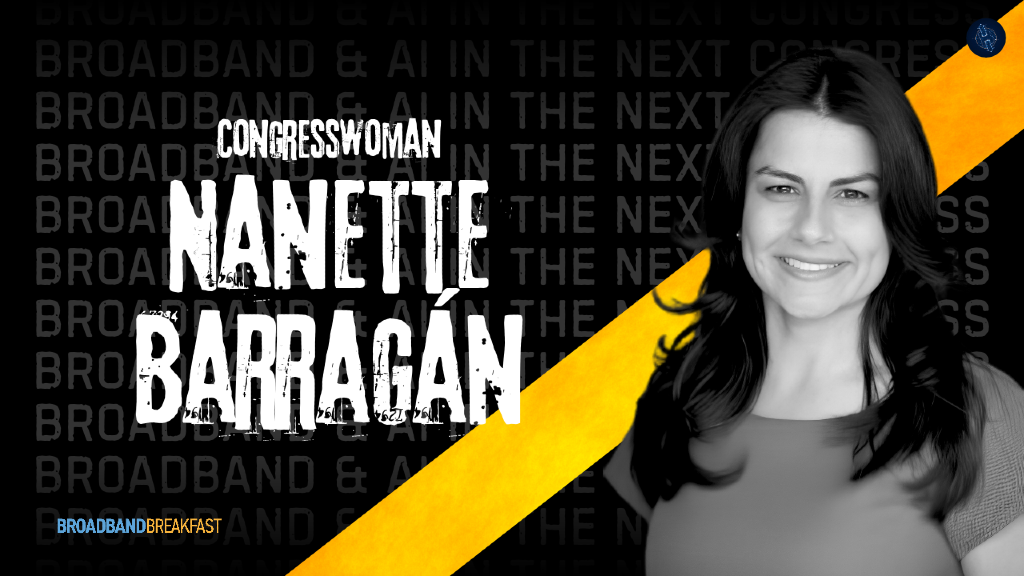
WASHINGTON, Nov. 27, 2026 – In 2024, a federal bill on the environmental cost of AI would have let companies choose whether to report anything at all. The 2026 version, co-led by Rep. Nanette Barragán, D-Calif., would require annual reports from every AI data center above 50 megawatts.
With Democrats taking the House in January, that shift from voluntary to mandatory becomes a live question for the Energy and Commerce Committee, where Barragán sits.


On Dec. 1, she gives a noon keynote at Broadband and AI in the Next Congress at the National Press Club. Her Senate partner on the reporting bill, Sen. Ed Markey, D-Mass., keynotes at 2:40 p.m.
A 50-megawatt line and a federal reporting duty
The Artificial Intelligence Environmental Impacts Act of 2026, H.R. 9183, was introduced June 8 by Rep. Don Beyer, D-Va., "for himself and Ms. Barragan." It was referred to the Science and Energy and Commerce committees.
The text covers any facility or connected group with a peak load or rated capacity "in excess of 50 megawatts" that houses AI training, inference or deployment infrastructure. Operators shall annually submit reports to the Environmental Protection Agency on the "full range of environmental impacts," posted publicly except for confidential commercial information.
EPA would first seek corrective action from an operator that fails to report. If no report arrives within six months of its due date, the agency could impose an administrative penalty based on facility size and the length of noncompliance. The bill sets no dollar amount, contains no preemption provision and authorizes no additional funds.
EPA would also lead a one-year impact study with the Energy Department, the Federal Energy Regulatory Commission and other agencies. The National Institute of Standards and Technology, or NIST, would convene a consortium including Tribes, local governments and industry to build measurement standards.
From a voluntary system to a mandate
The 2024 Senate version, S. 3732, directed NIST to develop a voluntary reporting system for companies and other entities that chose to participate. It did not define which data centers would be covered, set a power threshold or establish penalties. It gave EPA two years to complete its study.
The mandatory Senate version, S. 4727, arrived June 9 from Markey with four Democratic cosponsors.
Power bills are ’a first step’
The House passed H.R. 9340, the Ratepayer Protection Act, 417 to 3 on Sept. 16. It would direct state regulators under the Public Utility Regulatory Policies Act to consider rules making data centers above 100 megawatts pay the full incremental cost of the grid upgrades they need.
"This bill is a first step to ensure data center developers rightfully bear the higher electricity costs," Barragán said that day. "Congress must do more," she added, naming health and environmental harms and labor standards for new data centers.
The bill’s prospects in the Senate remain uncertain. Senate Democrats blocked the measure on a 57-to-43 vote, Broadband Breakfast reported.
Barragán has previously questioned how to keep the cost of serving data centers off household electricity bills. In October 2025, she was one of 20 House Democrats who asked the Data Center Coalition, the industry’s trade group, how those costs would be allocated. Its president, Josh Levi, speaks on the 1:10 p.m. power panel.
Literacy, medicine and a California yardstick
Her other AI bills would put no duties on industry. H.R. 7151, written with Rep. Jay Obernolte, R-Calif., would have Commerce run a five-year AI literacy campaign on deepfakes and scams aimed at seniors, with "no additional funds" authorized. Consumers "deserve clear, accessible information about how these technologies work," she said in January.
The HEAL-AI Act, H.R. 6077, filed Nov. 18, 2025, with Rep. Ted Lieu, D-Calif., would authorize $1 million a year through fiscal 2030 for AI training grants to medical schools and residency programs.
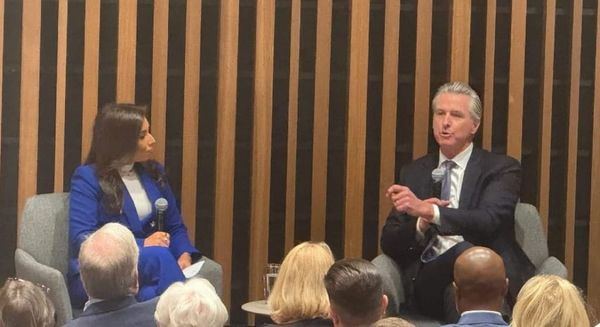
Back home, Gov. Gavin Newsom signed seven data center bills Sept. 21, three of them shifting grid costs from households to operators. Obernolte, her H.R. 7151 partner, co-wrote the FRONTIER Act, which his office says would "prevent a patchwork of state regulations" on frontier AI.
What to watch at 'Broadband and AI in the Next Congress'
- Would a Democratic majority keep her 50-megawatt reporting line or settle on the 100-megawatt line in H.R. 9340?
- Does "Congress must do more" mean binding health, environmental or labor conditions on new data centers?
- Would she support a national AI standard from Obernolte if it displaced California rules?
Sign up for Broadband and AI in the Next Congress on Dec. 1.