FCC Clears E-Rate Review, Local Permit Shot Clock Proposal

School and library groups said they were planning to marshal opposition to cutting back E-Rate funding

FCC Clears E-Rate Review, Local Permit Shot Clock Proposal
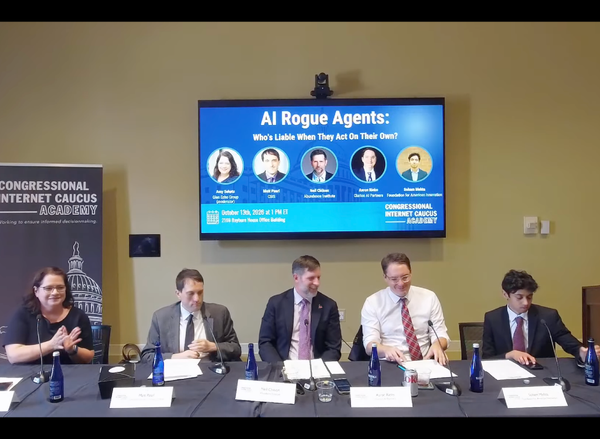
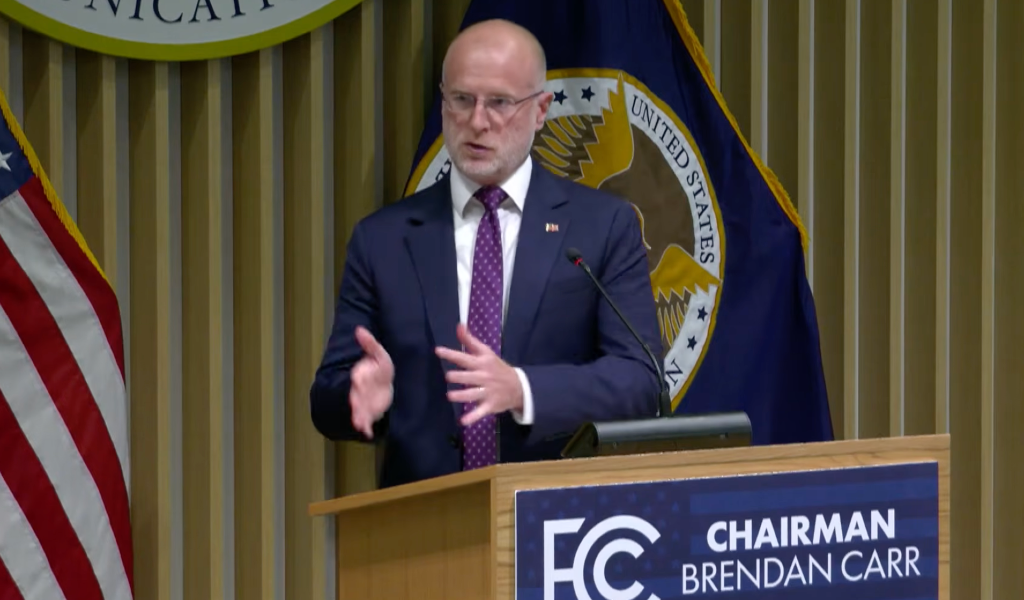
Screenshot of FCC Chairman Brendan Carr at the agency's press conference Thursday

WASHINGTON, June 25, 2026 – The Federal Communications Commission voted Thursday to kick off a broad review of its $2.5 billion-per-year subsidy program for broadband in schools and libraries.

FCC Chairman Brendan Carr said the inquiry, already contested by supporters of the E-Rate program, was a response to rising screen time and falling test scores in U.S. schools. The item will seek comment on whether a requirement that schools and libraries block inappropriate sites on only devices they own is enough to protect children online.
It will also ask whether the program should be limited to only rural areas or potentially shuttered entirely given the large expansion of broadband access in schools since the fund was stood up in the nineties. E-Rate funds discounts for broadband and telecom services for schools and libraries, supporting more than 96 percent of U.S. public schools by an analysis of one E-Rate consulting firm.

Fearing the agency planned to roll back funding under the program, organizations representing schools and libraries said Thursday they were planning to marshal responses from as many stakeholders as possible in the agency’s record.

“Concerns about children's screen time deserve to be taken seriously, but they should not become a backdoor for dismantling one of the country’s most successful connectivity programs and adding unnecessary budgetary strain on schools and libraries across the nation,” Joey Wender, executive director of the Schools, Health, and Libraries Broadband Coalition said in a statement.

FCC Commissioner Anna Gomez, the agency’s lone Democrat, said her office worked with Carr’s on some edits from the public draft released earlier this month, including extending the comment deadline to 60 days from the typical 30 days. 

SHLB said it “intends to use every day of that window” to, along with other groups, “fill the record” with comments from schools and libraries.

“We’re asking the important, common sense questions that will allow us to ensure that the program we administer continues to support educational opportunity,” Carr said, while at the same time considering “whether additional safeguards, refinements, or updates are needed to better protect kids online and ensure great educational outcomes.”

FCC Commissioner Olivia Trusty said she would “encourage E-Rate advocates to thoroughly explain how the program can focus on the most pressing connectivity needs of schools and libraries, while taking into account state and local policy development spurred by emerging research on effective learning environments.” 

She was referencing multiple state bills and school district policies aimed at curtailing the use of screens by young students, which Carr also cited. Gomez voted to partly approve and partly dissent from the item, while Carr and Trusty approved.

Local permitting preemption

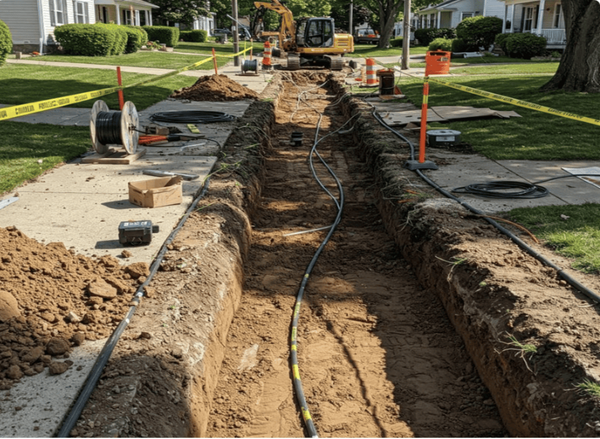
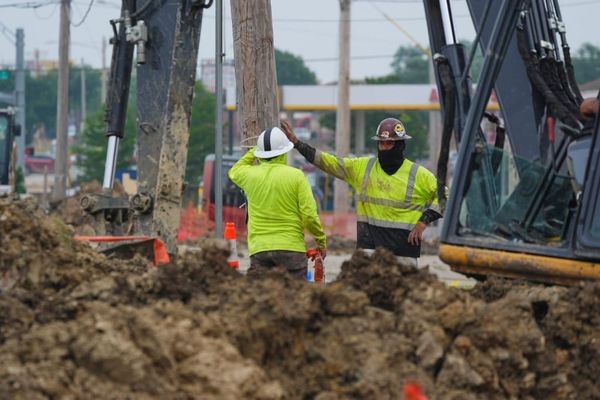
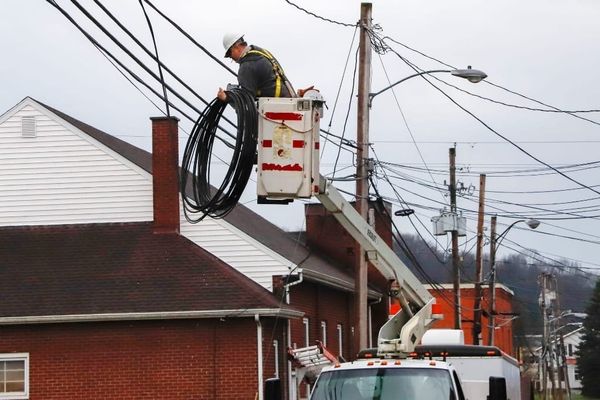
The agency also unanimously adopted a proposal to preempt local permitting policies ISPs say are barriers to broadband deployments.

The agency proposed a 120-day shot clock, in which time local permitting agencies would have to process permit requests before they were deemed approved, and fee limits tied to a localities direct cost of maintaining a given right-of-way.

It will also seek comment on applying the rules to infrastructure that can deliver both broadband and telecom services — the agency has authority to block local rules that prevent the deployment and expansion of Title II telecom services.

“There are some jurisdictions where providers continue to face lengthy delays, excessive fees, and unpredictable permitting processes that can postpone projects for months, or even years,” Carr said. “Those barriers raise the costs of deployment or discourage it altogether.”

Broadband industry groups have been pushing for permitting shot clocks, both at the FCC and in Congress. ACA Connects, which represents smaller cable providers, and the Wireless Infrastructure Association, which represents carriers, tower companies, and others, both issued statements praising the proposal.

Gomez said that since the item was just at the proposal stage, she supported it. But she said she thought a plain reading of the Communications Act allowed the FCC to preempt rules on a case-by-case basis, but not to issue blanket policies that overrode local ones.

“I hope commenters will opine on whether this reading is likely to survive judicial scrutiny under Loper Bright as the best interpretation” of the law, she said, “without which it is unclear the commission has a basis to issue rule-based preemptions.”

Cities and other local governments have strongly objected to the FCC considering preempting their rules. They say their reviews are necessary for projects to be done safely, and sometimes held up by a lack of staff resources, and that their fees are reasonable.

Other items

The FCC also unanimously adopted Thursday an order that will allow subsea cable operators to avoid rigorous application reviews as long as they certify they can meet stringent cybersecurity requirements.

“The message is simple: Adopt strong national security standards, and get a glidepath to application approval,” Carr said.

The order also instituted licensing requirements for operators of submarine line terminal equipment (SLTE), facilities where subsea cables connect to terrestrial networks. That proposal received strong pushback during the rulemaking process from industry groups, who said it would be too burdensome.

Agency staff at the FCC’s bureau press conference said that the agency did not make substantive changes to the SLTE licensing provisions in the public draft of the order.

Press conference

Many of the questions directed at Carr and Gomez during the agency’s press conference had to do with Carr’s investigation into ABC, and the network’s effort to mobilize public opposition. The company has been successful in attracting attention to the docket, which had more than 44,000 comments on Thursday morning.

Asked how the FCC was thinking about AST SpaceMobile’s request to use Ligado’s L-band spectrum for its direct-to-device service, Carr said there was “no news to break on that front. We’re running the standard process on that.”

But he spoke positively about direct-to-device providers having access to their own exclusive spectrum, which is what AST is seeking. The company already has deals to provide service on AT&T and Verizon spectrum, once it launches enough satellites to support that.

“You see now that SpaceX — Starlink — has access to the spectrum that they need to provide direct-to-device. You see Amazon buying Globalstar, which could enable them to do more and better direct-to-device technology,” Carr said. “We want multiple providers in the direct-to-device space, and the policy framework we’ve been putting in place is working.”

Carr also didn’t say whether he expected the White House to pick nominees soon for the FCC’s two vacant seats, or whether the administration would act given Gomez’s term expires June 30. Under FCC rules, commissioners can stay after their term until a replacement is appointed, but not beyond the end of the next session of Congress, generally extending terms up to an extra year and a half

Asked why she thought she hadn’t been fired like many other Democratic political appointees, Gomez said she assumed it was the FCC’s quorum requirement. The agency needs three active members to vote on new orders and proposals.

The Supreme Court is expected to hand down by the end of the month a decision in Trump v. Slaughter, in which Democratic FTC Commissioner Rebecca Slaughter is challenging her firing by the Trump administration.

Popular Tags