FCC Clears Slate of Spectrum Items, Including Proposal to Expand Direct-to-Device
The agency didn’t act on a request from SpaceX to consider satellite service in spectrum targeted by the NextNav petition


WASHINGTON, Oct. 29, 2026 – The Federal Communications Commission voted unanimously Thursday to seek input on a plan to make more spectrum available for direct-to-device service.
It was one of multiple spectrum efforts adopted during a busy FCC meeting, including advancing a new spectrum auction and allowing drones to use a mobile spectrum band.

The direct-to-device item proposed adding more than 480 megahertz to the FCC’s supplemental coverage from space (SCS) framework, which allows satellite companies to lease spectrum owned by terrestrial carriers, and overhauling some SCS requirements.
The agency did not act on a last-minute request from SpaceX to tweak the proposal, Wireless Telecommunications Bureau Chief Joel Taubenblatt said at the agency’s press conference.
The company had wanted the agency to include spectrum covered by the pending NextNav petition in its inquiry. NextNav wants to use some of the lower 900 MegaHertz (MHz) band for a GPS backup and 5G broadband, an effort that has been met with strong opposition from other users of the band.
SpaceX has expressed interest in using the airwaves for direct-to-device if that ends up being allowed.
The agency was more receptive to concerns from the national wireless carriers.
The carriers said the 2.5 GHz and 3.45 GHz bands, used by T-Mobile and AT&T, were bad candidates for direct-to-device because it would be almost impossible to prevent interference. The bands use time-division duplexing (TDD), meaning the same channels are used for uplink and downlink at different times, and satellites are so far away that they couldn’t properly keep in sync with towers on the ground, the companies argued.
“We adjusted how we’re seeking comment on bands that can be used for TDD,” Taubenblatt said. “There were a number of concerns that were raised in the record on some of the technical challenges there.”
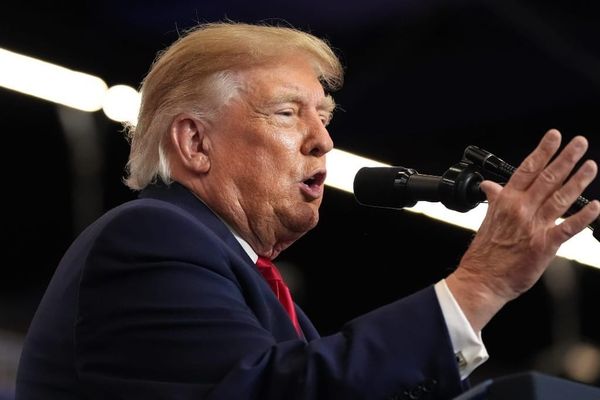
FCC Chairman Brendan Carr said that the 2024 SCS framework needed updating given the vastly increased interest from satellite companies in providing direct-to-device mobile service.
The item would propose to allow SCS leases in customer licenses areas, rather than the current nationwide framework, and would allow satellite companies to acquire the underlying spectrum licenses themselves. Under the current framework, satellite companies can use terrestrial mobile spectrum for direct-to-device if they lease it from carriers.
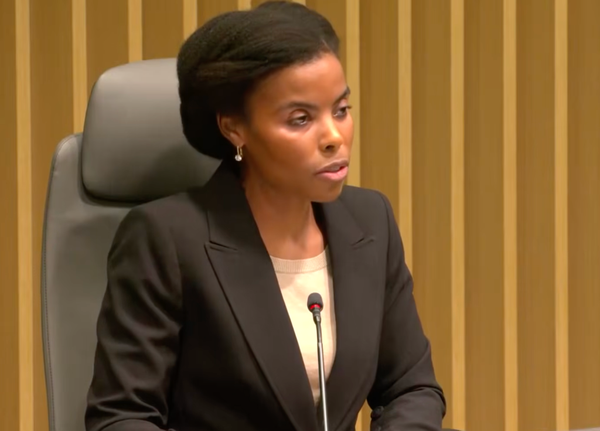
FCC Commissioner Anna Gomez, the agency’s lone Democrat, said she didn’t want the framework to allow one or two companies to dominate the direct-to-device market. She wasn’t opposed to the plan and voted in favor of it.
Gomez said she had been thinking lately about a spectrum screen for satellite spectrum, something she said she was able to convince Carr’s office to ask about in the adopted item.
The agency scrutinizes spectrum ownership in certain markets to prevent over consolidation, and something similar might be appropriate given the hugely increased demand for direct-to-device spectrum and the early stages of the market.
Spectrum auction
The FCC also unanimously advanced a proposal to hold an auction in the 1675-1695 MHz and 2020-2025 MHz bands.
“We expect big interest in this seemingly modest amount of spectrum,” Carr said.
The National Telecommunications and Information Administration is studying the 1675-1695 MHz band to confirm it can all be opened up for commercial use. It’s used in part by the government to transmit meteorological data from weather balloons.
Carr said NTIA would likely be finished with that study by early 2027, and that the results would inform the FCC’s ultimate approach.
Right now the agency wants the spectrum to be usable for terrestrial or direct-to-device mobile service, or a combination of the two.
Gomez said there were still “important technical questions” on whether satellite and terrestrial users could coexist in the bands.
Taubenblatt said the only significant change from the public draft of the item was additional questions on coexistence with users in adjacent spectrum bands. Gomez said the item would also ask about a satellite spectrum screen, and a Tribal licensing window.
Drone spectrum
The agency adopted an order allowing drones to use nearly 50 megahertz in the 800 MHz band.
It was one of the first bands allocated for mobile use in the U.S., and its rules prevented airborne use. Under the FCC’s order, wireless providers can offer drone services using the band.
“Virtually all drones need access to spectrum, whether to deliver video or data back to the ground, or to support mission-critical safety functions,” Carr said.
Amazon was pleased with the move. Ashleigh de la Torre, the company’s vice president of public policy, said in a statement that demand for drone delivery was growing and extra airwaves would be beneficial.