
FCC Expands National Security Role, Tightens Limits on Foreign Tech
Agency officials signal broader push into supply chain security and review of emerging technologies.

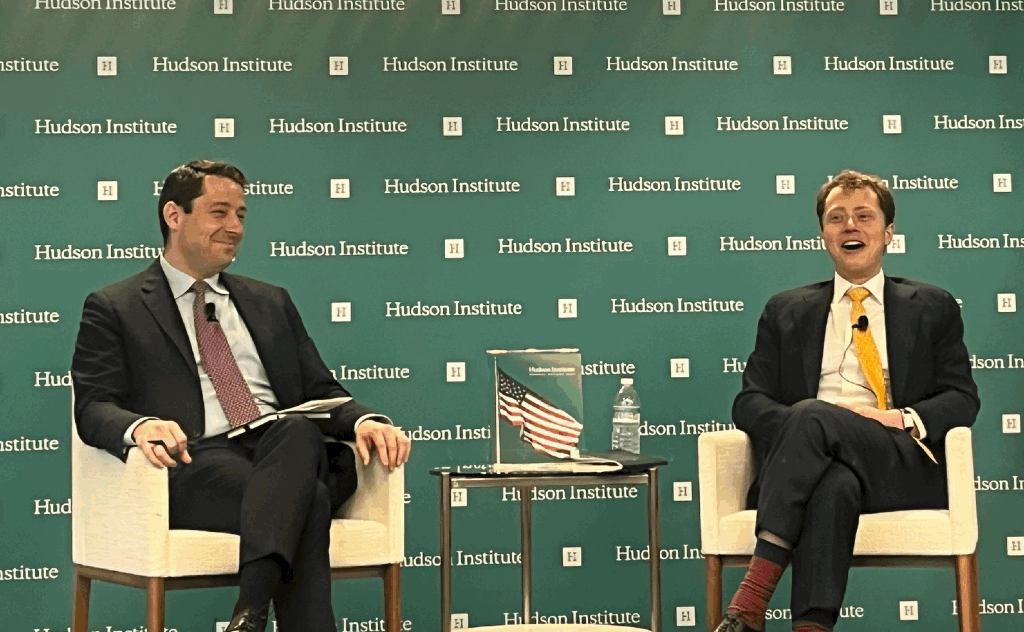
WASHINGTON, April 8, 2026 – The Federal Communications Commission is reasserting its national defense mandate under the Communications Act.
The effort, officials said Tuesday at an event marking the first anniversary of the FCC’s Council on National Security, positions the agency as a central player in efforts to secure U.S. communications networks and technology supply chains.
“The FCC was originally envisioned as very much a national security agency,” said Adam Chan, the inaugural director of the FCC’s Council on National Security, at the Hudson Institute event in Washington. “Recent actions over the last year are very much a return to the FCC’s core national security role.”

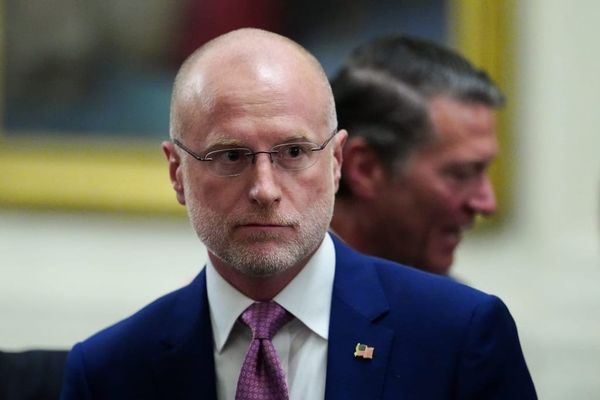
Stood up by Chairman Brendan Carr, the FCC’s Council on National Security was designed to integrate policy, enforcement, and legal functions across the agency. The council brings together staff from multiple bureaus and offices.
“Rather than having national security work streams siloed in individual bureaus, we integrated all the different functions into one body to harmonize rules and coordinate a unified agenda,” Chan said.
Using authorities to restrict foreign technology and coordinate more closely with other federal agencies, the FCC has positioned itself as a frontline defender against foreign adversaries targeting U.S. communications.
Covered list
The FCC’s “covered list” has been a central tool in its efforts. The list identifies communications equipment and services that pose national security risks.
Created under directives stemming from the Secure Equipment Act of 2021, it bars listed equipment from receiving FCC authorization for sale or import in the United States.
“That’s everything from phones to routers to drones,” Chan said, describing the policy as a functional ban on access to the U.S. market.
The FCC relies on interagency determinations to add entities to the list, Chan said. The tool has evolved from a narrow restriction into a central mechanism underpinning many of the agency’s national security actions.
“We've created a new avenue for the U.S. government to use in its arsenal to protect itself,” said Zenji Nakazawa, chief of the FCC’s Public Safety and Homeland Security Bureau, “but also to become more proactive in its stance when it comes to national security.”
Enforcement
Enforcement activity tied to national security rules was also increasing, with investigations into covered list entities, new penalties, and efforts to remove unauthorized equipment from U.S. markets are underway.
Regulators said more than 3 million illegal or unauthorized device listings have been removed from online marketplaces.
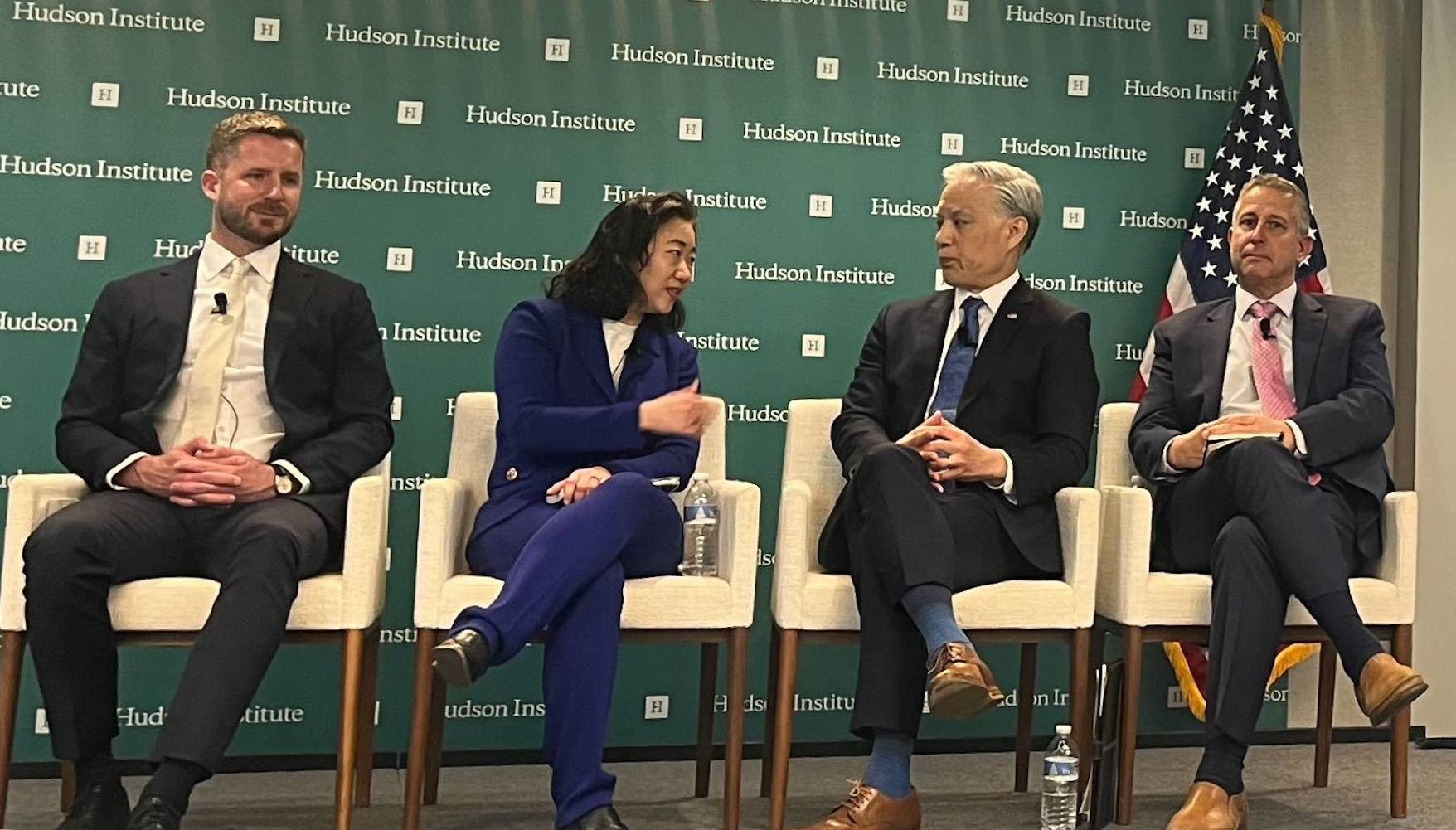
“We are focused on scale. We want to bring new devices, like AI glasses, all of these cool things to market, but when you reach the scale that we do, there are going to be a couple of bad apples that slip through,” said Alice J0u, deputy chief for the FCC's Office of Engineering and Technology.
“That is very much a focus of our equipment authorization integrity rulemaking, which is what we call Bad Labs,” Ju explained. “It's really about policing the gatekeepers to our system test labs.”
Ju said the FCC had removed more than 20 foreign testing labs from its equipment authorization system over national security concerns since adopting stricter rules, a move officials said could tighten parts of the technology supply chain.
Expanding restrictions
Regulators are increasingly targeting entire categories of technology, not just individual firms.
Restrictions on foreign-produced drones, for example, are driven by concerns over surveillance and potential military use.
“Drones are critical to warfare today, and drones are also critical to the modern future economy,” said Chan, “and so it's important for the U.S. to have a trusted drone supply chain here at home.”
Consumer routers have also come under scrutiny due to cyber intrusions and botnet activity in widely deployed devices.
Officials said the policy shift will help drive billions in U.S. investment and domestic job growth.
Supply chain limits
Gaps in domestic manufacturing are limiting national security efforts, officials said.
“The hardest problems are where the U.S. just doesn’t make the technology,” Chan said, pointing to drones and earlier 5G limitations.
The FCC lacks authority to fund domestic production and instead relies on regulation to influence markets.
That dynamic highlights tension between national security goals and domestic industrial capacity.


Member discussion