
FCC Moves to Scale Back Broadband Label Requirements
The commission also moved to delete nearly 400 'outdated' regulations from rulebooks.

Jericho Casper
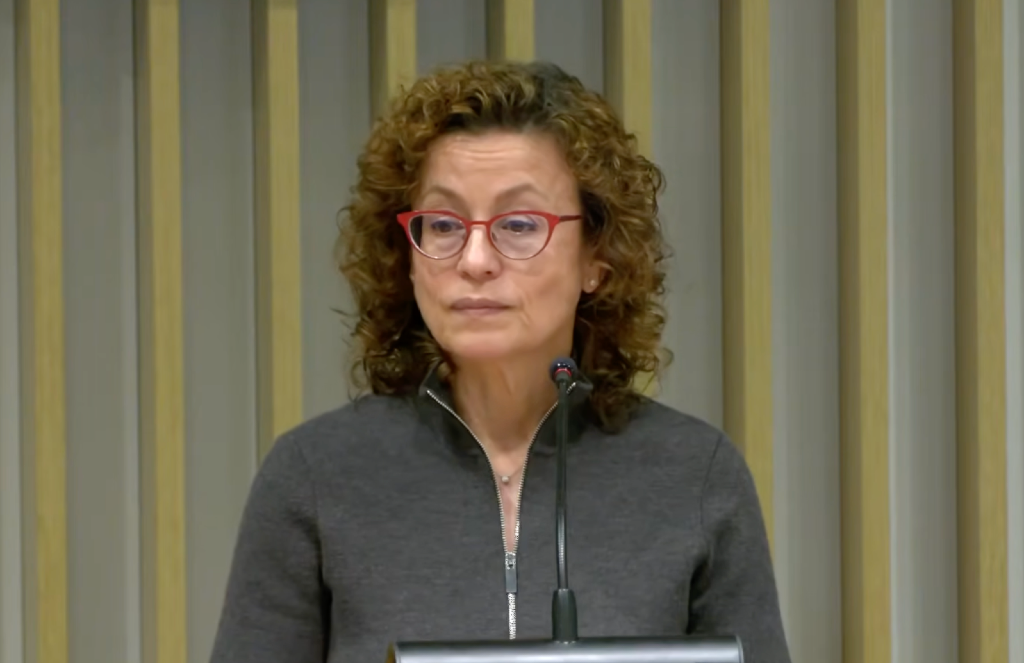
WASHINGTON, Oct. 28, 2025 – The Federal Communications Commission pushed forward Tuesday what one commissioner denounced as its most “anti-consumer” agenda of her tenure.
“This is one of the most anti-consumer proposals I have yet to see,” Commissioner Anna Gomez said during the FCC’s Oct. 28 open meeting, referring to the agency’s 2-to-1 decision to roll back transparency measures designed to keep consumers informed about broadband plans.
“The broadband label is about empowering consumers,” she said. “This proposal says you don’t need that clarity.”
The proposed rulemaking advanced Tuesday would scale back aspects of the FCC’s 2022 broadband “nutrition label” rules, which require internet providers to disclose prices, speeds, and other key terms in a standardized format.
The new proposal asks whether the FCC should remove six disclosure requirements, including those mandating that providers read labels over the phone, offer them in multiple languages, make them machine-readable, and display them within customer online portals.
“Many of these proposals lack full explanation of why they are necessary,” Gomez said. “For example, the proposal to eliminate the requirement to display the broadband label in a language other than English – which only pertains to providers that market their services in a language other than English – was adopted without explaining why this is logical, necessary, or not harmful to consumers.”
FCC Chairman Brendan Carr defended the changes as a way to simplify and modernize compliance. Carr said the 2022 rules, adopted under former Chairwoman Jessica Rosenworcel, had “departed quite dramatically” from the statutory framework established by Congress in the 2021 Infrastructure Investment and Jobs Act.
“Rather than focusing on the information that consumers want and need, the agency added costly requirements that are unrelated to consumers' purchasing decisions,” Carr said. “Today, we take action to… refocus these labels on transparently providing the information that consumers actually need, as contemplated by the 2021 statute,” he said.
Still, Gomez countered that the changes would leave households in the dark about what they actually pay each month.
“Here's what the agency proposes to do today,” Gomez said. “The FCC would allow companies to no longer explain line-by-line fees they choose to pass on to their consumers.”
“These are fees providers are not required to pass on to customers, but they choose to add them to the customer's bill so they can collect them without disclosing them in their marketed price,” she explained.
“If these proposals are adopted, all the information that Congress wanted to ensure consumers had to make informed decisions about the cost of their [Internet] service would no longer be available to them via their online consumer portal,” Gomez said.
'Delete, delete, delete'
Gomez also broke from her colleagues to vote against advancing the FCC’s recurring “Delete, Delete, Delete” initiative, pointing to errors the FCC made this month in its rush to clear the books.
“As it's become customary in every meeting, we have yet another direct final rulemaking to remove rules and regulations in bulk without providing sufficient time for review,” Gomez said. “Notably, two errors were reported by well-resourced industry associations suggesting other problematic deletions may be overlooked in the commission's hastiness.”
The new monthly deregulatory tradition at the FCC established under Carr seeks to eliminate outdated rules, reduce unnecessary regulatory burdens, accelerate infrastructure deployment, and promote network modernization, according to the agency.
This month’s direct final rulemaking proposed deleting approximately 398 provisions, totaling 58,598 words and spanning 138 pages of the Code of Federal Regulations, that FCC staff deemed “outdated.”
However, Gomez said two companies had flagged errors in the draft list, proof, she argued, that the FCC was moving too quickly.
She called the FCC’s twenty-day public comment window “unreasonably short” and said the rushed process had “imposed a massive burden on the public.”
Gomez has requested extending the public comment window to 45 days, a request she said “was denied without explanation.”
In other business, the FCC unanimously approved an enforcement measure to curb robocalls, a fifth further notice on Next GenTV to support the ATSC 3.0 transition, and a notice on IP interconnection to ensure voice networks remain compatible as carriers migrate to internet-based systems.
Additional actions from Tuesday’s meeting – including items focused on increasing the use of upper microwave spectrum, reforming prison phone call rates, and tightening restrictions on the import of foreign equipment – will be detailed in a separate report by Broadband Breakfast.



Member discussion