FCC’s Carr: Retiring Copper Networks Will Save Billions
Chairman Brendan Carr said the FCC has ejected more than 1,200 telecom providers for robocall mitigation.

WASHINGTON, April 16, 2026 – Ditching outdated copper communications networks will reap big financial rewards, according to Federal Communications Commission Chairman Brendan Carr.
On Thursday, Carr said the agency’s decision to retire copper networks will save billions of dollars a year.
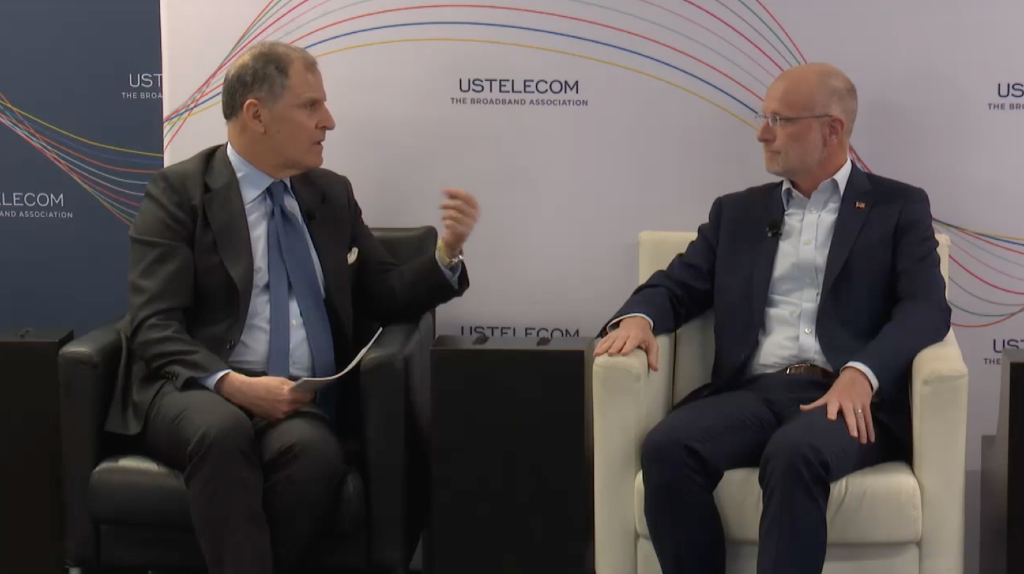
Carr joined USTelecom CEO and President Jonathan Spalter on the association’s 2026 American Connectivity Forum Livestream to discuss the FCC’s latest efforts in strengthening connectivity and protecting consumers.

Carr said for decades, long-standing federal rules prevented network providers from upgrading to modern broadband deployment methods. He said these regulations “forced providers to maintain aging copper networks instead of upgrading to fiber,” even when the copper lines were damaged in extreme weather.
“By simply allowing providers to retire copper line networks and upgrade communities with high speed networks instead, we are saving billions of dollars a year,” Carr said.
He said one provider spent $3 billion a year alone maintaining copper networks, but will now be able to reinvest that money for high speed networks and modern infrastructure.
Carr said he was focused on building out cheaper and faster internet infrastructure through the FCC’s “Build America” agenda. He said he has updated environmental and historical preservation rules at the federal and state level so it no longer “needlessly” delays infrastructure construction. At the local level, Carr said he planned to update shot clocks, which are mandatory time limits for permit and infrastructure project approval.
“There’s been some efforts over the years on that, but we’re moving across the board from environmental [and] historic rules as well, and then general permitting reform,” Carr said. “We’re going to work hard to get this thing turned around.”
He also highlighted the FCC’s recent proposal to strengthen illegal robocall protections, which would expand “Know Your Customer,” or KYC, requirements for telecom providers.
He said this was a part of the fundamental overhaul of the FCC’s robocall strategy that attacked the problem “at every single portion of the life cycle of a call,” instead of focusing on one or two bad actors.
From this new approach, Carr said he has tightened access to phone numbers and ejected more than 1,200 telecom providers “that we didn’t think were doing enough to combat it.”