FCC’s Trusty Looks to Universal Service's Next Phase
Trusty pointed to lessons from recent trips across the country as she considers the FCC’s approach to rural connectivity.

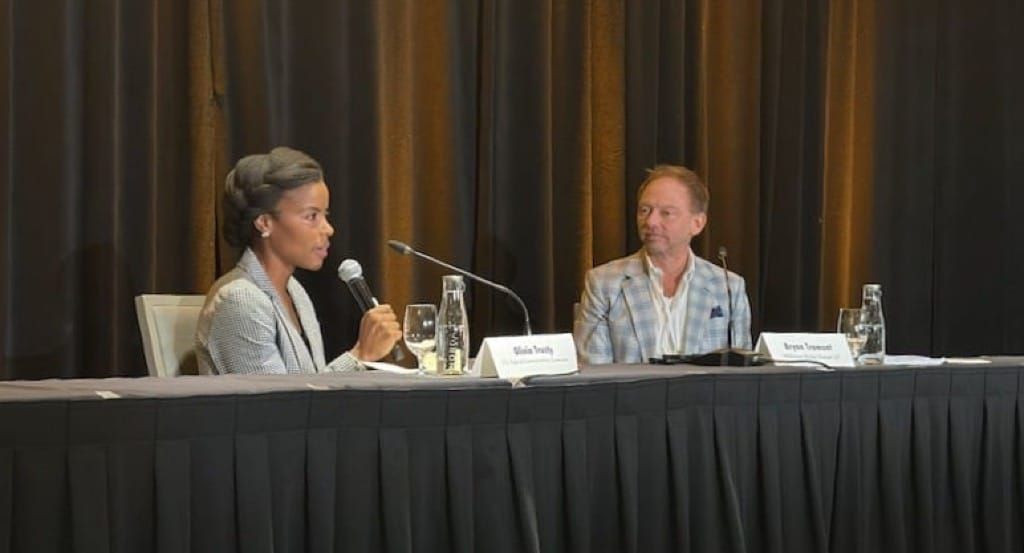
August 26, 2026 — Federal Communications Commissioner Olivia Trusty said the Universal Service Fund’s future should include a focus on keeping broadband networks running after federal dollars have helped build them.
Speaking at the Technology Policy Institute conference in Aspen, Colorado, Trusty said the FCC is considering how the roughly $8 billion-a-year Universal Service Fund can sustain networks once deployment is complete. The comments come as the commission undertakes a broader review of the fund and its administration.

“When I look at the USF, it for a number of years has helped to connect millions of Americans and businesses across this country,” Trusty said.
But she said the commission is now thinking about what happens after networks are constructed.
“What does this mean for the ongoing operation and maintenance of networks once we’ve built everything out?” Trusty said. “How can our investments be sustained?”
Trusty said those questions are shaping how she approaches USF policy. She also pointed to rural communities’ ability to participate in the artificial intelligence economy and to the fund’s role in the communications security landscape.
The comments come as the FCC examines the administration of USF and the role of the Universal Service Administrative Co., which has managed the fund since 1998. In July, the commission launched a comprehensive review of USAC’s operations, including its processes, expenses, governance structure and long-term role as the fund’s administrator.
The FCC has also been examining the individual programs supported by USF. In May, the agency opened an inquiry into the future of its high-cost program, including the potential role of satellite providers in subsidized broadband deployments.
Trusty travels to rural communities
Trusty said her own travels to rural communities have influenced how she views the fund.
She recalled visiting Eek, Alaska, a remote tribal village where the difficulty of traveling across the tundra underscored the challenges broadband providers face when deploying infrastructure in remote areas.
The experience, she said, reinforced the importance of the USF and the Alaska connectivity fund.
Trusty also cited a visit to North Dakota, where she met with SRT Communications, a rural provider serving Minot air force base. The visit showed her how a small rural carrier can provide connectivity to infrastructure that is important to national defense.
“Having that perspective as we’re thinking about USF, for example, at the FCC, is, I think, really important to understand all of the ways in which that kind of program is supporting our economy and national security,” Trusty said.
Her comments come as the financial sustainability of USF remains a major issue for policymakers. The fund’s contribution factor reached a record 38.8 percent in the third quarter of 2026, as the traditional revenue base used to finance the program continues to shrink.
A recent report from broadband advocates called on Congress to address the fund’s long-term legal and financial foundations while preserving its core mission.