
Federal Circuit Sends Spectrum Property Rights Case Back for More Briefing
Judges felt more information was needed to rule confidently on the issue.

Jake Neenan
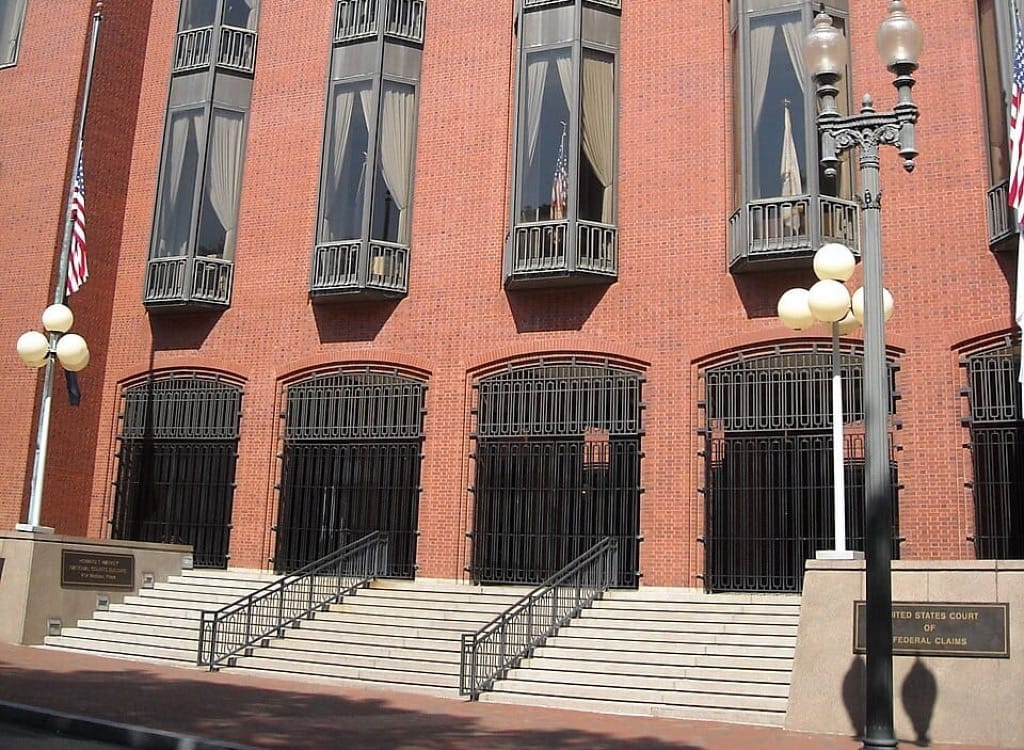
WASHINGTON, March 9, 2026 – After hearing oral arguments last month, federal judges said they didn’t have enough information to decide whether spectrum licenses create property rights for license holders.
Satellite company Ligado alleged Defense Department operations are preventing the company from making use of its FCC license and thus the company should be entitled to compensation. The government countered that electromagnetic spectrum is a public resource that the FCC grants access to, and thus licensees don’t actually own anything and should not be compensated if the government operates in bands they were licensed for.
“We conclude that the parties have presented arguments at too high a level of generality and with insufficient focus on the specifics of the statute at issue and of actions taken under it,” U.S. Court of Appeals for the Federal Circuit Judge Richard Taranto wrote in a Monday opinion.
Taranto wrote that the lower court, the Court of Federal Claims, was correct to deny the government’s request to dismiss the case, but that the Federal Circuit panel didn’t feel confident ruling on the property rights question with the information it had. The appellate court remanded the case “for the parties to litigate the key issues through an analysis having the focus required for a fully informed decision about whether the government or Ligado is correct.”
Taranto was appointed by President Barack Obama. The other judges on the panel, Chief Judge Kimberly Moore and Judge Kara Fernandez Stoll, were appointed by President George W. Bush and Obama, respectively.
How the case is decided could be important for the wireless industry, which depends on FCC licenses and has spent hundreds of billions acquiring them at auction. Major broadband trade group USTelecom told judges in a filing that carriers would be less willing to buy up licenses and build networks if their licenses didn’t confer some kind of property right, especially with respect to agencies other than the FCC.
It doesn’t appear likely that the industry, which has operated under the impression that the government can’t encroach on FCC licenses without compensating license holders, will get a definitive legal answer before the next big spectrum auction in 2027, New Street Research policy advisor Blair Levin wrote in an investor note last month.
“As we approach the next big spectrum auction, scheduled to commence in June 2027, the companies and the investment community will become more interested in the question of the nature of what they are bidding on,” Levin wrote. “Given the oral argument, we think it is unlikely that the question will be resolved with finality by the courts by that point.”
Moore said during oral arguments she felt that “this case is destined for the Supreme Court.”
Taranto flagged a number of issues he said potentially needed more analysis. Those included parts of the Communications Act dealing with issuing and revoking FCC licenses, plus whether the FCC, which handles commercial spectrum use, or National Telecommunications and Information Administration, which manages federal spectrum use, has the final say over who can use a specific band.
“The existence of [NTIA’s] authority might undermine, weaken, or complicate Ligado’s premise that the [FCC] had full and final power to provide sole use rights to Ligado,” Taranto wrote.
Ligado also said during oral arguments that it had completed more cooperation with the DoD, potentially a condition to any property rights related to Ligado’s licenses taking effect, than it had previously told judges. Taranto wanted more information on whether that was the case and how that change might be relevant to the case.
“We are glad that today’s decision allows Ligado’s case to move forward. Ligado won on the claims the Federal Circuit decided,” Ligado said in a statement. “The court directed further consideration of certain merits issues, and Ligado looks forward to continuing to pursue just compensation for the government’s interference with its licensed spectrum rights.”
Update: This story was updated to add a statement from Ligado.




Member discussion