FirstNet Showcases Disaster Response Network
Officials said the public safety network is adapting to more frequent and severe disasters.

WASHINGTON, April 23, 2026 – FirstNet is evolving to respond to increasingly frequent and severe natural disasters.
The nationwide public safety network delivered over 2,500 deployable solutions last year at no cost to police, fire, EMS, and other emergency personnel. The network is built and operated by AT&T and overseen by the FirstNet Authority.
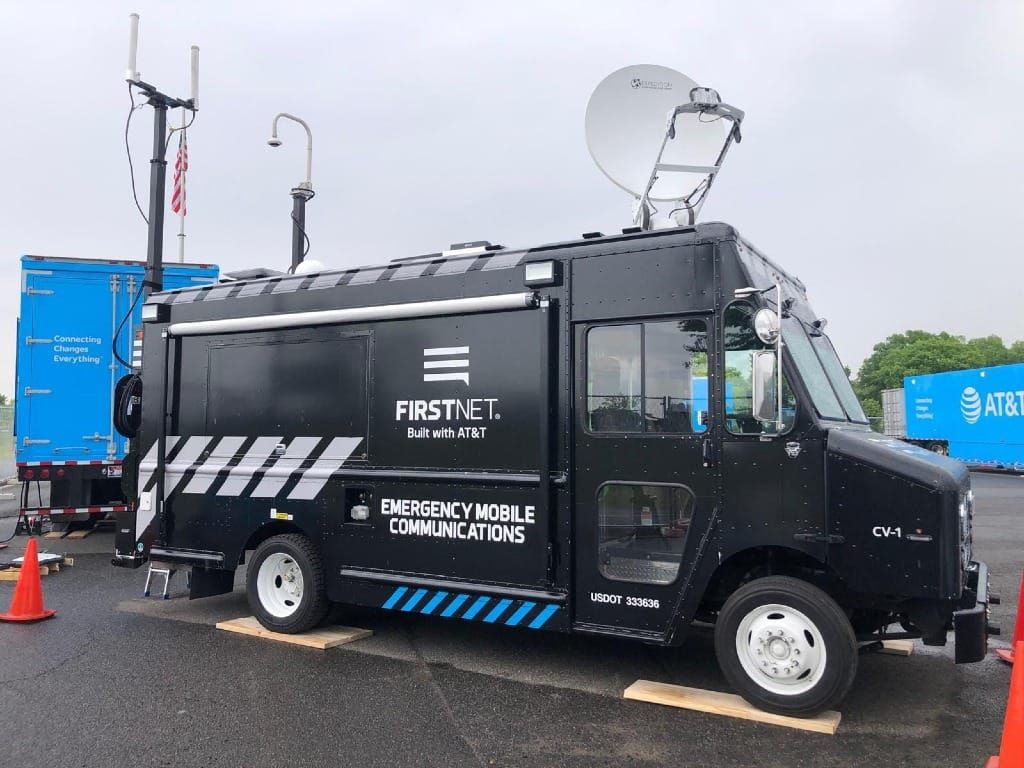
At a showcase in Washington, officials said FirstNet’s arsenal includes roughly 1,000 different types of technologies. From specialized boats and response vehicles to mobile command centers and central offices, the showcase featured a mix of aerial, ground, and maritime technologies designed for disaster recovery.

Michael Dubois, principal network technology support at AT&T, oversees a fleet of 67 deployable trailers staged across five U.S. warehouses designed to replicate full network operations in disaster zones.
He described how crews use a specialized armored fiber cable that allows rapid field connections without traditional splicing.
He cited an example in Hartford, Tennessee, when flooding from Hurricane Helene damaged AT&T central offices near Pigeon River. Three trailers were deployed to recreate the facility on site.
“Within three days, we had all the cell sites back up.” Dubois said. “By the end of the month, we had restored all services.”
Another prominent display featured a landing craft, a 45-foot flat-bottomed boat designed to transport vehicles and equipment to shore.
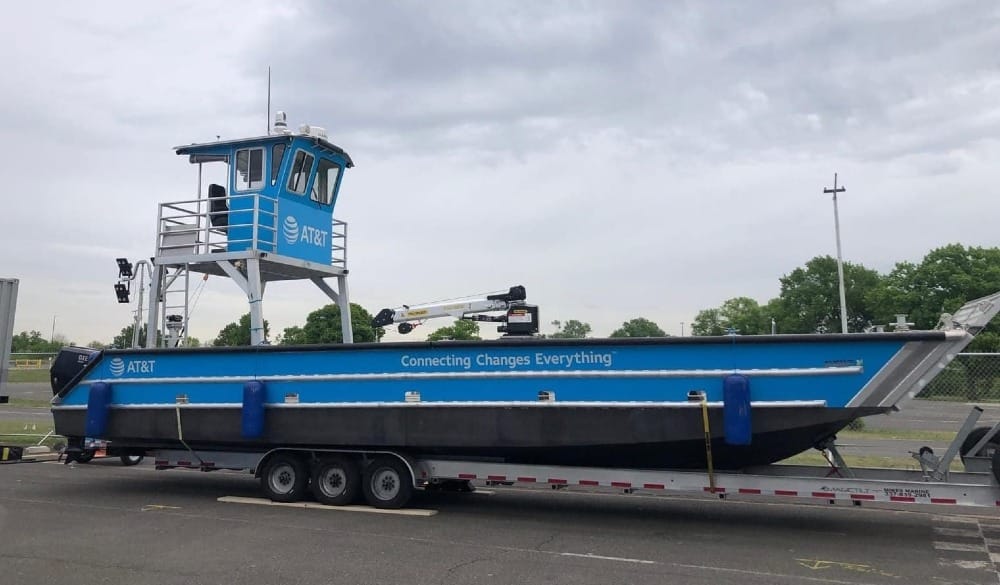
The vessel was developed after Hurricane Ian, when crews in Florida faced a two-day delay waiting for a barge to reach Sanibel Island from Fort Myers.
“We waited and waited for a barge to get assets to Sanibel,” said Jim Salter, a lead network technology specialist and master captain. That’s when “we came up with the solution.”
The vessel runs on diesel, which is easier to source during emergencies. It carries a 400-gallon fuel tank and is equipped with a 40-foot pump and hose system, allowing crews to refuel other response assets in the field.
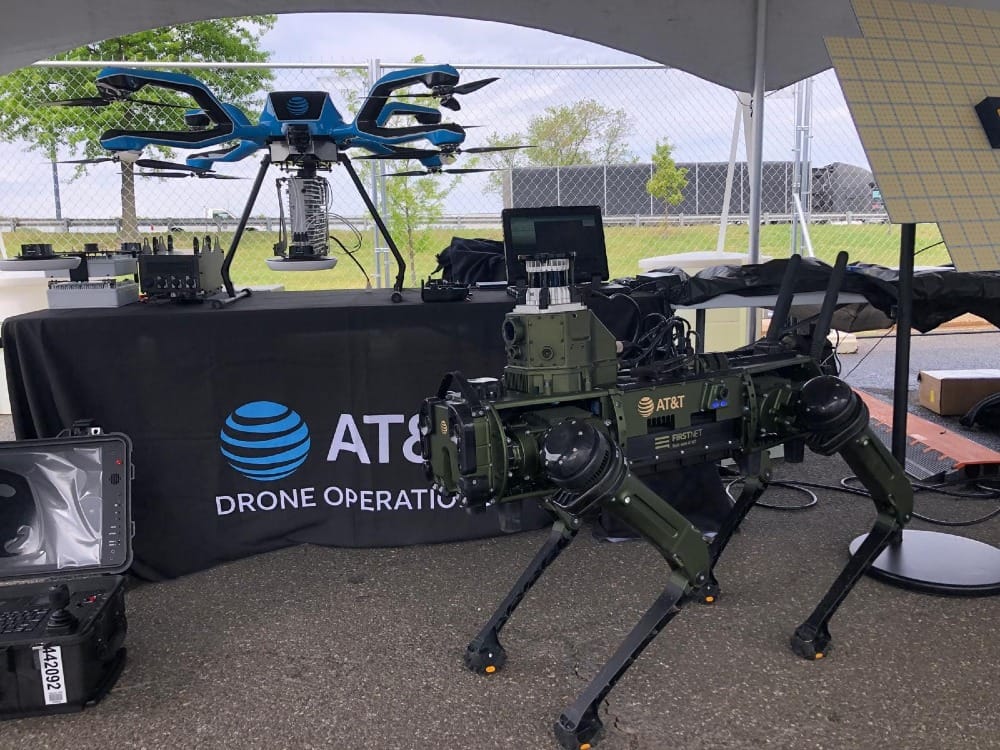
The showcase also featured drones designed to restore cellular coverage, land mobile radio (LMR) systems, 3D imaging tools, and emerging direct-to-device satellite technology.
The technology gained added significance this week as federal regulators approved AST SpaceMobile to expand its direct-to-cell service using AT&T and Verizon spectrum, a move expected to benefit FirstNet by expanding low Earth orbit satellite coverage.
The House voted Monday to extend the FirstNet Authority through September 2037. Without reauthorization, the program would otherwise sunset in 2027.
Officials said the program is seeing a 10 percent year-over-year increase in requests as its subscriber base continues to grow.