
Fischer Wants More Fiber for Nebraska from Trump’s Commerce Department
The Republican Senator did not comment on BEAD non-deployment funding.

Jake Neenan
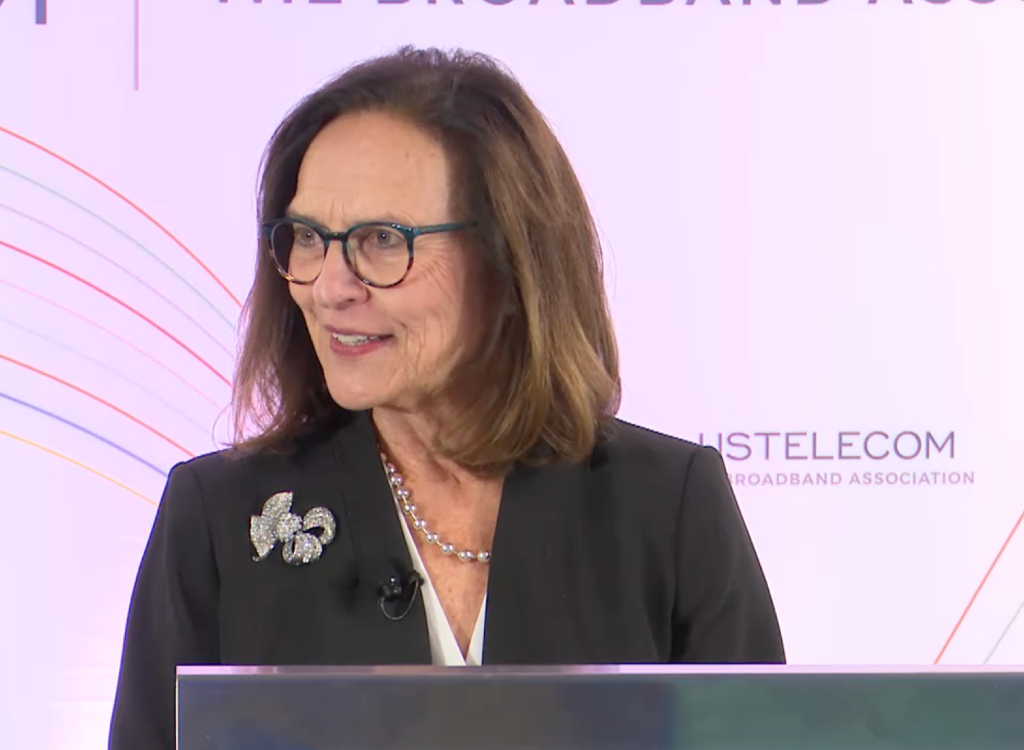
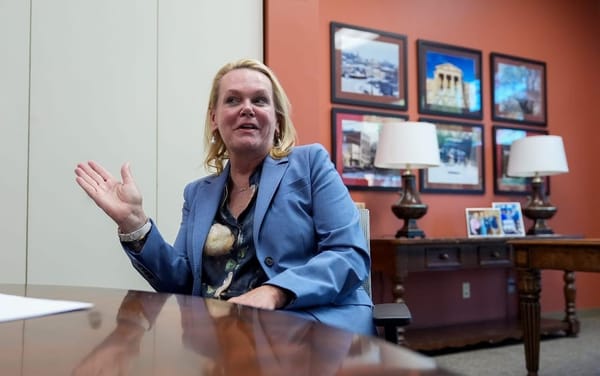
WASHINGTON, Oct. 23, 2025 – Sen. Deb Fischer, R-Neb., would prefer her state funded more fiber under the Broadband Equity, Access, and Deployment program, she said Thursday.
The Trump administration handed down new rules for the $42.45 billion broadband expansion program in June, ending an explicit preference for fiber and requiring another bidding round with an emphasis on lowering deployment costs. It made it easier for low-earth orbit satellite providers like SpaceX to compete for BEAD funding.
Fischer said she was by and large supportive of the new rules, which eliminated some provisions the GOP had been critical of, like more stringent low-cost service requirements and fair labor incentives, among other things.
“However, to be frank, I am from Nebraska, and the recent program changes have also minimized Nebraska’s ability to stick to its original state build-out plan,” she said.
“No state should have to rely on one type of network technology. That does not suit a program meant to build future-ready communication,” she added. “Fiber-based broadband remains absolutely critical to our rural development.”
Fischer spoke at a USTelecom event in Washington.
States have still been leaning on fiber in their tentative awards, at least to a greater extent than some expected when the new rules came down. In the 49 states that have reported those draft results, about 66 percent of BEAD-funded locations are in line for fiber, with about 20 percent getting LEO satellite service.
But not in Nebraska. Of the state’s roughly 14,000 locations, just 9 percent would get fiber and nearly 58 percent would get satellite.
Those results are not set in stone, but a final plan with a higher price tag, which more fiber would likely require, isn’t likely. The Commerce Department is reviewing states’ submission and asking broadband offices to justify their most expensive projects, and in some cases negotiate awards down or award areas to other providers, depending on how project per-location costs compare to agency models.
No state plans have been approved yet. Commerce said it plans to approve them within 90 days of submission, which for most states would be by early December.
“Ultimately, I hope to see more balanced awards come, that are among fiber, fixed wireless, and also satellite,” Fischer said. “I’m going to continue to press for this approach to close the digital divide, and to keep it closed.”
Notably, Fischer did not mention “non-deployment” funding under BEAD. That’s money allocated to states in 2023 that ultimately won’t be spent on broadband deployment.
The states and territories that have posted draft results are collectively more than $20 billion under budget – in Nebraska there would be more than $350 million in BEAD money left over after projects are funded. States had been planning under the Biden administration on spending unused BEAD money on broadband adoption and workforce development efforts, among other things.
The Trump administration isn’t eager to see much of that spending, and rescinded approval for any non-deployment efforts with its new rules. Commerce said at the time more guidance would come in the future.
States broadly would prefer to keep the money and spend it as they’d originally planned. Gigi Sohn, head of the American Association for Public Broadband, has said she’s trying to convince more Republican politicians to push the administration not to claw back unspent BEAD money.
So far Louisiana Gov. Jeff Landry and Sens. Roger Wicker, R-Miss., and Shelley Moore Capito, R-W. Va., have said they want their states to keep their allocated cash. Landry proposed requiring that states spend it on boosting AI infrastructure, or on certain “America First” policies that have some overlap with what states were already considering.
Spectrum
Fischer also didn’t mention the dispute over her amendment to the Senate’s draft of the annual defense policy bill. Fischer’s provision would give the Defense Department veto power over any changes to the lower 3 GigaHertz (GHz) and 7/8 GHz bands.
Those are already protected from being auctioned by the One Big Beautiful Bill Act, but federal users could need to be relocated into those bands to meet the same law’s mandate to sell off 500 megahertz of government spectrum.
Sen. Ted Cruz, R-Texas, eager for a large spectrum pipeline for the wireless industry, has said he wants the provision struck in the final bill. The House-passed version doesn’t include a similar measure, and Rep. Richard Hudson, R-N.C., has also said he agreed with Cruz. The House and Senate will have to reconcile their bills and agree on a final version before it’s signed into law.
USF
Fischer didn’t have any updates on the Congressional working group that’s crafting an update to the Federal Communications Commission’s Universal Service Fund. She’s leading the group with Sen. Ben Ray Luján, D-N.M.
The roughly $8 billion-per-year program, which just survived a major legal challenge, funds broadband access and adoption programs with fees on interstate and international voice revenue, a rapidly shrinking pool of cash.
The working group is working on legislation to update the fund. Broadband industry commenters told the working group they want big tech revenue assessed, which would likely be in addition to broadband revenue. Some advocacy groups and think tanks said USF’s low-income broadband subsidy should be expanded in the wake of the shuttered Affordable Connectivity Program, which provided a larger monthly discount.


Member discussion