Groups Campaign To Restore Canceled Digital Equity Funding
Communities see setbacks in broadband access a year after funding loss.

Georgina Mackie
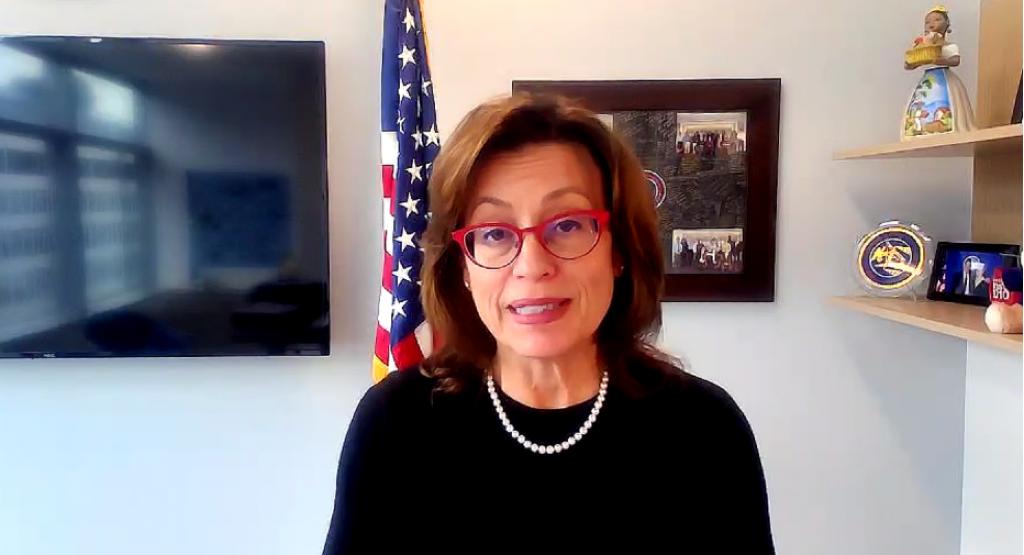
WASHINGTON, May 14, 2026 – A coalition of national broadband and civil rights organizations launched a campaign Thursday pushing Congress to revive federal funding one year after the loss of the Digital Equity Act.
The campaign, led by Hispanic Federation, Hispanic Technology and Telecommunications Partnership, and allied groups, focuses on restoring more than $2 billion allocated under the 2021 Infrastructure Investment and Jobs Act for digital navigator initiatives, workforce training, and affordable internet adoption efforts.
Speakers at Thursday’s event said the funding loss was disrupting local outreach efforts nationwide.
Andrew Butcher, president of the Maine Connectivity Authority, said Maine lost $35 million in anticipated funding after developing statewide implementation plans and hiring staff.
“People lost jobs,” Butcher said. “Every single person who shared their personal experience with the promise that it would lead to new opportunities was let down.”
Other speakers warned progress on broadband access had begun reversing.
“After nearly two decades of steady progress, last year we saw a decline in the number of people with reliable internet for almost every demographic group in the country,” said Frankie Miranda, president and CEO of Hispanic Federation.
FCC Commissioner Anna Gomez tied the funding to workforce participation and artificial intelligence readiness, arguing broadband deployment alone would not close the digital divide.
“You cannot build an AI-ready workforce without these investments,” Gomez said.
Marc Morial, president and CEO of the National Urban League, criticized the cancellation as a retreat from bipartisan commitments made under the infrastructure law.
“Digital equity is not a side issue. Digital equity is an American issue,” Morial said.
Lawmakers at the event urged Congress to restore the funding.
Rep. Grace Meng, D-N.Y., called broadband access essential for education, employment, and health care access, while Sen. Ben Ray Luján, D-N.M., said he plans to reintroduce legislation creating a nonprofit foundation focused on digital equity initiatives.
“Broadband access is not a luxury,” Luján said. “It’s a gateway to education, economic opportunity, health care and a better life for working families.”
Angela Siefer, executive director of the National Digital Inclusion Alliance, said nonprofits and digital navigator groups were already reducing services and laying off staff after the funding cancellation.
NDIA sued the Trump administration in October over the cancellation, arguing federal officials improperly terminated congressionally approved funding. A separate coalition of 21 states and the District of Columbia filed a parallel legal challenge.
“Digital inclusion work is the real last mile to close the digital divide,” said Chris Lewis, president and CEO of Public Knowledge, arguing broadband infrastructure alone would not solve adoption gaps.