House Committee Approves Package to Address Data Centers’ Growing Energy Demands
Bills aimed at modernizing the nation’s grid for AI data centers advance to the full House

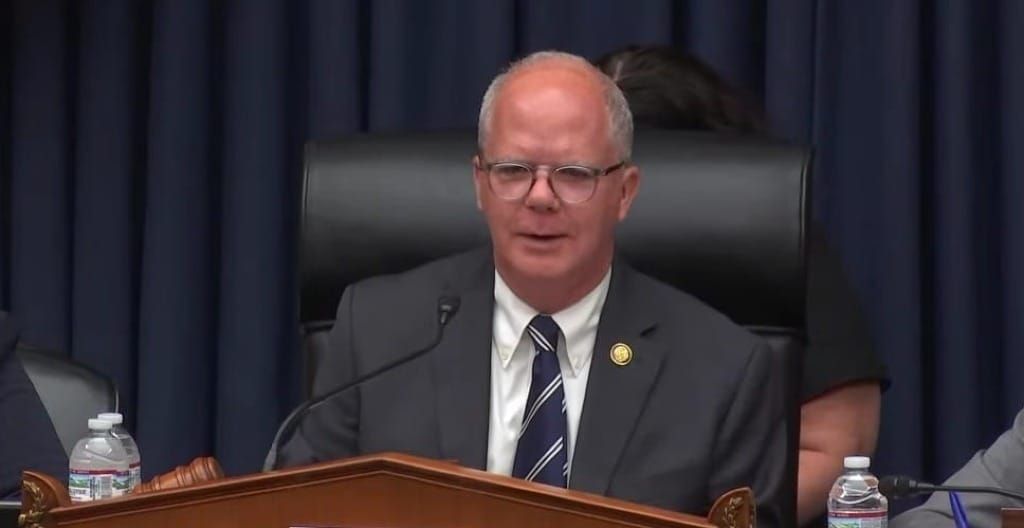
WASHINGTON, July 22, 2026 – House Republicans and Democrats found common ground Tuesday in supporting legislation aimed at shielding ratepayers from the rising grid costs associated with data center growth.
The Ratepayer Protection Act, H.R. 9340, sponsored by Reps. Gabe Evans, R-Colo., and Kathy Castor, D-Fla., sailed through the House Energy and Commerce Committee in a 52-0 vote, along with five additional measures focused on modernizing the nation’s power grid.

The energy measures advanced Tuesday are part of a broader energy package being assembled by committee Republicans.
Committee Chairman Rep. Brett Guthrie, R-Ky., released the discussion draft of the Permitting Our Way to an Energy Resurgence (POWER) Act on Wednesday, which combines 19 bills aimed at expanding grid capacity, streamlining energy permitting, and addressing rising electricity demand from large users, such as data centers.
At the center of Tuesday’s markup was the Ratepayer Protection Act, which lawmakers from both parties framed as a way to ensure data center developers, rather than residential customers, bear the cost of new grid infrastructure needed to serve large electricity demands.
“This legislation codifies President Trump's ratepayer protection pledge,” Evans said. “It’s common sense, bipartisan, and it directly responds to constituents’ concerns.”
H.R. 9340 would require each state regulatory authority to consider adopting a federal standard requiring data centers and hyperscalers with a demand of 100 megawatts to pay the full cost of any generation, transmission, or distribution upgrades needed to serve them.
“This bill does not impose a federal mandate,” Evans explained. “Instead, it offers a thoughtful federal standard for states to consider as they evaluate how best to integrate large loads.”
Several states including Minnesota, Michigan, Virginia, Ohio, Texas, California, Wisconsin, and Tennessee have adopted or advanced policies aimed at ensuring large loads bear more of the costs associated with connecting to and expanding the grid.
Ahead of the markup, committee leaders narrowed the ratepayer bill to apply specifically to large data centers through a substitute amendment, removing broader language that would have covered any non-residential electricity customer with demand of 100 megawatts or more, such as industrial facilities, manufacturing plants, or large commercial operations.
The change drew criticism from the Data Center Coalition, the industry’s leading trade group, which argued the committee’s changes to the bill leave everyday Americans vulnerable to the costs associated with large load growth from other industries.
Another provision in the package, H.R. 6529, would direct the Federal Energy Regulatory Commission to convene a conference with regulators, utilities, consumer advocates, and large electricity users to examine how the costs of serving large new users should be allocated.
Other measures focus on improving grid reliability, planning, and infrastructure.
H.R. 6633, the High-Capacity Grid Act, passed 49-0, would direct FERC to require certain transmission projects to use advanced, high-capacity conductors designed to increase the amount of electricity existing transmission infrastructure can carry.
H.R. 9332, the Load Forecasting Enhancement Act, passed 47-0, would require FERC to establish regional boards to develop best practices for improving electricity demand forecasts, including accounting for growth from large new electricity users.
H.R. 9335, the Advanced Transmission Technology to Reduce Rates Act, passed 39-10, would direct the Department of Energy to create a public clearinghouse on advanced transmission technologies and provide technical assistance to utilities and grid operators seeking to deploy them.
H.R. 9339, the Affordable Innovation for the Grid Act, passed 44-0, would require DOE to assess how artificial intelligence and high-performance computing could improve grid operations, including by speeding up generator and large-load interconnection studies and identifying barriers to adoption.
Democrats on the committee said additional action would be needed to address broader community impacts of data centers, including water use, noise, environmental concerns and local transparency.
“I am deeply concerned about the impact that unrestricted data center growth is having on our communities,” said Ranking Member Frank Pallone, Jr., D-N.J., “We need to be putting real, substantial guardrails in place to restrict their impacts on our air, our water, our power grid.”
Tonko similarly urged lawmakers to consider standards addressing environmental impacts.
“I would encourage everyone to commit to working on meaningful federal standards that address these facilities’ air emissions, water usage, and much more that can impact our communities and our people,” said Rep. Paul Tonka, D-N.Y.
The House E&C Committee advanced 17 of the 29 bills it had been scheduled to consider during the markup, leaving several measures unfinished.