Open Rules and Protocols, Including Section 230, Fuel ‘Permissionless Innovation’
The FCC's expanding 'Covered List' now requires companies to seek government approval, reversing innovation

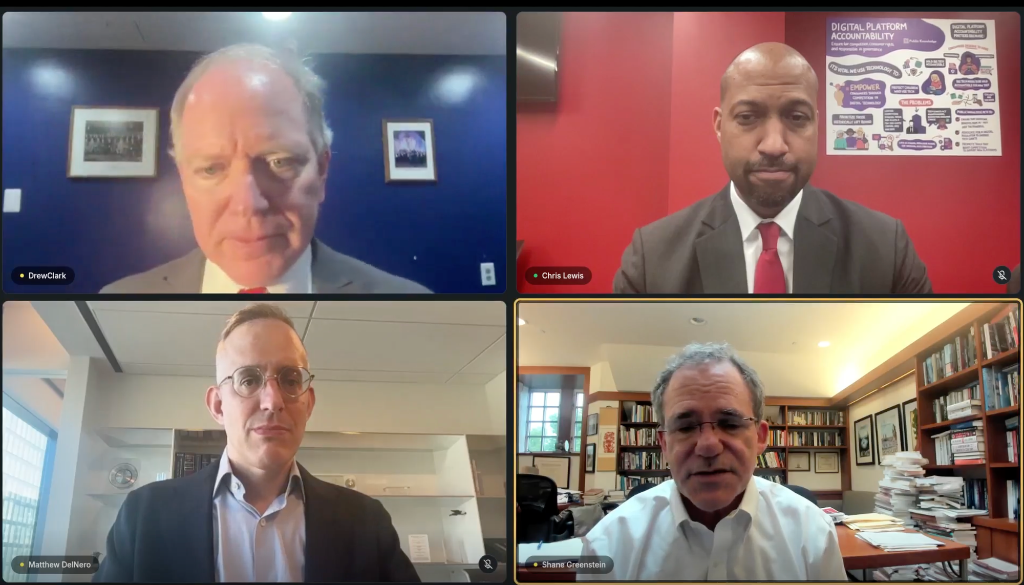
WASHINGTON, Oct. 2, 2026 — Permissionless innovation has driven American communications from the transistor to the smartphone, according to a group of esteemed historians and policymakers speaking Thursday at "250 Years of American Independence and 150 Years of American Telecommunications."
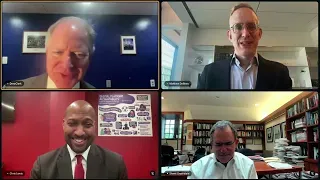
Breakfast Club Members Watch Panel 1 at America250 / Telecom150
That freedom to launch a new product or service without first securing a regulator's or a network owner's approval, has been a critical ingredient in American success across the generations, agreed each of the panelists.
For online platforms, that freedom was written into federal law in the form of Section 230 of the Telecom Act of 1996, said Chris Lewis, president of Public Knowledge, speaking at the Broadband Breakfast event.
That section provides the federal shield that protects websites from lawsuits over users' posts. It has spurred a generation of online platforms by reducing the legal exposure of hosting third-party content. The platforms that followed enabled Americans to publish information and answer one another, extending communication beyond broadcast television's one-way distribution.
But the 1996 law included no guardrails against those platforms consolidating into a few dominant companies, Lewis said. Nor did Congress pass comprehensive privacy protections for their users, he added.
Open protocols freed developers from seeking approval
Section 230 was just one manifestation of permissionless innovation, said Lewis, responding to moderator Drew Clark’s request for panelists to identify overarching sources of American innovation. Clark is CEO of this publication.
In addition to developers being enabled to build on the Internet without seeking approval from a regulator or a network owner, the Internet's underlying protocols – the technical rules governing how computers exchange data – were also open to anyone.

Podcasting is another example of something that grew directly out of that freedom of permissionless innovation, said Shane Greenstein, a Harvard Business School economist who studies digital markets.
Podcasters distribute episodes through RSS feeds, an open web format for syndicating new content. A firm with a new idea could "get access to distribution without restriction," Greenstein said.
Breaking AT&T's grip spurred new waves of invention
American networks innovated most when they partnered with the nation's research scientists and independent entrepreneurs, Greenstein said. During the AT&T telephone monopoly, that partner was the company's research arm, Bell Laboratories. The lab invented the transistor in 1947, and the component, which controls electrical signals, became the basis of modern electronics.
AT&T’s willingness to share the invention reflected antitrust pressure, Greenstein said. The company licensed the transistor to competing manufacturers in the early 1950s while the Justice Department was suing it.
The 1956 settlement required AT&T to license its existing U.S. patents royalty-free. A second wave of innovation followed once entrepreneurs gained access to the company's discoveries, Greenstein said.
But the same lab also held discoveries back, Lewis countered. The push to break up AT&T exposed inventions Bell Labs had chosen not to sell, along with lines of research it had never pursued, he said.
The 1984 breakup, which separated AT&T from its local telephone companies, spurred greater innovation, said both Greenstein and Lewis. Lewis said he saw similar competitive pressure in artificial intelligence.
The release of ChatGPT, the chatbot from the AI company OpenAI, forced the search giant Google to launch language models it had already been developing, he said.
The force of the 1914 FTC Act
The 1996 law that created Section 230 also prescribed how established local telephone companies would open their networks to competitors and enter long-distance markets, said Matt DelNero, a former federal telecommunications regulator. DelNero previously led the Wireline Competition Bureau, the Federal Communications Commission division overseeing telephone and broadband rules.
Changes in the industry left those provisions largely obsolete within a few years, DelNero said. Laws written around broad goals fared better, he said.
Online privacy enforcement, by comparison, relied heavily on an older law with broader reach, DelNero said. The Federal Trade Commission Act of 1914 created the nation's consumer protection agency. The law's prohibitions on unfair and deceptive business practices continue to apply across different media.
Those prohibitions give the FTC a basis to act when online companies mislead users about how they collect or share personal information, or engage in unfair data practices. That authority has remained a principal enforcement tool while Congress has not enacted a comprehensive federal privacy law, DelNero said.
Flexible spectrum rules paved the way for the smartphone era
Greenstein traced the commercial internet to a 1992 change in federal law. Congress that year expanded federal authority to support networks carrying traffic beyond research and education, which allowed commercial traffic onto the Internet backbone, the high-capacity lines linking networks. Greenstein called the change "the first step towards the commercial internet."
Equipment approval opened up later in the decade, Greenstein said. In the late 1990s, new electronics could wait one to three months for FCC employees to approve them. The commission then shifted that work to private certification bodies.
The approach mirrored Underwriters Laboratories, the private safety certifier whose mark appears on toasters and microwaves. Tens of thousands of products a year now move through the FCC's version, Greenstein said.
Faster approval paid off most in unlicensed spectrum, bands where qualifying devices can operate without individual licenses, Greenstein said. Wireless earbuds and hotel key cards were among the products that benefited.
The FCC also stopped dictating what each wireless band could be used for in the 1990s, Greenstein said. He credited that flexibility with helping support the smartphone era, now dominated by Apple's iPhone and Google's Android operating system. Earlier leaders, including Finnish phone maker Nokia and Canadian smartphone maker BlackBerry, had been less supportive of independent application developers, he said.
‘Covered List’ expansion tests 40 years of open innovation
Permission requirements were returning in the name of national security, DelNero warned. The FCC's covered list names equipment and services the agency deems an unacceptable security risk. It initially targeted manufacturers including Chinese telecommunications equipment maker Huawei and has expanded to foreign-produced routers, drones and certain power inverters.
"Now you do have to go to the government," DelNero said, "and say, I want permission." Policymakers had not weighed that shift against 40 years of permissionless innovation, he said.
But DelNero also offered Section 230 as a case for caution, since its effects proved difficult to anticipate. The liability shield drew little attention when Congress wrote the 1996 law. Other provisions of the Communications Decency Act sought to restrict indecent material online.
The Supreme Court struck down the challenged indecency provisions in the 1997 case Reno v. American Civil Liberties Union, finding that they violated the First Amendment. Section 230 survived.
That history argued for restraint, DelNero said. Government worked best when it acted with humility and did not "prejudge where the technology is going to go," he said.
Lewis argued that consumers also needed privacy law and competition policy, along with public options such as municipal broadband, networks owned by local governments. Consumers wanted technology that "works for them, it doesn't use them or exploit them," he said.
Public polling showed both fear and excitement about AI, Lewis said, alongside a backlash against the social media platforms that rose in the mid-2000s. He did not cite a specific survey.
A June poll by the Pew Research Center, a nonpartisan research organization, put numbers to that mix. Fifty-two percent of U.S. adults said they were more concerned than excited about AI's growing role in daily life, and 37 percent said they felt both equally.
Those concerns could become more visible in the November midterm elections, Lewis said.