Operators: Smart Communities Need More than Fiber, They Need Government Engagement
A Nebraska fiber provider built a wireless network into every city router that school-issued Chromebooks connect to automatically, turning any home into a homework spot.

Akul Saxena
ORLANDO, May 18, 2026 — Fiber broadband operators are deploying a school-only wireless network built into home routers to give public school students automatic internet access.
This is regardless of whether their families subscribe to broadband service, a step that operators said Monday can close the digital divide without waiting for household-level connectivity to catch up.
ALLO Communications, the Lincoln, Nebraska-based fiber provider, built the school-only network into every router it deployed across the city. Chromebooks issued to Lincoln Public Schools students connect automatically to any ALLO router in the city. A student at a neighbor's home, a friend's house, or anywhere on the network can complete schoolwork without a paid subscription.
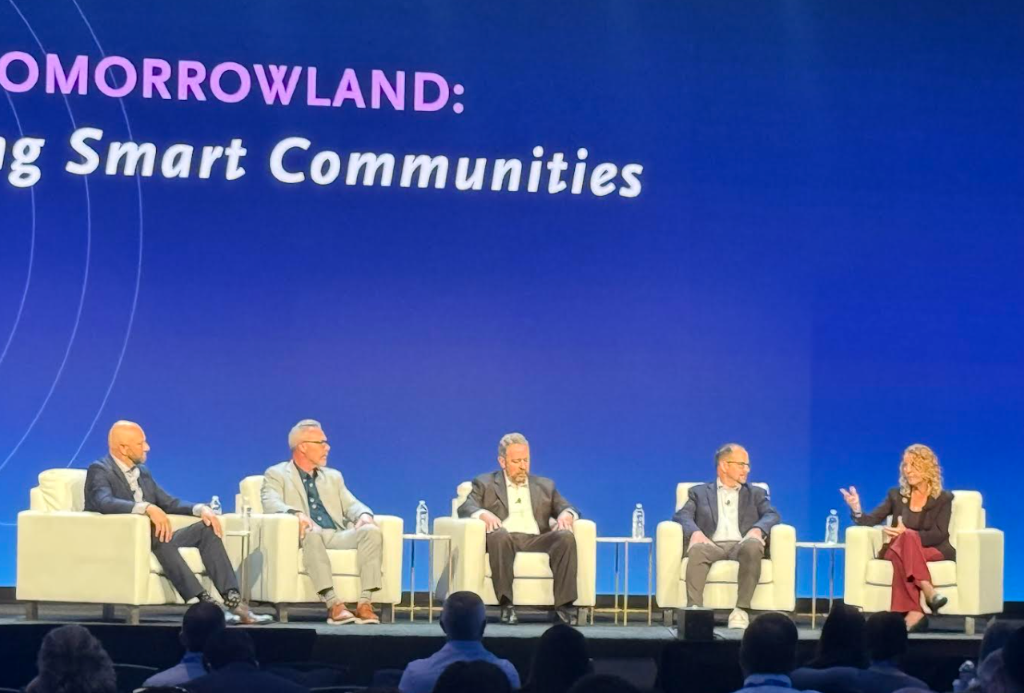
"We are slamming the door on the digital divide in Lincoln," said Todd Heyne, chief construction officer at ALLO Communications.
A smart community, panelists said, is not defined by the public safety cameras and sensors a city deploys but by what the underlying fiber network makes possible: remote medical care, connected schools, and economic development that would otherwise require physical proximity to a major city.
Fixed wireless access and satellite internet can reach some of those goals in some contexts, but fiber is the only technology that scales reliably enough to support all of them, panelists argued. Fiber is the foundation every other technology builds on, from cellular towers to Wi-Fi access points to the fiber backhaul that connects every wireless signal to the broader internet, said Paul Fleming, head of government and external affairs at Arizona-based WeCom Fiber.
Deployment alone does not produce a smart community, said Teresa McCaughey, vice president of global field and partner marketing at Calix, the San Jose-based broadband platform company. What produces results is how deeply operators engage with local governments, schools, and businesses before the first cable is laid.
"Can a student at home get the same educational level as someone inside a classroom?" Fleming added. "The fiber and device portion might be the smart section, but the community outcome is what determines whether you've actually built a smart community."
Fleming described WeCom's deployment in a small Arizona mining town that lost half its population between 1970 and 2020. WeCom connected a school building the town was converting into a business incubation and senior services center, delivering 100 gigabits of capacity to a location no private provider had found economically viable.
"What you just did will save lives," Fleming said the town's mayor told him. "Telehealth and other things will literally save lives going forward."
The economic case extended beyond education. Rural communities that gained fiber access saw residents able to work remotely, said Derek Kelly, vice president of market development at Lumos Fiber, the eastern U.S. fiber provider operating across 10 states. A North Carolina customer described a wife who eliminated a daily 30 to 40 minute commute into Raleigh after fiber reached their community.
The communities that have moved furthest, McCaughey said, are those where operators helped local leaders envision connected parks, first responders with reliable communications, and businesses able to recruit employees who no longer need to live near a major city. That vision, McCaughey said, is what converts a skeptical city council into a committed partner.
"You need to help communities envision what connectivity makes possible," McCaughey said, "before asking them to commit to a build."