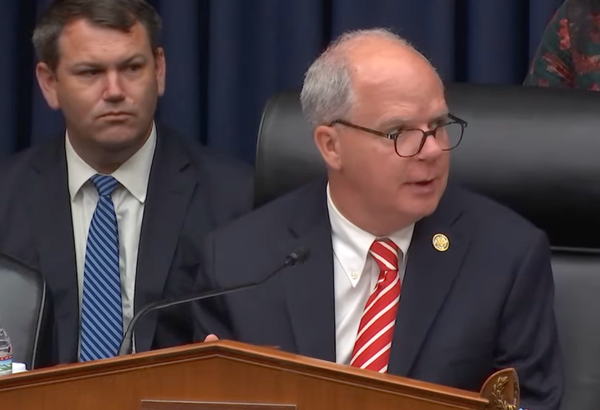
Farm Bill Fails to Advance from Senate Agriculture Committee
Impasse leaves rural broadband provisions, including ReConnect reauthorization, on hold.

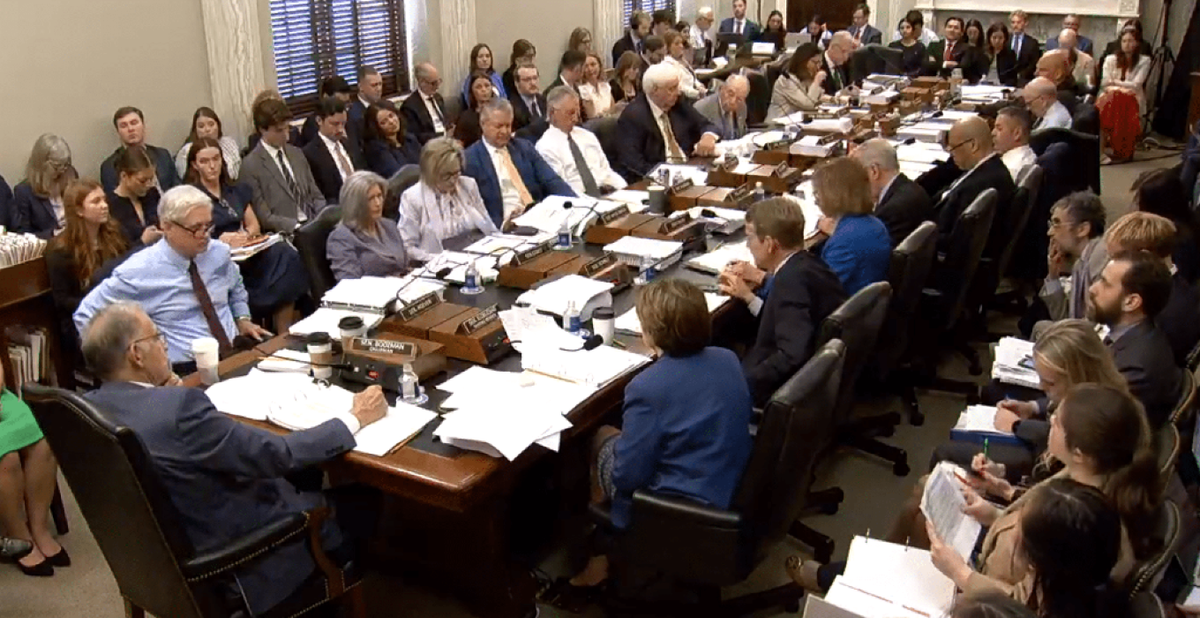
WASHINGTON, August 6, 2026 – The fate of millions of dollars in rural broadband funding remains unresolved as Congress heads into its August recess.
The Senate Agriculture Committee failed Thursday to advance the Agricultural Act of 2026, the chamber’s version of a long-delayed farm bill. The stalled bill includes language that would codify and consolidate the U.S. Department of Agriculture’s ReConnect broadband program, which has distributed $5.5 billion in rural broadband funding since 2018, but has never operated on a permanent statutory basis.


The Senate draft, released in June by the office of Committee Chairman John Boozman, R-Ark., and revised again in late July, would authorize up to $100 million a year for ReConnect through 2031, targeting underserved areas where 90 percent of households lack access to broadband service offering speeds of 25 Megabits per second (Mbps) download and 3 Mbps upload.
Under the draft legislation, newly funded projects would be required to deliver at least 100 Mbps download and 20 Mbps upload speeds.
Those figures differ from the House-passed Farm, Food, and National Security Act of 2026, which cleared the chamber 224-200 in April and set a lower 50 * 25 Mbps speed floor for ReConnect builds, while using the same 25 * 3 Mbps eligibility threshold.
Both chambers’ bills would reauthorize ReConnect through 2031, bar USDA from regulating broadband rates through the program and call for closer coordination among federal and state broadband funding efforts.
The Senate text would also expand support for middle-mile infrastructure and add a “last acre” initiative aimed at extending connectivity directly to farms and ranches for precision agriculture uses.
Because the Senate committee did not advance its bill, the chamber cannot yet begin reconciling those differences with the House-passed version.
Boozman recessed the committee rather than adjourning it, a procedural move that lets him reconvene members at any time, including after the Senate returns from its August break on Sept. 14, without a new markup being formally scheduled.
That gives the committee little room to maneuver: the current farm bill, an extension of the 2018 law, expires Sept. 30, and it would already be the third consecutive year Congress has relied on a stopgap rather than a full five-year reauthorization.
Bill falls on party lines over SNAP
The Senate farm bill fell on a party line vote of 10-11. Republicans on the Senate Agriculture committee needed at least one Democratic vote to advance the bill.
Two Republican members, Sens. Tommy Tuberville of Alabama and Mitch McConnell of Kentucky, did not vote. Tuberville left the meeting before the final committee vote; McConnell has been on medical leave since a fall in mid-June and has not appeared in public since.
Committee Democrats stood united against the package, holding out for a two-year delay to a new requirement that states help cover a portion of the cost of Supplemental Nutrition Assistance Program benefits based on their payment error rates.
Boozman had offered a one-year delay instead, paired with other provisions authorizing year-round E15 fuel sales, and additional funding for the Emergency Food Assistance Program, which distributes USDA food through food banks.
Boozman told the committee his offer represented Republicans’ final position. Ranking Member Amy Klobuchar, D-Minn., said she wants a bipartisan deal but that resolving the SNAP dispute has to come first.
Senate Majority Leader John Thune, R-S.D., a longtime committee member, argued the one-year delay would still save money for states in the room. Sen. Cory Booker, D-N.J., said the outcome was expected going in, framing the markup as unlikely to produce a farm bill regardless of what else got resolved.
Senators separately adopted dozens of amendments to the underlying text before the failed final vote, including one from Thune reinstating mandatory country-of-origin labeling for beef, and others permanently transferring the Food for Peace program to USDA and making hot rotisserie chicken eligible under SNAP.
The markup anticipated 206 amendments, but Democrats introduced only 13. Democratic amendments aimed at reversing SNAP funding cuts and adding other nutrition priorities were rejected along party lines.Republican priorities were incorporated into the manager’s amendment.