Starlink Fallout Delays Ontario’s Universal Internet Target
Ontario delayed its broadband goal to 2028 amid U.S. trade tensions and construction setbacks.

Nov. 3, 2025 — Ontario said it would delay its goal of delivering high-speed internet to every household until 2028, acknowledging fallout from its canceled $100 million contract with Elon Musk’s Starlink. Global News reported the revised timeline Friday.
The 2024 deal would have brought Starlink’s low-Earth orbit service to about 15,000 homes in northern Ontario.
The province ended the contract in March, citing “contract chaos,” supply-chain strain, and political tension over new U.S. tariffs.
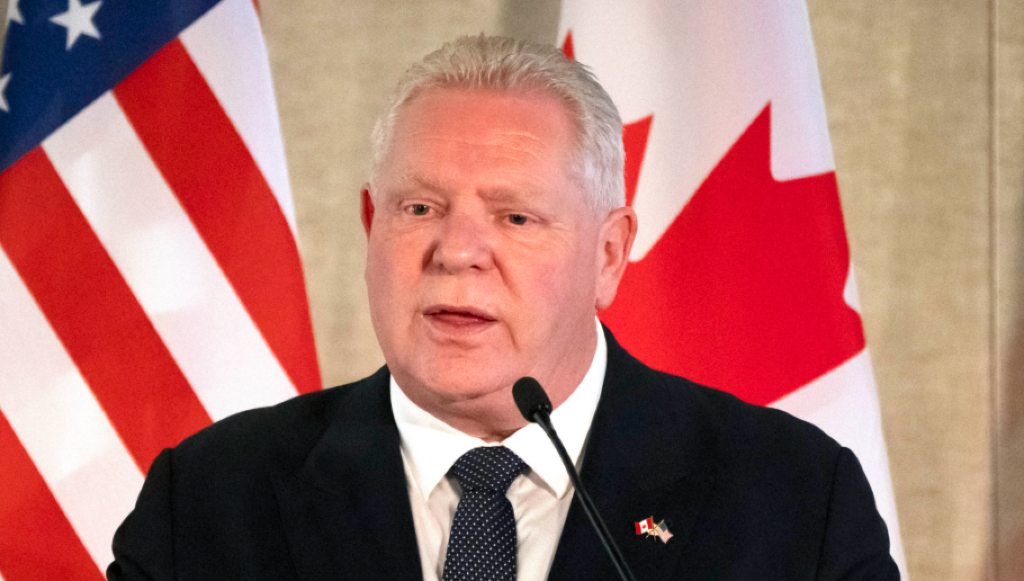
Premier Doug Ford said in February that Ontario “won’t do business with people hell-bent on destroying our economy.” The agreement, part of the Ontario Satellite Internet (ONSAT) program, was intended to expand service to remote First Nations and rural communities.
The province’s infrastructure agency later said it would reassess satellite options and pursue a mix of fibre, fixed-wireless, and other emerging technologies instead.
Ontario launched its $4-billion broadband plan in 2021, pledging to connect 700,000 unserved or underserved homes. Officials said the revised 2028 timeline maintains that commitment and remains Canada’s largest rural-connectivity initiative.
Among the 10 companies blacklisted by China are AVEOX in Simi Valley, California; Red Cat Holdings and Teal Drones, both in South Salt Lake, Utah; and IMSAR in Springville, Utah.
Society has no choice but to change in the advent of AI, although Huang has been optimistic about the technology’s potential.
The Federal Energy Regulatory Commission has ordered regional grid operators to help large energy users connect more quickly to the grid.
French President Macron criticized the U.S. for restricting foreign access to advanced AI models, a sentiment echoed by OpenAI CEO Sam Altman