
States Face LEO Dilemma as BEAD Program Revamps
Industry experts warn low-Earth orbit providers may not meet BEAD's federal broadband requirements.


WASHINGTON, August 4, 2025 — State broadband offices confront mounting uncertainty over whether to accept low-cost satellite internet bids as part of the Broadband Equity, Access and Deployment program.
Some industry experts, speaking at a Broadband Breakfast Live Online event on Wednesday, warned that SpaceX’s Starlink and Amazon’s Project Kuiper cannot deliver the service quality required under the $42.45 billion federal broadband program.
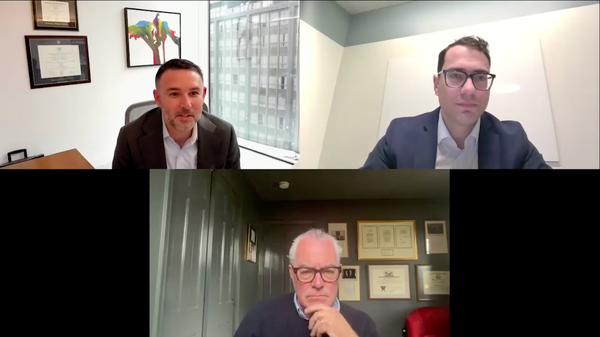
The challenge has shifted dramatically as eligible locations may have dropped as much as 65 percent, from 11.9 million in 2023 to 4.2 million today, according to a study by the New York Law School. That has transformed BEAD’s program from being one of funding shortages to a potential too much money. Randy Leuning, founder of BroadbandToolkit.com, said: "Three years ago, we approached this as there's not going to be enough money, and now we're approaching [it] like there's too much money, and so how do we adapt?”
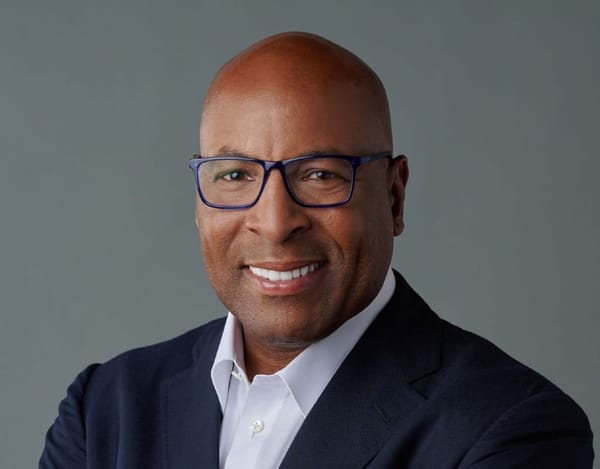
 Michael Santorelli
That could result in billions returned to the federal government if states do not prioritize fiber deployments - as they had been planning to do. But a critical question remains: Can satellite technology meet BEAD's fundamental infrastructure requirements?
A technical analysis conducted by Glenn Fishbine, partner at Breaking Point Solutions, revealed severe capacity limitations for current Starlink technology. "If you get within a Starlink radio beam area, which is approximately 62-63 square miles, if you have more than 419 subscribers in that beam area, you are not going to be getting 100 by 20," he said, referring to the federal broadband speed standard of 100 Mbps download and 20 Mbps upload.
Environmental factors compound these technical challenges. Fishbine's research showed forest coverage creates significant obstacles, with "one in three" odds of signal failure in evergreen needle forests due to tree blockage.
Despite these limitations, satellite providers have submitted aggressive bids across multiple states. Leuning's analysis of Tennessee's benefit-of-the-bargain round found satellite bids averaging $844 per location compared to $4,797 for fiber deployment — roughly a six-fold cost difference pressuring state decision-makers.
Reduction in need, according to NYLS study
The location reduction stems from analysis by the Advanced Communications Law and Policy Institute at New York Law School. Alex Karras, senior fellow at the institute, described the progress optimistically: "It seems like 65% of the program has been accomplished without the program. Hopefully this means that there's more funding left for less locations and that it's possible to get the best possible service to the 35% or so that are left."
Michael Santerelli, director of the institute, noted states face severe constraints under current rules requiring acceptance of the lowest bid unless alternatives come within 15% of the lowest price. "Even if a state wanted to try to fund all fiber, they would be severely constrained under the current rules if they received bids in those areas that are significantly more than 15% lower for LEO or fixed wireless," he said.
Some states may attempt to maintain fiber preferences. Santerelli cited Louisiana's requirements for applicants to demonstrate capability for "symmetrical gig and multi-gig speeds over the next four years." If continued, that could effectively limit eligibility to fiber providers.
However, Fishbine warned that focusing solely on the lowest-cost alternatives "should be implemented with caution, especially in areas that have no affordable options."
The Commerce Department's National Telecommunications and Information Administration retains ultimate approval authority, with Santerelli noting the agency "can overrule states on almost any ground," including "excessive costs" in awarding grants.
Karras offered a stark bottom line: "If the amount of funding was enough back in 2023 to pull this off, that, with the big decrease we've seen in eligible locations, we should be very ashamed of ourselves if this program doesn't have positive outcomes for American households."
Full Video
Can't see the full event video? Join the Breakfast Club to watch





Member discussion