
T-Mobile Ending More Diversity Initiatives as Deals Await Approval
The carrier is in the process of acquiring Metronet and UScellular.


WASHINGTON, July 9, 2025 – T-Mobile told the Federal Communications Commission Tuesday it was axing some more of its diversity initiatives as it looks for the agency to approve two acquisitions.
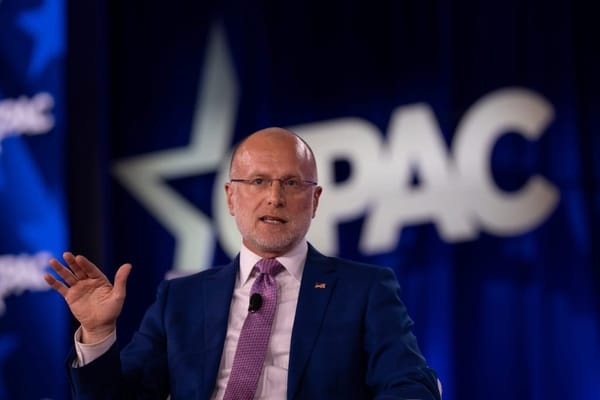
FCC Chairman Brendan Carr has made it clear the agency wants to see DEI efforts rolled back before greenlighting deals. T-Mobile already sent a similar letter to the agency before it approved the carrier’s purchase of Lumos, as did Verizon before its acquisition of Frontier was allowed to move forward.
T-mobile didn’t mention the transactions specifically Tuesday, but filed its letter in the FCC dockets pertaining to them. The company is in the process of purchasing UScellular’s 4 million wireless customers and about a third of its spectrum, plus Metronet’s 2 million fiber passings as a separate joint venture with an investment firm.

FROM SPEEDING BEAD SUMMIT
Panel 1: How Are States Thinking About Reasonable Costs Now?
Panel 2: Finding the State Versus Federal Balance in BEAD
Panel 3: Reacting to the New BEAD NOFO Guidance
Panel 4: Building, Maintaining and Adopting Digital Workforce Skills
The carrier said the “handful” of employees who work on diversity and inclusion would now focus on “employee culture and engagement.” Internal training manuals will no longer mention “diversity, equity, and inclusion,” and neither will the company’s website or external communications, the company said.
“Our primary intention always was to create a culture that makes employees feel supported and therefore able to bring their best to the company,” T-Mobile Executive Vice President Mark Nelson wrote. “Equality of opportunity, performance-based rewards, and ensuring we’re a place where everyone can win as ‘One Team, Together’ – that’s what we intended through some of our practices that were labeled as ‘DEI.’”
The letter also reiterated changes T-Mobile said it had already made before the Lumos deal was approved, like eliminating targets for diverse spend in equipment purchases and contracts, and said its existing hiring and career development policies didn't run afoul of Carr’s “invidious discrimination” standard.
Democratic FCC Commissioner Anna Gomez has opposed the practice of conditioning deal approval on diversity policies generally, and was critical of T-Mobile's letter.
“In yet another cynical bid to win FCC regulatory approval, T-Mobile is making a mockery of its professed commitment to eliminating discrimination, promoting fairness, and amplifying underrepresented voices,” she wrote in a post on X. “History will not be kind to this cowardly corporate capitulation.”
Consumer advocate, rural carrier opposition
Consumer advocacy groups and rural wireless carriers have been opposing the UScellular deals – the company is also selling spectrum to AT&T and Verizon for about $1 billion each.
Public Knowledge, New America’s Open Technology Institute, and the Benton Institute for Broadband & Society joined a petition to deny the Verizon transaction Monday, again urging the FCC to review all three transactions together for cumulative anti-competitive effects. The Rural Wireless Association also asked the agency to deny the Verizon deal Monday.
“If this Application is approved, spectrum covering an area that spans throughout the country and holds more than 27 million Americans will shift from a market competitor, UScellular, to being divided up between a dangerous market triopoly,” the consumer groups wrote.
They argued Monday, as they have with respect to the T-Mobile and AT&T transactions, that the consolidation of spectrum will reduce competition in the affected areas and thus harm consumers.
UScellular has argued along with T-Mobile and AT&T against reviewing the transactions all together, and that the public interest would be served by the deals by improving the larger carriers’ service where they grab UScellular licenses.
The groups argued for imposing pro-consumer conditions on approving the Verizon deal, as they did with the T-Mobile purchase, including a phone unlocking requirement and pro-worker conditions. UScellular has started the process of laying off much of its workforce, but has told regulators that it’s made arrangements to offer a majority of its workers jobs at T-Mobile after the deal closes.
No major roadblocks
Blair Levin, New Street Research’s policy advisor, said in a June 27 investor note he doesn’t see the opposition – or anything else – as a major roadblock to the T-Mobile deal getting approved in the near future. The companies predicted it would close sometime in the middle of this year.
He said UScellular wasn’t big enough to seriously impact the competitive analysis on a national level, and that it wouldn’t be difficult for the companies to address concerns in local markets where the reduction in competition will likely be more problematic.
“If there is a problem in a local market, the divestiture of spectrum and/or customers to another provider would likely address that problem,” he wrote. “While there will be conditions, we don’t believe they will be material in the short run nor affect operations and profitability in the long run.”
Federal law enforcement officials greenlit the deal last month. T-Mobile is owned by the German firm Deutsche Telekom, triggering the foreign ownership review process

Member discussion