U.S. Broadband Capex Hits $92.6B in 2025 as Fiber Fuels AI-Era Networks
The report frames 2020-2025 as the strongest sustained era of network investment on record

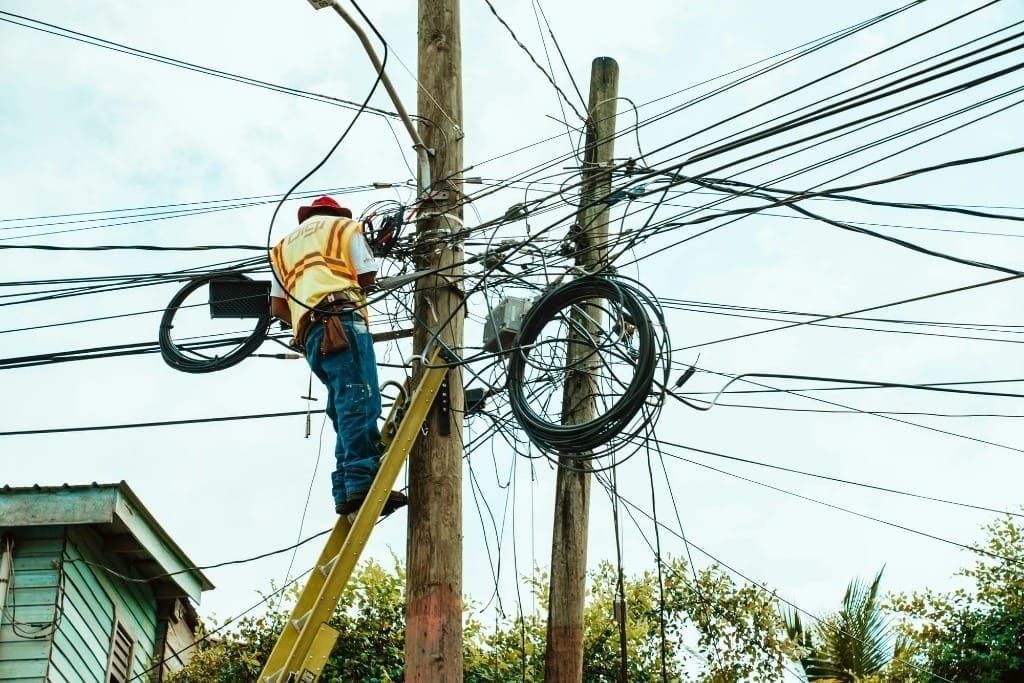
WASHINGTON, Sept. 21, 2026 - U.S. broadband providers invested $92.6 billion in communications infrastructure in 2025, a 3.4% increase over 2024 and the third-highest annual total since 2002, according to USTelecom’s 2025 Broadband Capex Report. Cumulative investment now approaches $2.3 trillion since 1996 as demand for faster, more sophisticated networks continues to grow.
The report frames 2020-2025 as the strongest sustained era of network investment on record, with average annual capex of $92 billion, surpassing previous boom periods tied to the dot‑com surge, early broadband rollout and the streaming/smartphone era.

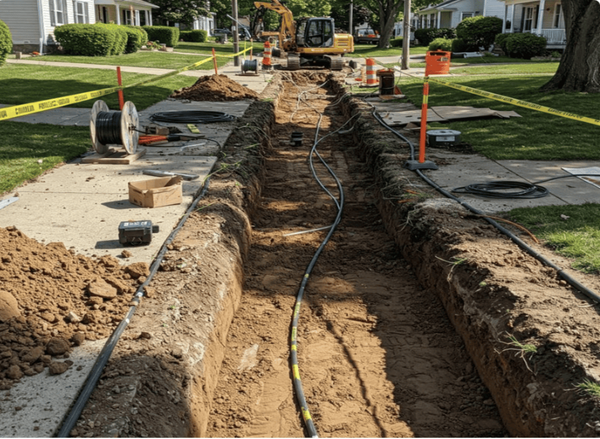
In 2025, providers accelerated fiber deployment, completed C‑band and 5G buildouts, expanded fixed wireless access, and pursued converged fiber‑and‑wireless strategies, while modernizing acquired networks and adding capacity through densification in high-demand areas.
Average monthly broadband usage reached 767.4 gigabytes per subscriber by year’s end, up 9.9% from 2024. Looking ahead, Cisco projects that AI and agentic AI adoption could increase consumer-driven network traffic 6.6-fold by 2035. In 2025 alone, upstream usage rose 21.7%, more than twice the growth rate of overall usage.
A key theme in the report is how traffic patterns are changing in the AI era, and USTelecom argues that fiber is uniquely suited to navigate this shift because it can deliver high‑capacity, symmetrical performance upstream and downstream, supporting AI and other data-intensive applications. Deeper fiber investment also strengthens the broader connectivity ecosystem, since 5G and eventually 6G networks rely heavily on fiber backhaul, satellites hand traffic off to fiber-connected ground stations, and fixed wireless and Wi‑Fi draw on the capacity of the wired networks behind them.
“Fiber isn’t just today’s wiring - it’s the load‑bearing infrastructure for whatever comes next,” said USTelecom CEO Jonathan Spalter. “Every gigabyte moving upstream shows America’s innovation economy being built in real time, and providers are meeting that demand with real capital. Now Congress must pass permitting reform so providers ready to build can build, and every American -especially in rural communities - gets connected to future‑proofed fiber.”
The report concludes that 2025’s spending extended a period of historically high broadband investment, expanding rural reach, modernizing wireless networks and pushing fiber deeper into communities to ensure the opportunities created by American innovation reach every community.
But the entire broadband sector is still no match for a Big Tech company like Google, which is spending $205 billion alone in 2026 on data centers and AI compute capacity. Meanwhile, Big Tech’s overall capex budget for 2026 could hit $800 billion.