Amazon Leo Aiming to Sway Consumers From Starlink With Prime, Other Bundles
The company is planning to launch initial service later this year

WASHINGTON, Oct. 9, 2026 – Amazon Leo is aiming to compete with SpaceX’s satellite broadband service by bundling its plans with other Amazon services.
“We’re going to take the Amazonian way and have the best value by far,” Chris Weber, the company’s vice president of business, said in an interview with Ars Technica.

Amazon currently has almost 400 satellites in orbit to support its Amazon Leo home broadband service. Executives told Ars the company is aiming to launch initial service later this year.
Rajeev Badyal, head of Amazon Leo, told Ars that the existing constellation had enough capacity to do that, and the company was trying to add resiliency before offering service. The company has until July 2029 to deploy the full 3,232 satellites it’s federally approved for.
SpaceX is currently the only player in low-Earth orbit consumer broadband in the U.S., with an estimated 4 million U.S. subscribers according to New Street Research.
Weber said Amazon would try to win consumers over by combining its broadband service with other Amazon subscriptions like Amazon Prime, gear like Eero routers, and/or other services like Fire TV and Ring.
“There are lots of assets within Amazon that we can pair with Leo to bring new value to consumers,” he said. “There are lots of opportunities for us to bring new value to consumers in those three things.”
On the enterprise side, he claimed Amazon would be able to exceed SpaceX’s download speeds by a factor of three and upload by a factor of 10.
“There are use cases where contracts we have signed with customers — I won’t get into the names because we haven’t announced them — but they’ve purely made the decision on our performance, and there’s some distinct ones around uplink that they simply couldn’t get it done other than with Leo,” he said.
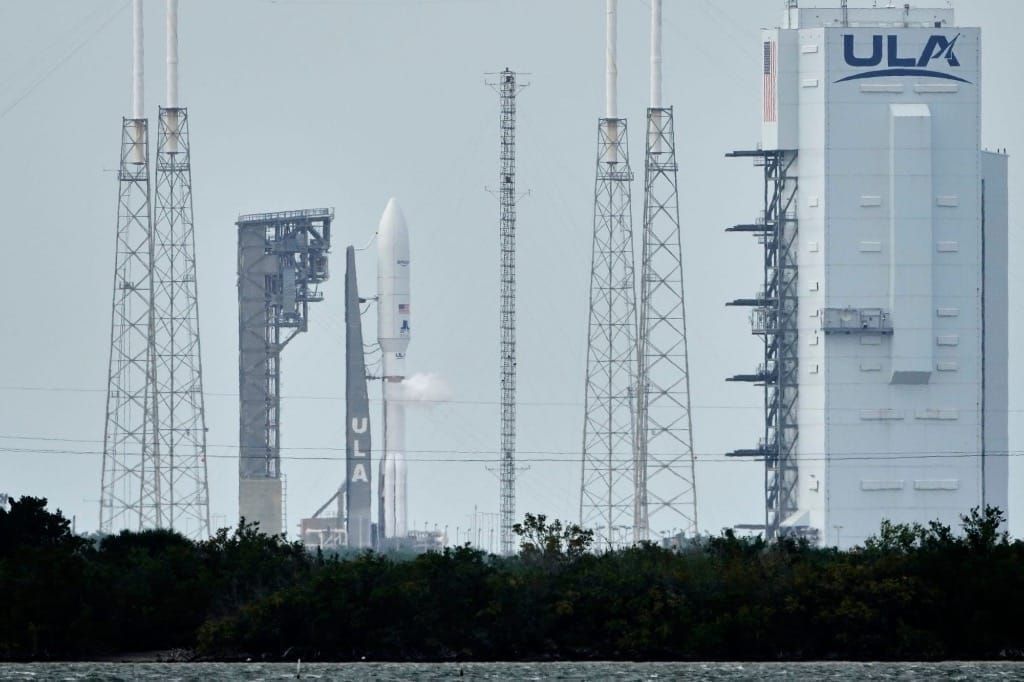
Weber said the company had manufactured its 1,000th satellite and was “weeks away” from resuming launches. He said there would be at least three this year, starting with a United Launch Alliance Vulcan rocket and followed by an Arianespace launch and additional Vulcans.
In June, the Federal Communications Commission agreed to waive a deployment deadline on Amazon’s constellation. It was supposed to have 1,616 satellites up and running by July 30.
The company told the agency that difficulty securing launches was a big factor in falling behind schedule.
SpaceX launched its first Starlink V3 satellites into orbit last month. The company has said the units will provide ten times the bandwidth of the current V2 satellites.
There are 26 V3 satellites on their way to operation orbit currently, according to astronomer Jonathan McDowell, compared to 7,300 V2 satellites. Getting more of the larger V3 satellites in space will require the use of SpaceX’s Starship rocket, which is still in testing.
SpaceX is authorized to have 15,000 Starlink satellites in orbit, although the company has asked the FCC for permission to launch a 100,000-satellite constellation.
SpaceX and Amazon were both big winners in the Broadband Equity, Access, and Deployment program. The companies were slated to receive about $1 billion combined and serve about 800,000 locations between them.
That number is likely to come down though. The Trump administration has asked states to reduce their satellite awards by as much as half, citing new broadband coverage data that showed some locations were ineligible. That could reduce BEAD satellite locations by 35-42 percent, according to one analysis.